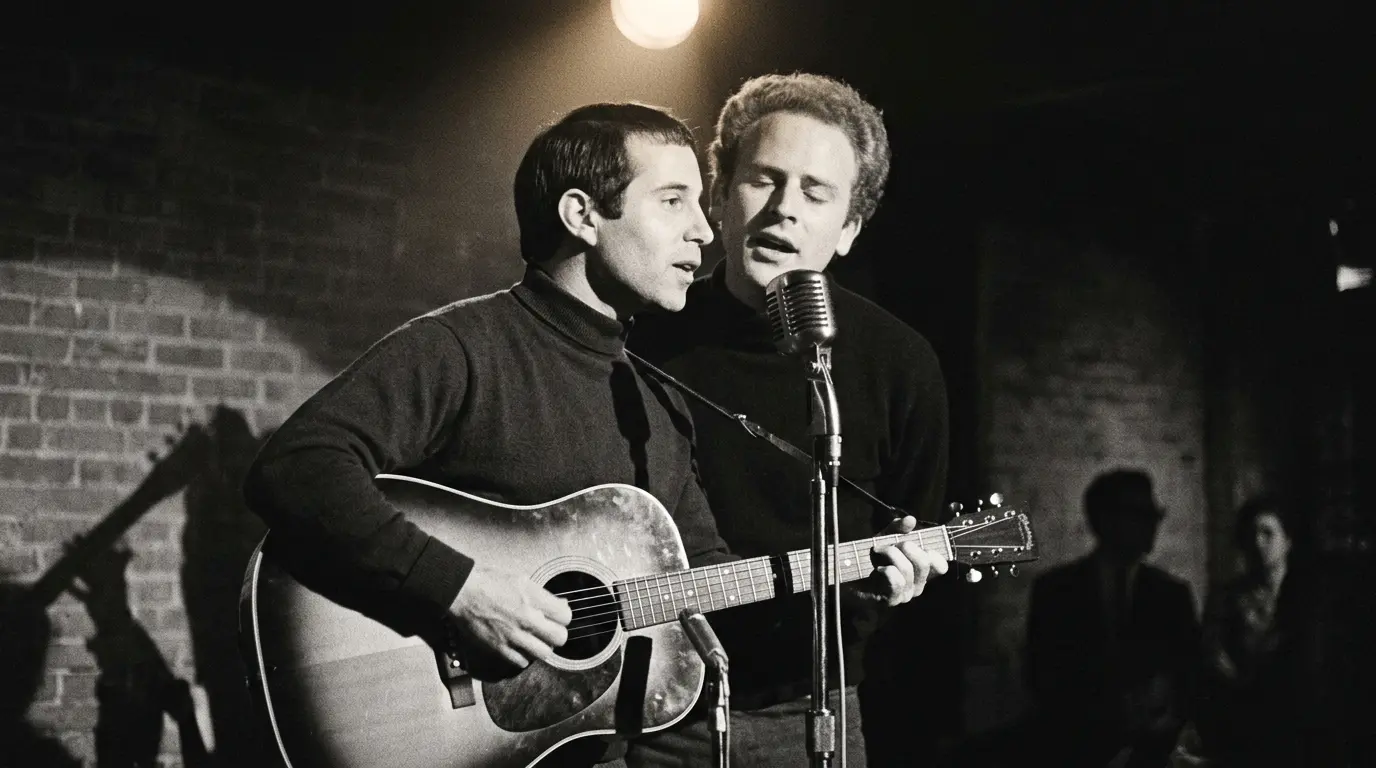
Simon & Garfunkel’s history is available here!
- 🎧 Listen to This Article
- No. 8 is “America.”
- 🎥 As always, let us begin with the official YouTube videos.
- What Was the “America” They Were Searching For?
- When the Joking Stops, the Journey Changes Its Meaning
- Anxiety Growing Within a Gentle Sound
- In Closing: The Journey Continues Because No Answer Is Given
🎧 Listen to This Article
You can quickly explore the key points of this article through English and Japanese narration.
Recommended for readers who want to understand the atmosphere of “America” and the overall direction of the article before reading.
🎵 English Narration
An English audio introduction to the content of this article.
🎶 Japanese Narration
A Japanese audio introduction to the content of this article.
Listening first will make it easier to understand the journey, loneliness, and central ideas portrayed in “America.”
No. 8 is “America.”
This song was included on Bookends, Simon & Garfunkel’s fourth studio album, released on April 3, 1968. The album reached No. 1 on the U.S. album chart and became one of the defining works that carried the duo to the summit of American popular music.
“America” was not originally released as a separate single when the album appeared. It was issued as a single in the United States in 1972, after the duo had ceased working together. Although it reached only No. 97 in the United States and No. 25 in the United Kingdom, it gradually established itself as one of the songs that most clearly represents Simon & Garfunkel’s artistic world.
The title suggests something sweeping and monumental, but this is not a sightseeing journey through famous American landmarks. It is the story of two young lovers who set out with a single bag, exchange playful jokes, gradually fall silent, and begin to realize what they have truly been searching for.

A bright departure gives way to an uneasiness that neither of them can explain. I am drawn to “America” because it does not decorate youth as a purely radiant season. It also captures the moment when a person suddenly finds himself unable to move forward, even while standing at the very center of youth.
A Poetic Interpretation
We became lovers, packed all our hopes and a few coins into a bag, and set out together in search of “America.”
We laughed on the bus and amused ourselves by inventing stories about strangers, but eventually the cigarettes were gone and our conversation fell silent.
As you slept beside me, I quietly confessed that I felt empty and could not understand why loneliness hurt so much.
The countless cars moving along the highway seemed to be searching for their own versions of “America” as well.
🎥 As always, let us begin with the official YouTube videos.
Common Credits
Song: America
Artist: Simon & Garfunkel
Written and Composed by: Paul Simon
Vocals: Paul Simon and Art Garfunkel
Official YouTube Channel: Simon & Garfunkel
① “America (Audio)” — Studio Recording
Album: Bookends
Year Released: 1968
Produced by: Paul Simon, Art Garfunkel, and Roy Halee
Video Format: Official Audio
Two-Line Commentary
This studio version portrays two young lovers crossing the United States while searching for an invisible ideal they call “America.”
The delicate harmonies and steadily expanding arrangement transform the excitement of travel into a loneliness whose source remains difficult to name.
② “America (from The Concert in Central Park)” — Live Performance
Concert: The Concert in Central Park
Concert Date: September 19, 1981
Venue: Central Park, New York City
Video Format: Official Live Performance
Two-Line Commentary
Performed before an estimated audience of 500,000 in Central Park, this live version possesses both grandeur and warmth.
Sung by Simon and Garfunkel after the passage of many years, the young lovers’ travel story becomes a reflection on the ideals they once pursued.
What Was the “America” They Were Searching For?
The story begins with two people who have become lovers and speak of combining their possessions and their futures. Yet the bag they carry contains no valuable property, only the few belongings needed to continue their journey.
They buy cigarettes and pie, then set out without naming a definite destination. The “America” presented here is not merely the nation drawn on a map. The word also contains the future they want to believe in and the place where they hope to feel that they truly belong.

Although they are already traveling inside the United States, they are still searching for “America.”
This apparent contradiction runs through the entire song.
Moving from one place to another can reveal unfamiliar scenery. Simply changing location, however, cannot make a person’s uncertainty disappear. Their journey changes from an attempt to discover the world outside them into a period in which they confront what is missing within themselves.
A Story Born from a Real Journey
The song originated in a journey across the United States that Paul Simon took in 1964 with his girlfriend, Kathy Chitty. The “Kathy” named in the song is not a fictional character but a direct reflection of the woman with whom Simon was involved at the time.
Because the song is rooted in personal experience, it includes specific names such as Pittsburgh, Saginaw in Michigan, Greyhound, and the New Jersey Turnpike. Although the song addresses an abstract question, its story remains firmly grounded in real towns, roads, and modes of transportation.
Everyday objects such as cigarettes, a raincoat, a magazine, and pies are equally important. Paul Simon does not explain ideals or loneliness directly. Instead, he uses the objects encountered during the journey and fragments of conversation to reveal the young couple’s limited means and their changing emotional relationship.
- Departure: They speak of sharing their future.
- On the Bus: They observe the other passengers and entertain themselves with jokes.
- At Night: Their conversation stops, and the man reveals what he has been feeling.
No dramatic event occurs. The two do not separate, and the journey is never declared a failure. Even so, the story becomes increasingly somber because the end of their ordinary conversation allows the man’s inner condition to emerge for the first time.
When the Joking Stops, the Journey Changes Its Meaning
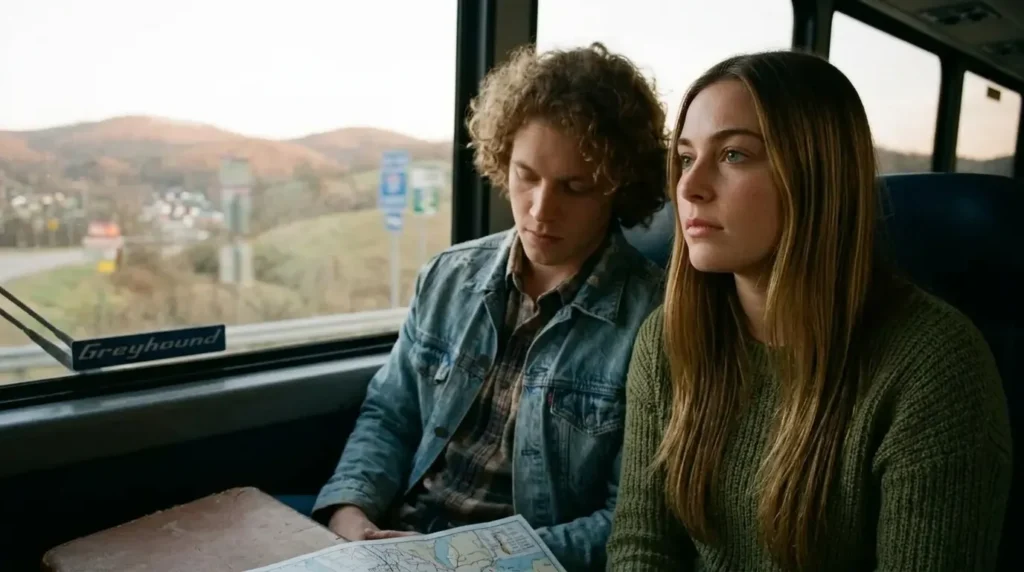
On the bus, the two imagine that a stranger is a spy and joke that his bow tie is actually a camera. Their ability to share such purposeless fantasies captures the happiness and intimacy of two people in love.
The atmosphere changes, however, during their brief exchange about a cigarette. They smoked the final one an hour earlier. Kathy reads her magazine while the man turns his eyes toward the passing scenery. The game they had been enjoying has ended almost without either of them noticing.
Later, the man tells the sleeping Kathy that he is lost and that he feels empty and in pain. Perhaps he could not say those words while she was awake, or perhaps he did not require an answer. By refusing to explain his motive, the song makes the confession even more immediate and painful.
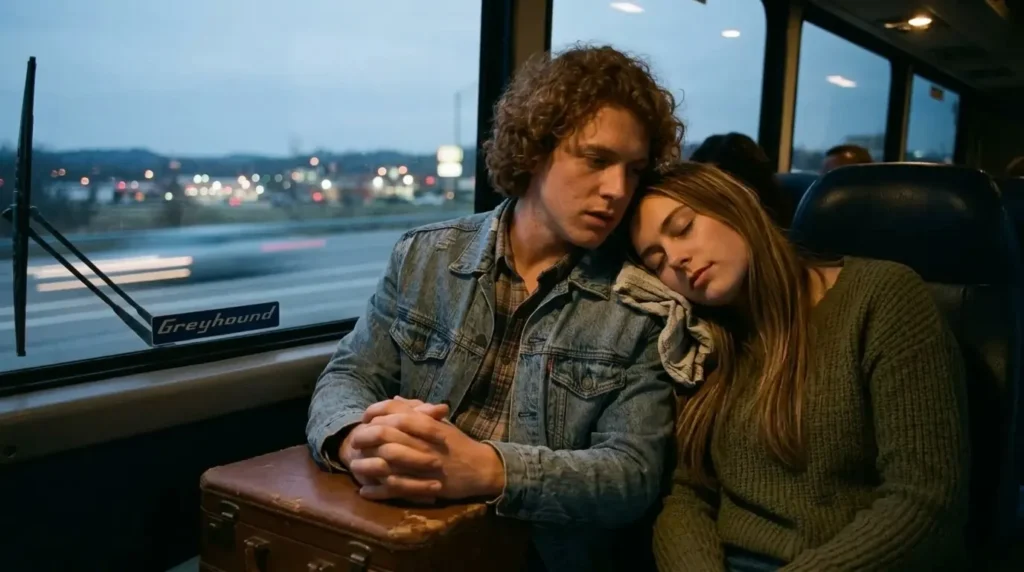
What the man has lost is not his geographical direction. He has lost the inner marker that would tell him where he is going and what kind of life he wants. Youth offers numerous possibilities, but it is also a period in which no one can tell a person with certainty which road he should follow.
From a Private Confession to a Portrait of Unknown Travelers
Near the end, the viewpoint moves from inside the bus to the stream of cars traveling along the New Jersey Turnpike. The narrator watches a road crowded with countless people and senses that he and Kathy are not the only ones who have lost their direction.
Each car carries people with different circumstances. Some may be traveling to work, some may be returning home, and others may be preparing to begin life somewhere new. They are not necessarily pursuing the same ideal, but they remain connected by their search for a form of happiness they can call their own.
In this way, the story of one couple expands into a wider landscape that includes people whose names they will never know. The title “America” does not function as a slogan praising a particular nation. It becomes a vessel capable of containing whatever human beings continue to seek.
Anxiety Growing Within a Gentle Sound
“America” does not begin by strongly emphasizing sadness. Paul Simon’s acoustic guitar and the voices of the two singers possess a gentle brightness that suggests the anticipation of departure.
As the story advances, however, bass, drums, and organ enter, and the arrangement gradually increases in scale. The landscape outside the bus opens before them, but the narrator’s state of mind does not clear. Instead, his feelings become increasingly difficult for him to contain.
The duo’s harmonies create another revealing contrast. Musically, their two voices blend beautifully. Within the story, however, Kathy reads her magazine while the man looks out at the passing scenery. The unity of their singing does not necessarily correspond to the direction of the characters’ thoughts.
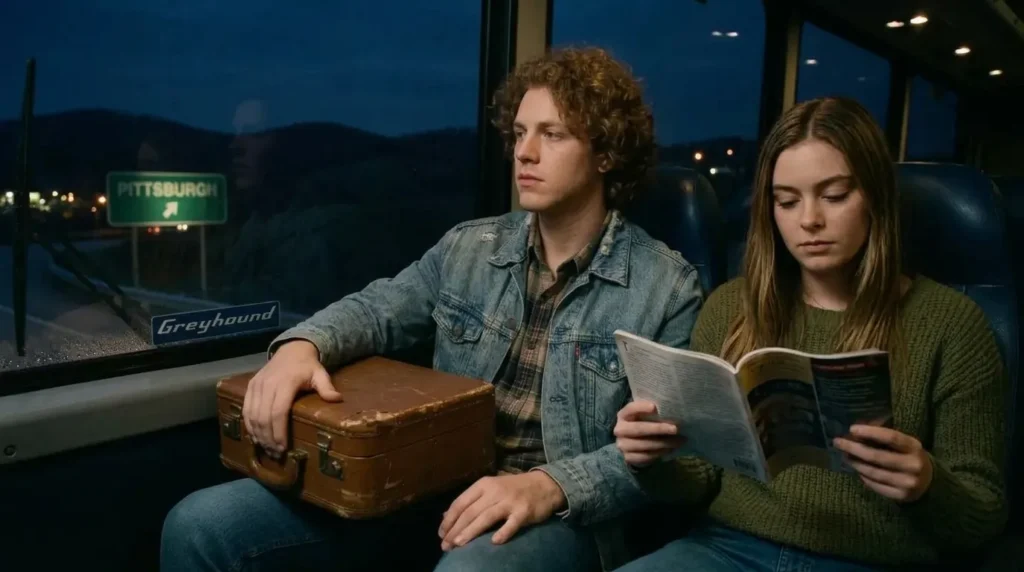
Because of this divergence, the performance never becomes merely sweet or beautiful. Beneath the polished harmonies lies a difficult truth: having a lover beside you does not necessarily make your loneliness disappear.
Two Versions of “America”: 1968 and 1981
The 1968 studio recording conveys the moment when two young people first encounter the uneasiness within themselves. The clear voices and carefully constructed arrangement hold anticipation and uncertainty in a delicate balance.
In the 1981 Central Park performance, the same song carries the weight of another period in time. Paul Simon and Art Garfunkel stand together once again and sing the story of the young travelers before an estimated audience of 500,000 people.
If the studio version resembles a diary written during the journey, the live version sounds like that diary being read thirteen years later. The composition itself has not changed, but the years lived by the two singers transform youthful uncertainty into a retrospective view of life.
In Closing: The Journey Continues Because No Answer Is Given
“America” has no definite conclusion. We do not learn where the two travelers arrive, whether they find what they were seeking, or even whether Kathy hears the man’s confession.
The absence of an answer is not a weakness in the song. In life, people cannot always explain what they truly seek at the moment of departure. Sometimes they reach their destination only to discover that they had been searching for something entirely different.
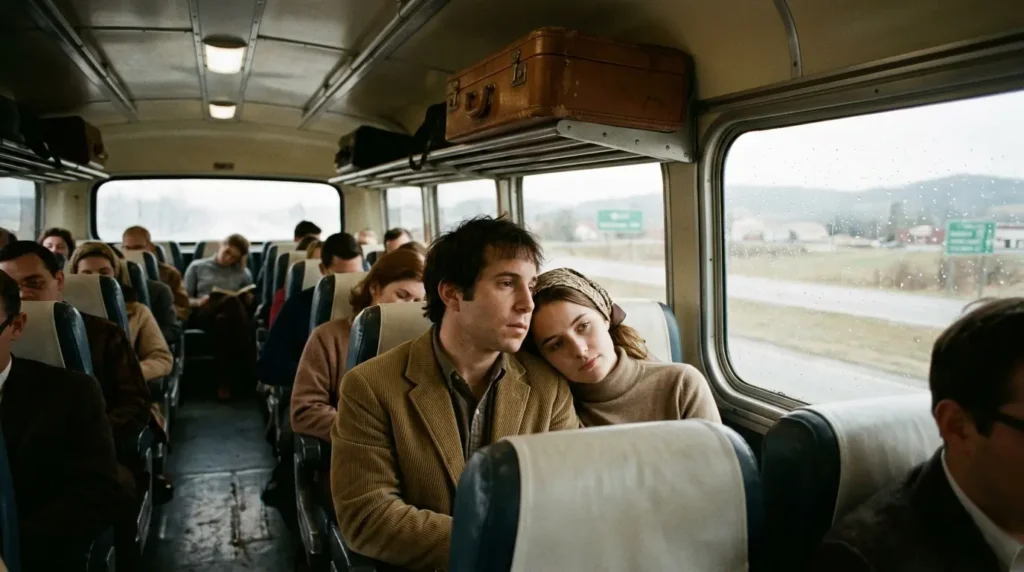
Paul Simon expressed that elusive feeling through the bus journey of two young lovers. By choosing the conversation after the cigarettes are gone and the sight of cars moving along a nighttime highway, rather than a dramatic incident, he transformed “America” from a personal memory into a song with universal meaning.
All of us move toward one place or another while searching for a form of life we can accept as our own. For No. 8, I chose “America,” a song that bears the name of a nation while containing both the hope and the uncertainty of youth within a single journey.

音楽ファン同士の交流・リクエストはこちら / Connect & Request Songs Here