💛The “Miracle of Chicago,” the band that fused rock and brass and rewrote pop history, starts here: Read the series introduction.
- 🎧 Listen to This Article
- No. 4 is “Hard to Say I’m Sorry”
- First, Listen to the Official YouTube Video
- A Song That Opened Another Door for Chicago
- What the Song Expresses Is Not Just a Beautiful Apology
- Peter Cetera’s Voice Defines the Song
- David Foster Refined Chicago for the 1980s
- Why I Placed This Song at No. 4
- In Closing
🎧 Listen to This Article
You can quickly grasp the key points of this article through narration.
Before reading the full article, this narration is recommended for getting a feel for “Hard to Say I’m Sorry” and the overall flow of the piece.
🎶 English Narration
This audio introduces the content of the article in English.
🎵 Japanese Narration
This audio introduces the content of the article in Japanese.
Listening first will help you grasp the mood of “Hard to Say I’m Sorry” and the main points of the article more easily.
No. 4 is “Hard to Say I’m Sorry”
The song I chose for No. 4 is “Hard to Say I’m Sorry,” a song that made a strong impression on Chicago’s 1982 comeback. In Japan, it is widely known by the Japanese title “Sunao ni Narenakute.” For many Japanese listeners, this is one of the unforgettable ballads that introduced them to Chicago’s 1980s sound.
For me, however, this song occupies a slightly complicated place. I have no doubt that it is a great song. Peter Cetera’s voice reaches deep into the heart, and David Foster’s arrangement is superb.
Yet whenever I listen to this song, I feel that Chicago had already begun to show a different face from the band I had first fallen in love with.
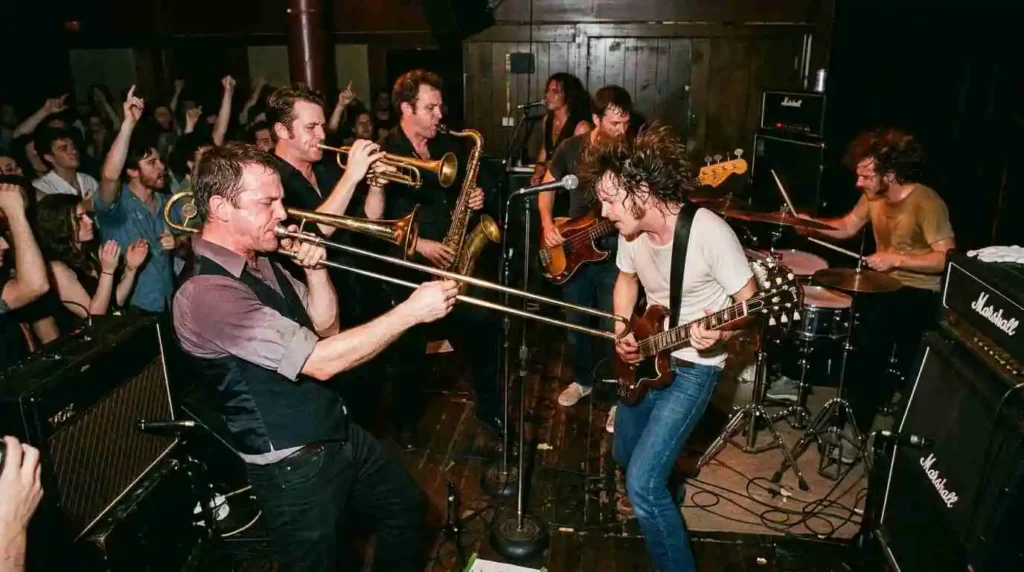
The brass-driven heat of early Chicago, the muscular feel of a rock band, and the excitement of horns and rhythm section pushing forward together.
Those elements are not the main characters in this song. Instead, what stands at the center is a polished melody, an elegant sound, and the strength of a ballad that delivers the pain of love directly to the listener.
That is why I placed this song at No. 4. I could not rank it any lower. But to place it higher, I would need a little more of what I personally feel is the essential Chicago sound. This ranking contains both admiration and hesitation.
Free Translation
You said a little time apart would make things easier.
But I cannot bear even a moment away from you.
I am sorry. I want to hold you now. I do not want to lose you.
After all we have been through, I promise I will make it up to you.
You are a part of me that I simply cannot let go.
First, Listen to the Official YouTube Video
Credits
Chicago — “Hard to Say I’m Sorry”
Official Music Video
Songwriters: Peter Cetera, David Foster
Producer: David Foster
Album: Chicago 16 (1982)
Japanese title: “Sunao ni Narenakute”
Two-Line Commentary
Born from the 1982 album Chicago 16, this song became one of the defining grand ballads of Chicago’s 1980s era.
Peter Cetera’s delicate vocal and David Foster’s refined arrangement turn the pain of wanting to apologize but being unable to be honest into a dramatic love song.
A Song That Opened Another Door for Chicago
From Brass-Rock Heat to an Urban Ballad
When I think of Chicago, I naturally think of their brilliant horn section. Trumpets that cut through the air, trombones with real weight, and saxophones with supple lines. Together with guitar, bass, and drums, they expanded the possibilities of rock. That was where Chicago’s special excitement lived.
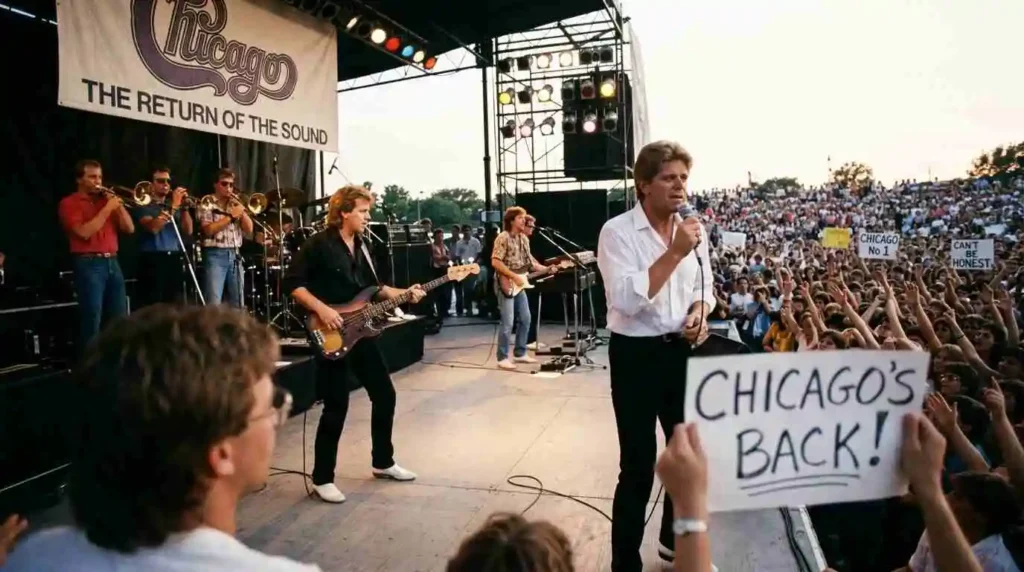
But the opening of “Hard to Say I’m Sorry” is surprisingly quiet. The brass does not lead the way. Instead, the piano and Peter Cetera’s voice begin almost like a private conversation between two people. What we hear is not the collective heat of 1970s Chicago, but an intimate look into one man’s heart.
The Sound of 1982
This shift also overlaps with the flow of 1980s pop music. “Hard to Say I’m Sorry” was included on the album Chicago 16, written by Peter Cetera and David Foster, and produced by Foster.
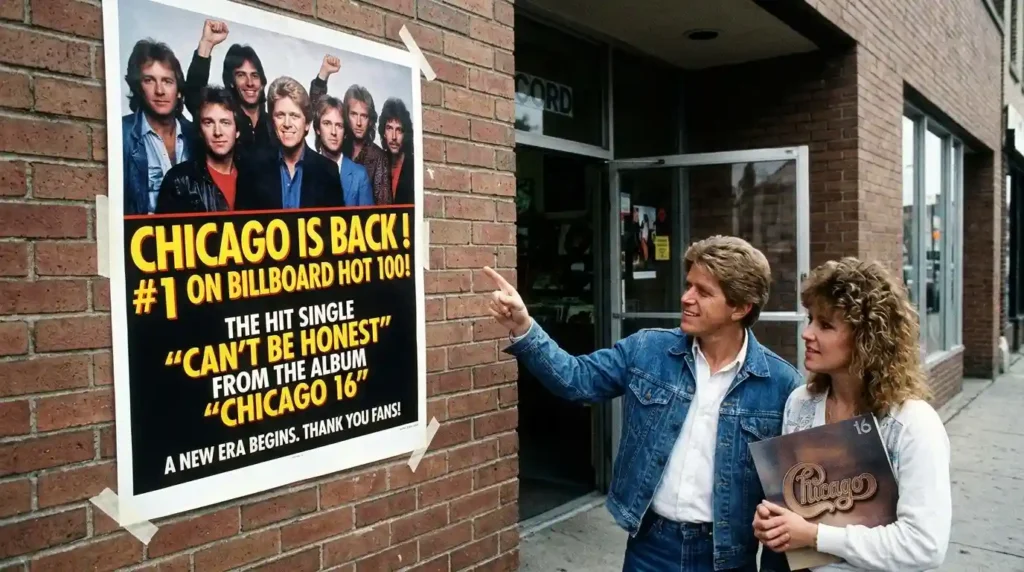
The sound is clean, the melody is beautiful, and the emotional lift toward the chorus is carefully designed. The song has the power to catch the ear the moment it comes on the radio. In fact, it reached No. 1 on the Billboard Hot 100 and helped define Chicago’s dramatic comeback.

What matters here is not simply that Chicago moved toward a more commercial sound. Rather, the band changed the way it presented itself to match the air of the times. The brass drive that once stood at the front moved slightly backward, while the song and its melody took the central position.
That choice succeeded brilliantly. That is precisely why, for someone like me who was strongly drawn to earlier Chicago, joy and hesitation remain side by side. The fact that this is a great song, and the fact that it is a little different from the Chicago I first loved, do not contradict each other in my mind.
What the Song Expresses Is Not Just a Beautiful Apology
The Awkwardness of a Man Who Cannot Say “I’m Sorry”
The original title, “Hard to Say I’m Sorry,” means exactly that: saying “I’m sorry” is difficult. The Japanese title “Sunao ni Narenakute” captures that feeling naturally in Japanese. It is a very effective title.
Yet behind the softness of that Japanese title, there is a bitter feeling. The phrase “unable to be honest” has a certain tenderness to it. But in reality, being unable to apologize can be quite unattractive.

Somewhere in his heart, he knows he was wrong.
He probably knows that he hurt the person he loves.
And yet, the first word will not come out.
This is not simply a beautiful romantic scene. It is human immaturity itself. That is where I find the real appeal of the song. It is not a song about perfect love. It is a song about finally trying to admit one’s own weakness after having failed.
A Love That Does Not Know How to Let Go
The narrator is told that some time apart is necessary. But he cannot endure that time apart. Perhaps he understands, at least in his head, that distance may be needed. Still, his heart tries to hold the other person back.
What we hear here is not mature love, but a love that has not yet learned how to let go. That is why the song hurts a little to listen to. The melody is beautiful, but the feeling being sung is not graceful or composed.
Life gives us many moments when we should apologize. Not only to a lover. To family, friends, or someone who was once close to us. There are times when something we once believed was right begins to look a little different later on.

At such times, people do not apologize easily. Even when they know that apologizing is the right thing to do, a small pride gets in the way. This song seems to include even that pitiful resistance within its music.
Peter Cetera’s Voice Defines the Song
The Fear of Rejection Hidden Inside the Sweetness
Peter Cetera’s voice plays a decisive role in this song. His voice has sweetness. But that sweetness is not merely a romantic decoration. As he reaches for the higher notes, a tense edge appears in his voice. That tension seems to turn the narrator’s hesitation directly into sound.
If this song had been sung by a thicker, more forceful singer, it might not have felt this urgent. Cetera’s voice contains both the desire to hold the other person and the fear that he might be rejected.
The Band Name and the Presence of the Vocalist
One reason this song has lasted so long is the persuasive power of Cetera’s voice. The voice is beautiful, but the narrator is not cool or heroic. In fact, he cannot quite hide his awkwardness. That is what keeps the song from becoming merely a sweet ballad.

At the same time, the appeal of this voice greatly changed the impression of Chicago as a band. Rather than the collective power centered on brass, the emotional presence of one vocalist comes to the front. Even though the name on the record is Chicago, listeners can easily hear it as a Peter Cetera ballad.
In this period of Chicago, the singer’s expression stands out more strongly than the force of the ensemble. The song still carries the band’s name, but the center of what we hear is not a mass of brass. It is the urgency of a single voice.
David Foster Refined Chicago for the 1980s
A Beautiful Design That Produced a Major Hit
When discussing “Hard to Say I’m Sorry,” David Foster cannot be ignored. With this song, he guided Chicago toward a sound that could reach 1980s radio with absolute clarity.
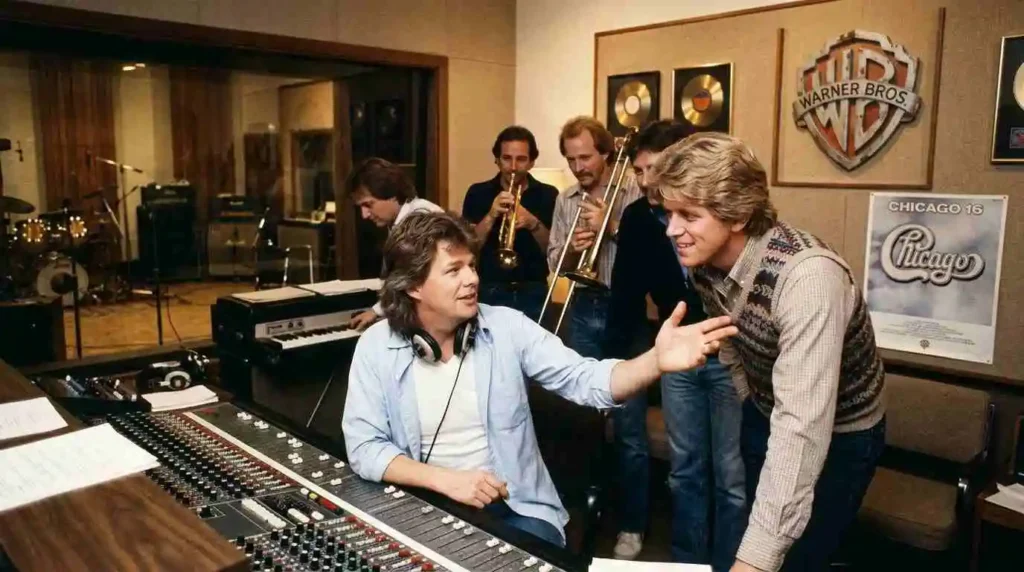
The piano entrance, the spread of the strings, the timing of the drums, and the emotional lift toward the chorus are all carefully shaped. Everything is arranged to raise the temperature of the listener’s heart little by little.
From Collision to Harmony
Earlier Chicago had brass and rock facing each other on the same stage with equal force. The horns were not mere decoration. They were one of the beating hearts of the band. There was a strength there that moved forward even if the sound was a little rough around the edges.
In this song, however, the edges of the sound are beautifully polished. Instead of collision, there is harmony. Instead of the sheer force of the whole band, the expression of the song comes to the front. Here we can hear a major change as Chicago crosses from the 1970s into the 1980s.
Why I Placed This Song at No. 4
The Song’s Completion and My Own View of Chicago
So why did I place this song at No. 4? The reason lies in both the song’s high level of completion and my own view of Chicago.
The strength of the melody, the persuasiveness of the vocal, the polished 1980s sound, and even the way the Japanese title helped the song take root in Japan. In all of these respects, “Hard to Say I’m Sorry” deserves to be called one of Chicago’s representative songs.
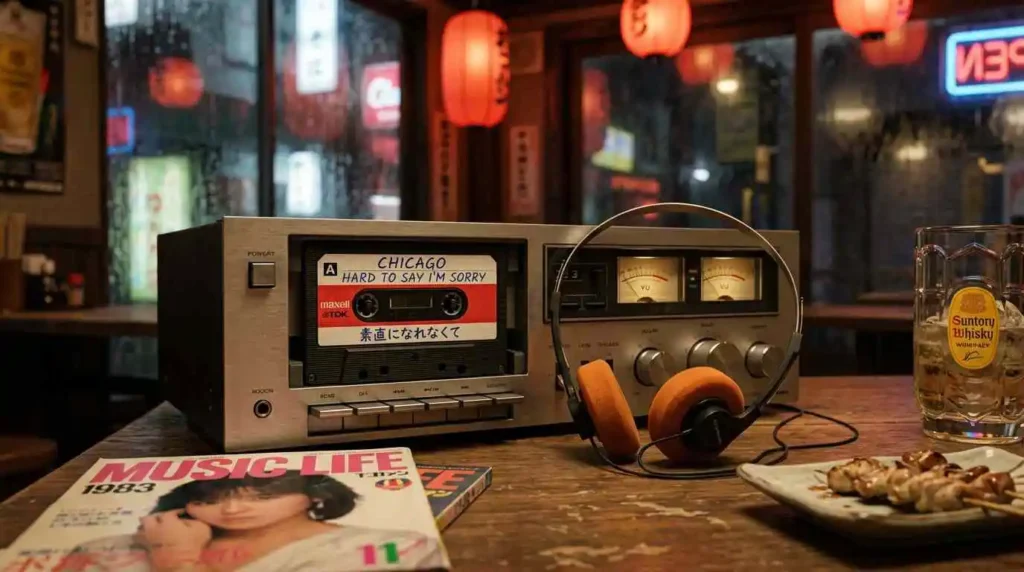
On the other hand, the Chicago I loved most was the band in which brass and rock sounded with the same heat, and the whole group pushed forward together. The horns did not merely support the song from behind. They helped move the song itself.
I Could Not Place It Lower, But I Could Not Place It Higher Either
“Hard to Say I’m Sorry” is a little different from that Chicago. But that does not mean I look down on it. It is a song by a band that moved into a different place and achieved something remarkable there.
That is why it belongs at No. 4. I could not place it any lower. But to place it higher, I would need a little more of what I personally feel is the essential Chicago sound. I reflected that feeling honestly in this ranking.
A ranking is not decided only by sales or popularity. It is also a way of looking at where each song sits in one’s own heart.
In Closing
“Hard to Say I’m Sorry” is a song of great importance in Chicago’s history. It left a strong impression of 1980s Chicago on many listeners and fixed Peter Cetera’s voice firmly in their memories.
For me, however, this is not a song that simply fills my chest with excitement. It is a song that makes me pause and think. It is beautifully made. It reaches the heart. And yet it feels different from the Chicago texture that first captured me. That difference is exactly what makes the song hard to forget.
The more someone loves early Chicago, the more complicated their feelings toward this song may be. Still, I placed it at No. 4, including that complexity. I want to acknowledge both the sadness of change and the beauty that was born after the change.
Although this is a song about a man who cannot say “I’m sorry,” it also seems to reflect Chicago’s own transformation. The band could not remain as it had been. Yet its new form had a definite shine. Because it rings within that tension, “Hard to Say I’m Sorry” continues to remain in the hearts of so many listeners.
音楽ファン同士の交流・リクエストはこちら / Connect & Request Songs Here