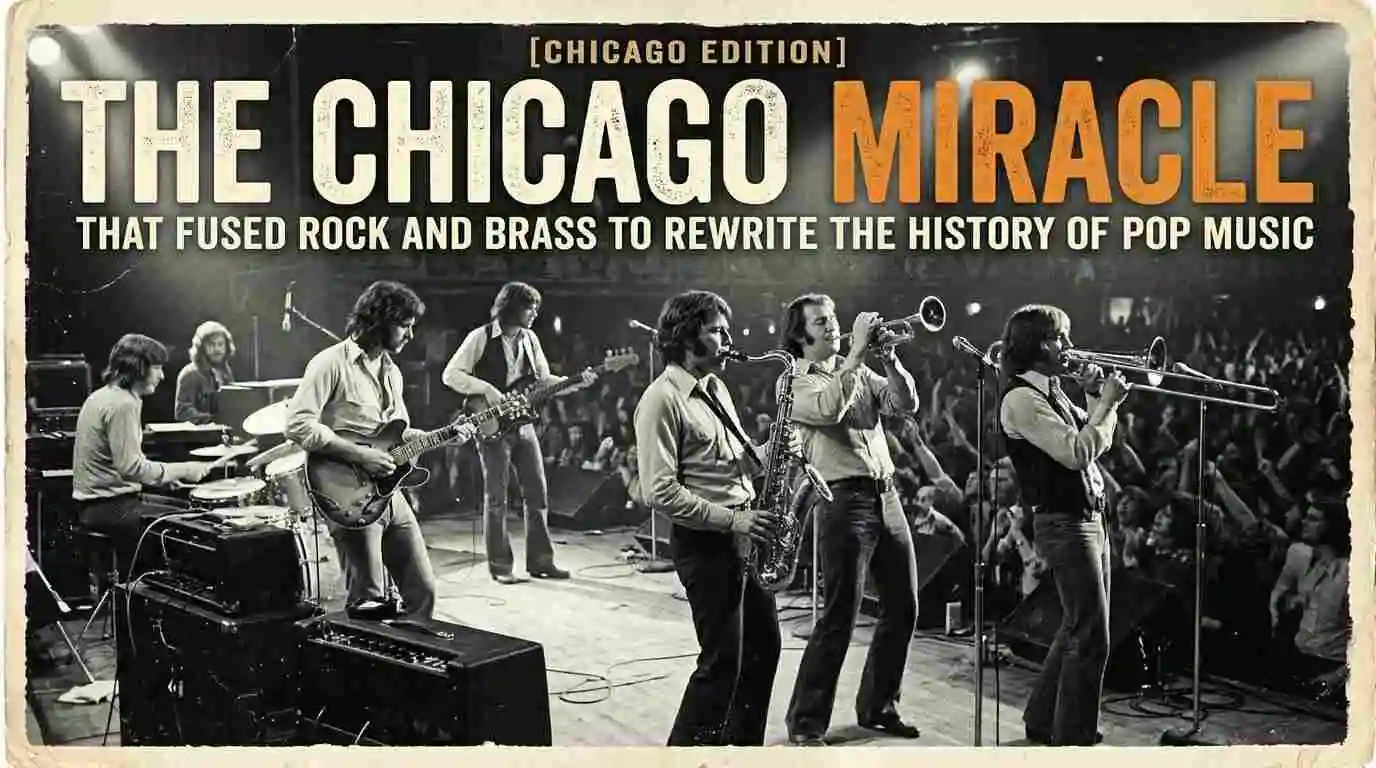
💛The “Miracle of Chicago,” which fused rock and brass to rewrite the history of pop music… Click here!
- 🎧 Enjoy This Article in Audio
- Number 10 is “Harry Truman”
- First, Please Listen to the Official Audio on YouTube.
- The Unsettling Backdrop of the Turbulent Year of 1975
- A Cynical Structure Hidden Behind a Pop Facade
- The Exquisite Position of This Track Within “Chicago VIII”
- Anxiety Toward “Words” That Have Lost Sincerity
- In Closing
🎧 Enjoy This Article in Audio
You can quickly grasp the main points of this article through narration.
Recommended for those who want to catch the vibe of the music and the flow of the article before reading.
🎶 English Narration
An English audio introduction to the contents of this article.
⌛ Duration: Approx. 2 mins 15 secs
🎵 Japanese Narration
A Japanese audio introduction to the contents of this article.
⌛ Duration: Approx. 2 mins 15 secs
* Listening to the audio before reading helps you better understand the world of the music and the main points of the article.
Number 10 is “Harry Truman”
In my personal Top 10 list for Chicago, Number 10 goes to “Harry Truman,” a poignant message song written by Robert Lamm and released on their 1975 album “Chicago VIII.”
This track is far more than mere nostalgia or a simple political critique. Wrapped in the guise of a cheerful pop-rock tune, it sharply questions the honesty and integrity that society was on the verge of losing at the time.
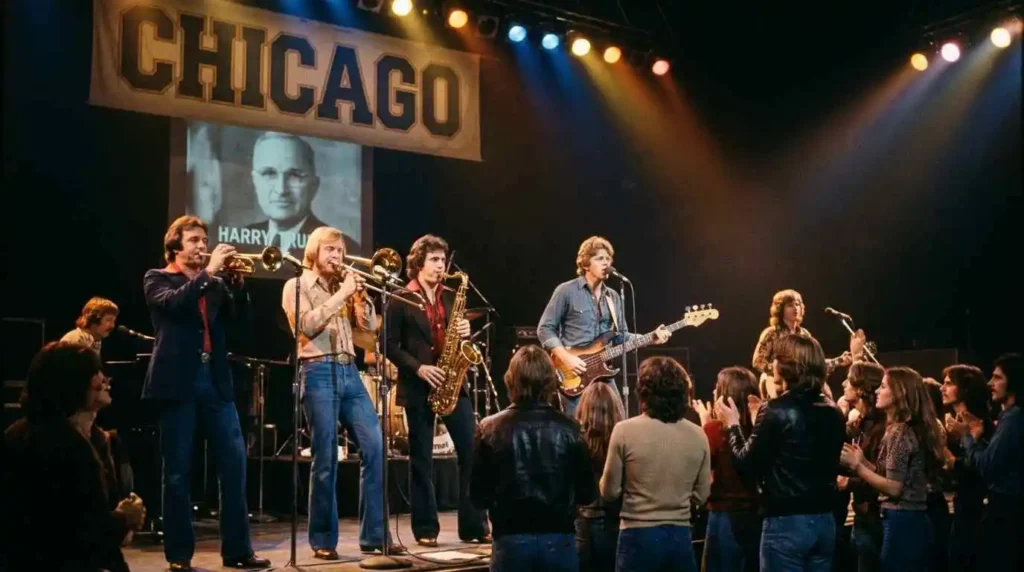
While the song wears the brilliant, flashy armor of brass rock, an underlying cynical and cool-headed perspective runs deep beneath the surface. In this piece, I would like to explore the true charm of this song, focusing on the stark contrast between its bright, upbeat sound and its biting lyrics.
My Personal Translation: The World Within the Lyrics
From a deeply troubled America to our former leader, Harry. Our country has lost its way, and it feels as though we are being sold out to leaders filled with lies and deception. We have acquired safer cars and built rocket ships to Mars, but in exchange, we have lost our genuine integrity. Just like you, who never missed your morning walks, loved the piano, and spoke of things exactly as they were, won't you please come back and awaken the truth in this land once more with your plain and simple words?
First, Please Listen to the Official Audio on YouTube.
Social Satire Hidden Beneath a Brisk Melody
To truly appreciate the lively sound of this track alongside the irony embedded in its lyrics, I have included the official YouTube audio below. Rather than treating it as a visual piece, I recommend first focusing your ears on Robert Lamm’s lead vocals, his driving piano, and the signature, soaring horn arrangements of Chicago.
Credits
Chicago - "Harry Truman"
Written and Composed by: Robert Lamm
Lead Vocals: Robert Lamm
From the Album: "Chicago VIII" (1975)
Produced by: James William Guercio
Label: Columbia Records
Brief Commentary
A rock number with a heavy dose of social satire, featured on the 1975 album "Chicago VIII."
This is not a music video, but the official audio track published on the official Chicago Band channel, provided to YouTube by Rhino, accompanied by a still cover image.
When you listen to the music while sensing the earnest gaze and profound message harbored by the band behind those cheerful brass notes, a completely new layer of depth begins to emerge.
The Unsettling Backdrop of the Turbulent Year of 1975
Let us take a brief look back at the state of America around 1975, the period when this song was sent out into the world.
The nation had just witnessed the historic resignation of President Nixon due to the Watergate scandal, and the Vietnam War was finally drawing to a close. It was an era when public trust in politics was violently shaken, and the country’s national confidence and ethical foundations were deeply wounded.
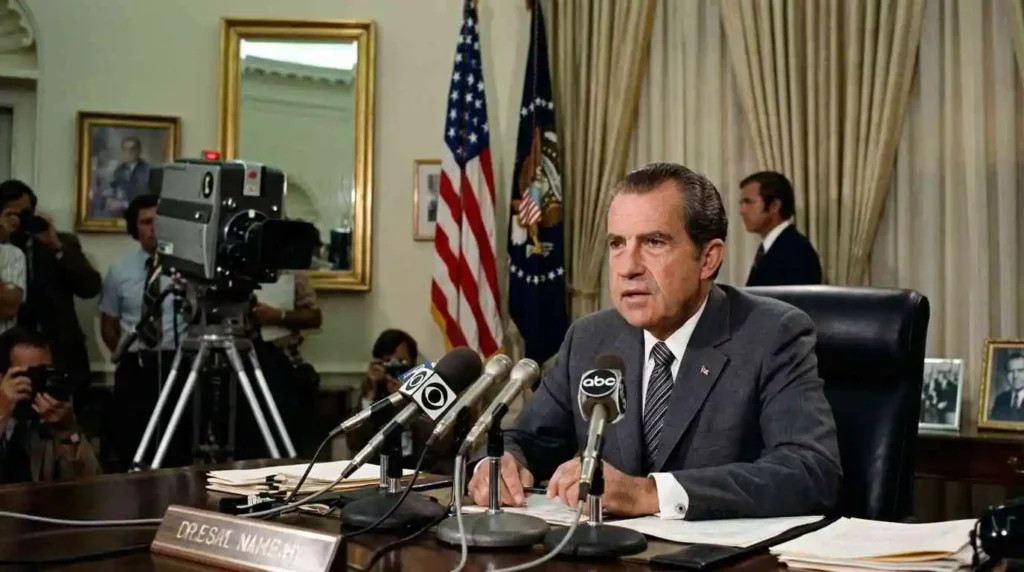
The Watergate scandal was one of the largest political crises in American history, unraveling after a break-in in 1972. Illegal activities and subsequent cover-up attempts surrounding President Nixon’s re-election campaign became major issues, ultimately forcing Nixon to resign in 1974. Following this event, a profound sense of political disillusionment swept through American society, leaving people wondering if they could ever believe the words of their government or president again.
This is exactly why Robert Lamm’s plea in this song, “Harry, could you please come home,” carries a sense of urgency that goes far beyond simple nostalgia.
In a time when faith in politicians had evaporated and deep suspicion gripped society, Robert Lamm summoned the image of the 33rd President, Harry S. Truman. Truman appears in this song not as a flawless, idealized hero, but as an icon of a leader who spoke bluntly and without pretense.
The uncomfortable feeling that core truths are being cast aside behind a facade of beautiful public statements is a theme that resonates deeply. The alarm Robert Lamm sounded in this song is by no means confined to the America of half a century ago.
The Contrast Between Material Wealth and Spiritual Impoverishment
To be completely honest, for someone of my generation, English lyrics don’t always click instantly the moment they hit the ear. I often find myself enjoying the comfort of the melody and the horns first, and it is only later—when I carefully read through the translations and commentaries—that I experience a profound wave of understanding, thinking, “Ah, so that is what they were talking about.”
While looking through the translation of this track, coming across the lines that meant “We’re gettin’ safer cars, rocket ships to Mars,” made me feel as if the dots were suddenly connecting, and it genuinely made me stop and think.
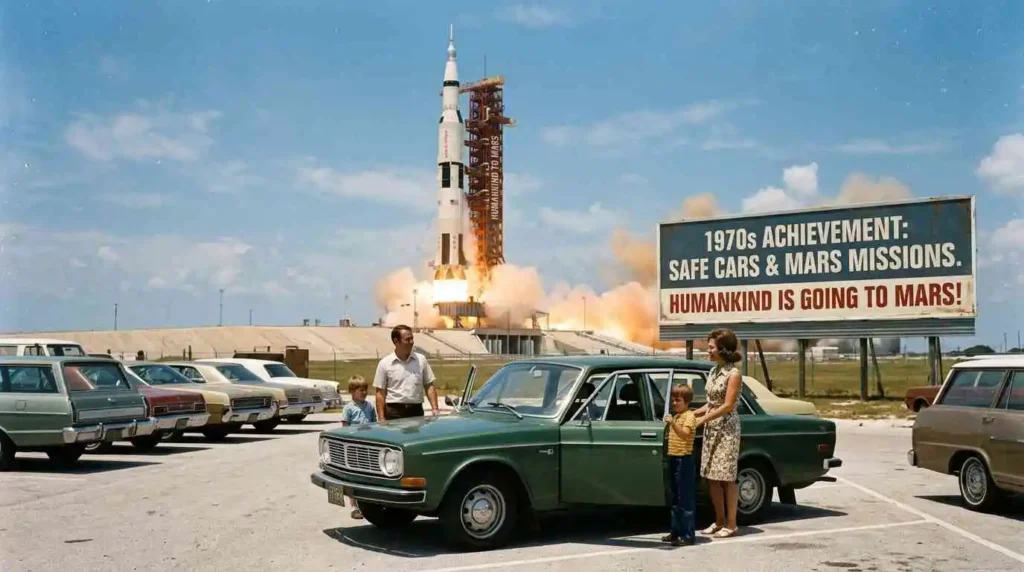
How is it that we can build such a highly convenient society, yet still lose the most vital piece of our humanity: honesty? This verse showcases Robert Lamm’s signature, biting irony, drawing a sharp contrast between material advancement and spiritual emptiness.
- Material Evolution: Safer automobiles, exploration of space, and the refinement of visible infrastructure.
- Spiritual Decay: Individuals merely crowding around power, lies repeated without hesitation, and the hollow nature of words.
Can we not overlay this exact structure onto our contemporary landscape, where digital societies and AI technologies are advancing at a staggering pace?
No matter how much our tools evolve, if the people utilizing them lack genuine integrity, society will easily hollow out from within. Robert Lamm’s perspective has lost none of its sharpness today.
A Cynical Structure Hidden Behind a Pop Facade
The true brilliance of “Harry Truman” lies in the fact that its musical brightness and its harsh lyrics point in completely opposite directions. From the very introduction, Robert Lamm’s bouncing piano and Chicago’s signature, triumphant horn section create an uplifting atmosphere that feels almost celebratory.
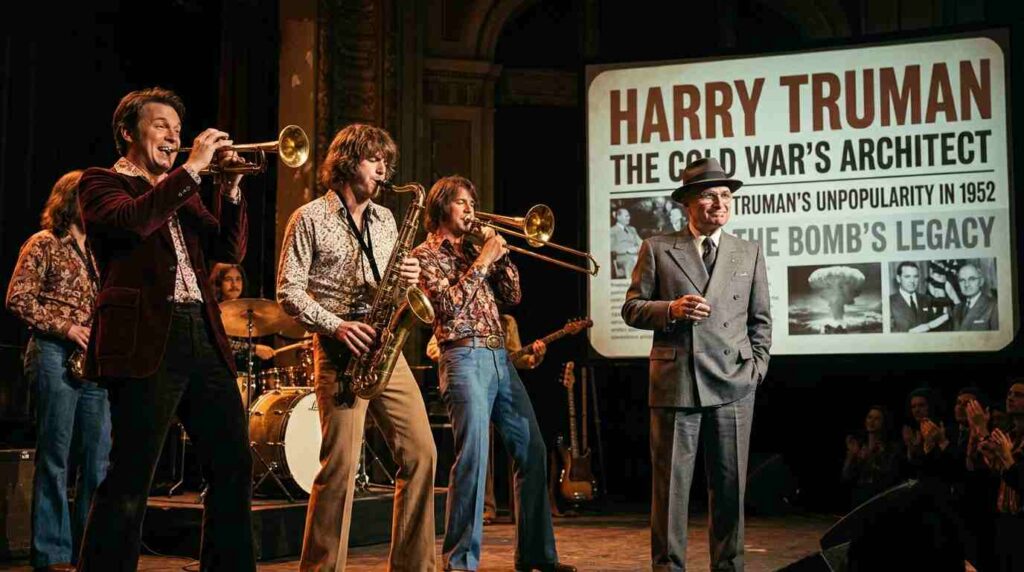
Yet, sung over this lively, up-tempo sound is a narrative of profound political distrust and disillusionment. This massive gap between the bright musical backdrop and the dark reality of the lyrics leaves listeners with a strange, lingering sense of friction.
The very structure of the music serves as a parody of a society putting on a cheerful face and acting as if “everything is just fine.”
Every time I listen to this song, I cannot help but imagine Robert Lamm smiling defiantly. Rather than delivering his anger as a straightforward, aggressive rant, he coats it in the sugar pill of an extremely catchy pop song, ensuring it would be broadcasted daily on radios across America. This is the hallmark of a first-rate artist possessing a truly sharp critical mind.
The Exquisite Position of This Track Within “Chicago VIII”
At this point, I would also like to touch upon the placement of this song within the album “Chicago VIII.”
While their previous effort, “Chicago VII,” was an experimental and ambitious double album that leaned heavily into jazz and fusion, this record marked a turn toward a straight-ahead rock sound, serving as a return to their roots.
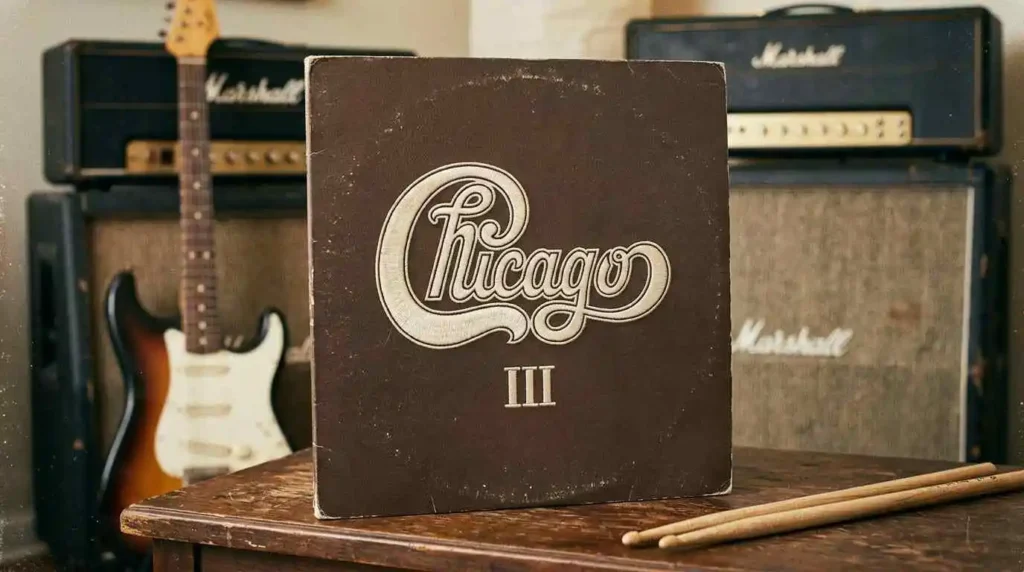
On “Chicago VIII,” which features ten tracks in total, “Harry Truman” is placed as the sixth track—the opening song of Side B on the original vinyl release. Following the high-energy flow of the album’s first half, choosing to position this highly satirical track right after flipping the record over showcases the band’s clever and deliberate sense of curation.
Musically, it is incredibly accessible; the fresh horn arrangements during the bridge and the energetic beat make it sound like a perfectly delightful pop song on the first listen. However, as you let yourself coast along with its refreshing sound, the sharp irony mentioned earlier suddenly rears its head. Catching the listener’s ear off guard right at the start of the album’s second half is a beautiful balancing act that represents the absolute essence of Chicago.
Anxiety Toward “Words” That Have Lost Sincerity
What Robert Lamm desired to convey most through this track was likely less an emotional longing for a specific president, and more a deep yearning for the “honesty to speak of things exactly as they are” that Truman came to represent. In the latter half of the lyrics, Truman’s daily routines are painted with a sense of simple clarity:
- His dedication to walking a mile every single morning.
- His love for playing the piano and his unpretentious personality.
- His tendency to speak plainly, calling a spade a spade.
Setting aside historical evaluations of his political accomplishments or decisions, it was Truman’s raw honesty and his refusal to mince words that the American public so deeply craved at that moment.
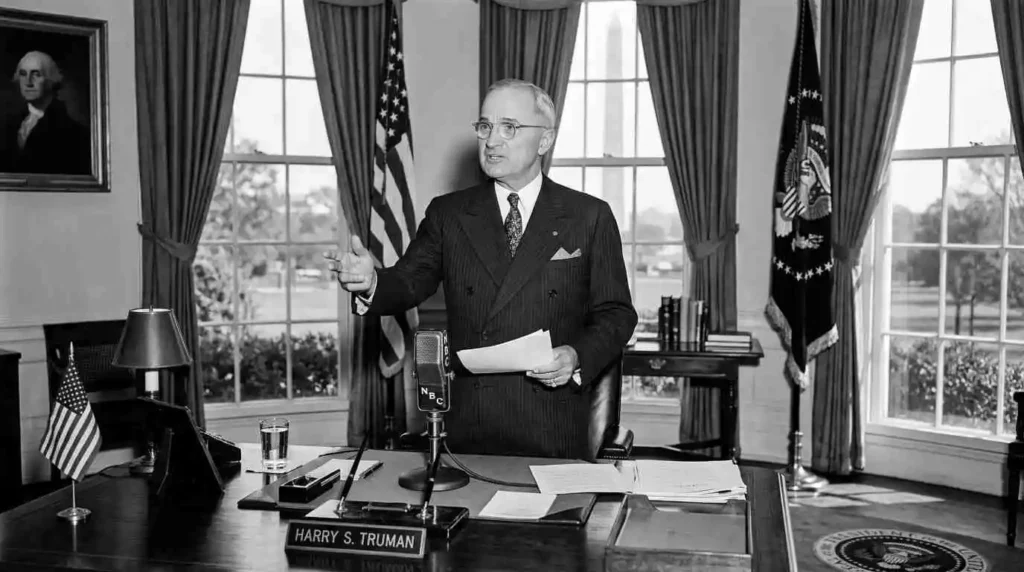
In a world where everyone was clouding their language out of self-preservation and pulling strings behind the scenes to gather power, a past leader who spoke from the same level as ordinary citizens must have seemed incredibly radiant to those weary of dishonesty.
Throughout my own journey within various organizations and society, I have encountered numerous situations where the words that truly moved people were not grand slogans, but simple, straightforward expressions. This is precisely why the raw earnestness Robert Lamm poured into this song resonates so quietly and deeply within me now.
In Closing
While Chicago’s “Harry Truman” was an arrow shot directly at the unique landscape of 1975, it possesses a timeless quality that continues to strike a chord in our hearts even today, half a century later.
No matter how convenient our world becomes, if our trust in words is lost, the very foundations of society will quietly begin to erode. It is because Robert Lamm’s bright piano and Chicago’s brilliant brass section illuminate this fragile reality with such an upbeat tone that the song lingers so powerfully in our minds today.

音楽ファン同士の交流・リクエストはこちら / Connect & Request Songs Here