
- 🎧 Enjoy This Article in Audio
- June 22nd is Cyndi Lauper’s Birthday – The Trajectory of a Brilliant Light
- Today’s Featured Song: Introducing “Time After Time”!
- When I First Heard This Song… ♫
- Breaking Norms with Visual Style and Lifestyle Choices
🎧 Enjoy This Article in Audio
You can quickly grasp the main points of this article through narration.
Recommended for those who want to catch the vibe of the music and the flow of the article before reading.
🎶 English Narration
An English audio introduction to the contents of this article.
⌛ Duration: Approx. 4 mins
🎵 Japanese Narration
A Japanese audio introduction to the contents of this article.
⌛ Duration: Approx. 4 mins
Listening to the audio before reading helps you better understand the world of the music and the main points of the article.
June 22nd is Cyndi Lauper’s Birthday – The Trajectory of a Brilliant Light
A Late-Blooming Pop Icon with a Four-Octave Vocal Range
Born in Brooklyn, New York on June 22, 1953, Cyndi Lauper has etched her name into music history as a unique artist who defies the conventional boundaries of a mere pop star.
Spending her twenties paying her dues and enduring the heartbreak of her band Blue Angel breaking up, she never once gave up on singing. Then, in 1983, she made her solo debut with the album She’s So Unusual, triggering a global Cyndi phenomenon.
Today, I would like to introduce “Time After Time,” a masterpiece I couldn’t cover on her birthday last year.
(By the way, last year’s featured birthday song was “Girls Just Want to Have Fun.”)
Poetic Translation of the Lyrics
Lying in my bed, listening to the clock tick, I think of you.
The spoken words that passed us by, the time we couldn't catch up to, they are still tangled deep in my heart.
If you get lost, just look for me. I will be waiting right where you can find me.
If you fall, I will catch you, time after time.
No matter how many times the seasons turn, my feelings will always find their way back to your side.
Today’s Featured Song: Introducing “Time After Time”!
First, please enjoy the official YouTube music video!
🎧 Official Video Credits
Cyndi Lauper – "Time After Time"
Written by Cyndi Lauper / Rob Hyman
From the Album: She’s So Unusual (1983)
Single Released: 1984
Music Video Director: Edd Griles
Two-Line Review
"Time After Time" stands as one of the finest ballads of 1980s pop, capturing a devotion to reconnecting no matter how far apart or lost two people become. Amidst a flamboyant era, Cyndi Lauper’s vocals chose vulnerability over sheer power, which is exactly why the track leaves such a profound, lasting impact on our hearts today.
Credits
Cyndi Lauper – "Time After Time (Live in Paris)"
Written by Cyndi Lauper / Rob Hyman
Original Album: She’s So Unusual (1983)
Original Producer: Rick Chertoff
Original Single Released: 1984
Video: Official Live Performance via CyndiLauperVEVO
Recorded Live: Paris Concert. Officially titled "Live in Paris."
Two-Line Review
In contrast to the delicate confession of the studio version, Cyndi Lauper’s voice resonates with raw, living energy before the Parisian audience.
The core message of "If you're lost, you will find me" transforms into an even more urgent and profound promise through her live breathing and visible expressions.
When I First Heard This Song… ♫
| When I First Heard This Song… ♫ | |||||||||
| Elem. School | Jr. High | High School | University | 20s | 30s | 40s | 50s | 60s | |
| Song Release | 1983 | ||||||||
| When I Heard It | ● | ||||||||
Back then, I was in my second year as a young professional in my twenties, constantly overwhelmed by daily work.
In the midst of a hectic routine commuting between my workplace and the company bachelor dormitory, the first track by Cyndi Lauper to catch my attention was the previously featured “Girls Just Want to Have Fun.”
It came as quite a pleasant shock! Her wild, uninhibited energy felt incredibly cool and thoroughly refreshing.
Soon after, when I heard “Time After Time” for the first time, the moment the quiet, clean guitar arpeggio of the intro began, it felt as though all the noisy chaos of my daily routine evaporated instantly. In a cityscape overflowing with loud disco beats, her distinctive vocals stood out with remarkable clarity.
While Cyndi Lauper had built a strong reputation for her vibrant hair colors and high-energy bouncing on stage, the poignant yet commanding emotional depth she demonstrated in this track drew me in completely.
Breaking Norms with Visual Style and Lifestyle Choices
Her electric pink and red hair, eccentric layers of vintage clothing, and intensely theatrical stage presence delivered a monumental shock to both the visual and auditory landscapes of the music industry.

By living powerfully and refusing to be bound by social status or conventional gender expectations, she inspired countless women worldwide and remains highly respected as an enduring cultural icon.
The Birth of a Global Masterpiece and Its Stellar Records
Launching as the Second Single
“Time After Time” was released in January 1984 as the second single culled from her debut album, She’s So Unusual.
In stark contrast to the bright, neon energy radiated by her previous smash “Girls Just Want to Have Fun,” this track is a gorgeous, intimately delivered ballad that communicates directly with the listener’s inner emotions.
Climbing the Charts
The single soared straight to number one on the US Billboard Hot 100, securing Cyndi Lauper her very first chart-topping hit. The song went on to achieve massive international commercial success, hitting the top spot in numerous countries including Canada and Chile.
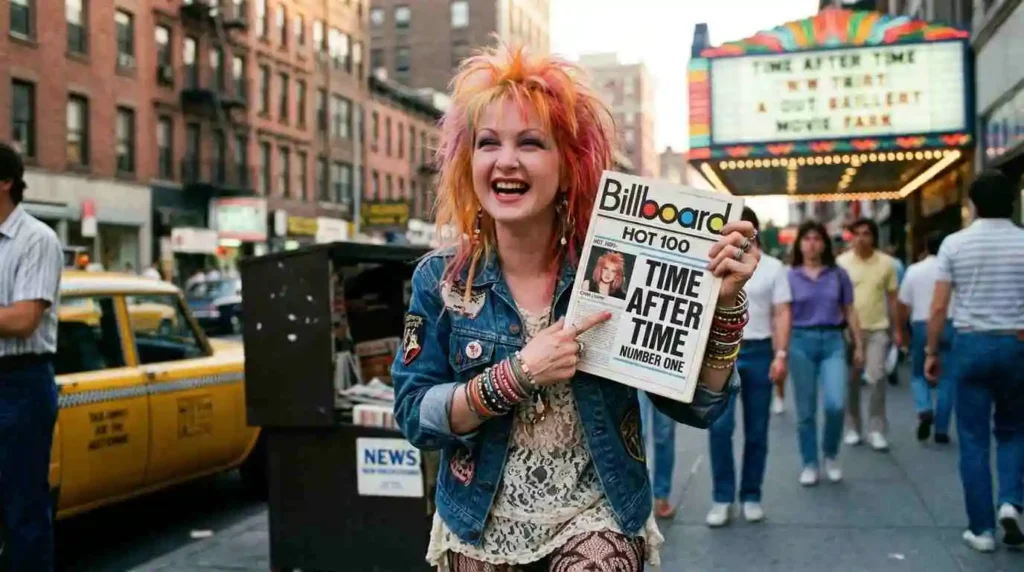
At the 27th Annual Grammy Awards in 1985, it earned a prestigious nomination for “Song of the Year,” firmly establishing Cyndi’s exceptional credibility as a first-rate songwriter.
The Frenzy of the Early 1980s and the MTV Revolution
From “Listening to Music” to “Watching Music”
It is impossible to analyze the musical landscape of the early 1980s without acknowledging the launch of MTV, which triggered the golden age of the music video format.
Musicians suddenly had to offer striking visual identities and cinematic storytelling alongside high-quality audio. Megastars like Michael Jackson and Madonna were dominating the global cultural landscape with cinematic videos around this exact time.
A Beautiful Counter-Statement to a Flamboyant Era
Simultaneously, the charts were saturated with glossy, synth-heavy pop anthems and theatrical hair metal bands. It was an era driven by an insatiable appetite for more glamor, more novelty, and loud, aggressive stimulation.
Operating amidst this chaotic soundscape, “Time After Time” deliberately chose an understated instrumental approach, relying entirely on the strength of its core melody and lyricism to serve as a brilliant counter-statement to the era.
The Authentic Artistry Behind the Flamboyant Persona
A Meticulously Trained Vocal Instrument
Fixating solely on Cyndi Lauper’s eccentric fashion and cartoonish antics makes it easy to completely miss her artistic core. At her foundation lies a meticulously trained vocal capability paired with a profound reverence for musical history.

Growing up listening to iconic artists like The Beatles and Judy Garland, she learned to master her voice as a versatile instrument through deliberate imitation and rigorous practical performance.
Overcoming Despair to Find an Authentic Resonance
During her early years of trying to break into the industry, she severely damaged her vocal cords from overuse, facing a devastating medical diagnosis that she might never be able to sing again.
However, through intense vocal rehabilitation and an overhaul of her singing technique, she reclaimed a stronger, far more emotionally resonant voice. The vocal performance captured on “Time After Time” – seemingly fragile and delicate, yet anchored by an unbreakable core – could only have been forged through surviving such profound hardship.
Behind the Scenes: A Fortuitous Collaboration with Rob Hyman
The Missing Puzzle Piece Needed to Close the Album
As the recording sessions for She’s So Unusual neared completion, producer Rick Chertoff felt the tracklist still lacked an essential, emotionally grounding centerpiece.
He reached out to Rob Hyman, the talented multi-instrumentalist and frontman of the Philadelphia-based rock band The Hooters.
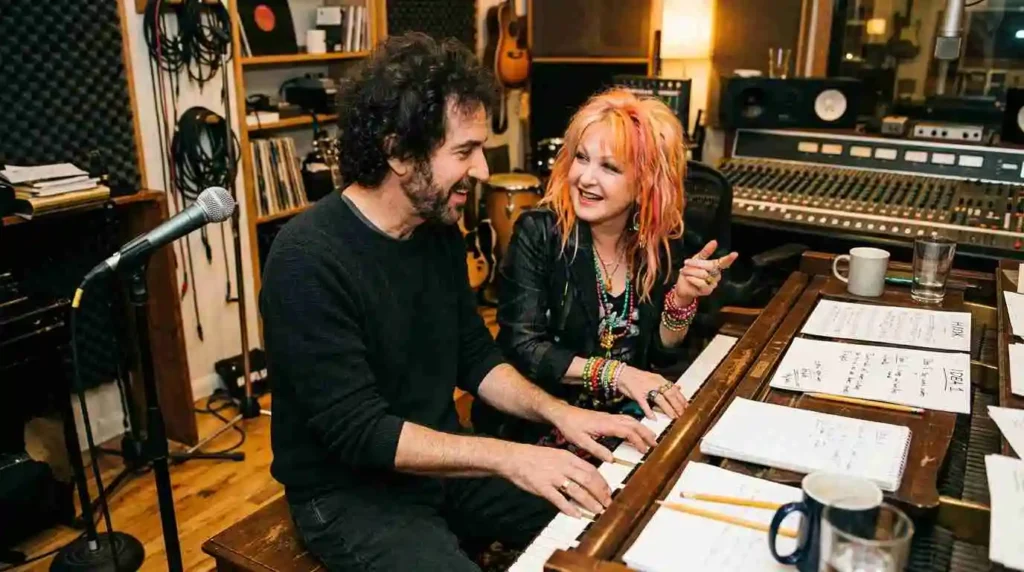
Brought together by Chertoff, Cyndi and Rob sat at a studio piano and began trading musical concepts. This unexpected pairing provided the exact creative spark required to write an immortal pop standard.
Studio Improvisation Sparks Magic
Inspiration Drawn from a Film Title
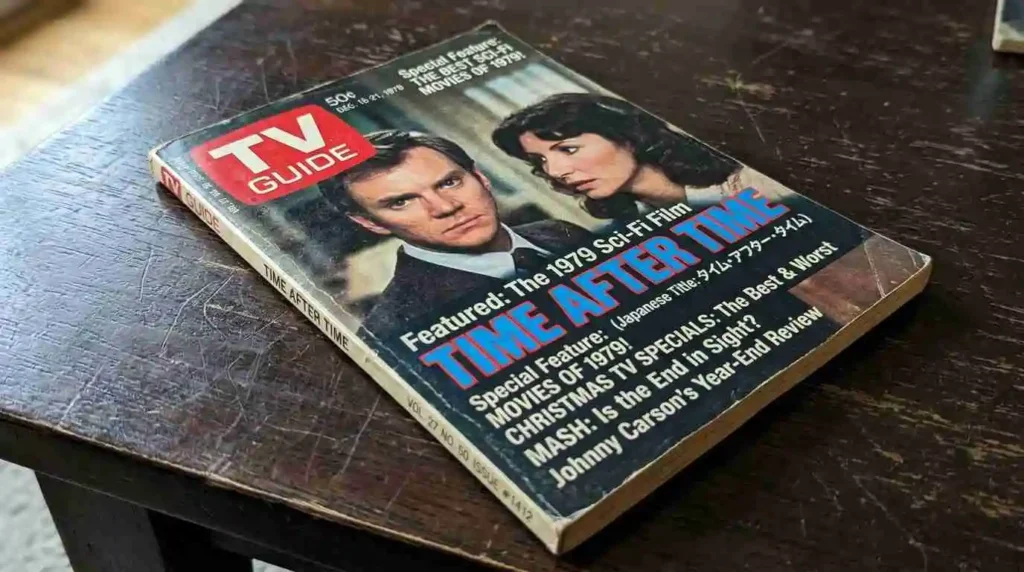
The song’s title was inspired by a listing Cyndi noticed in a TV Guide magazine for the 1979 science fiction movie Time After Time.
A Moment of Total Creative Alignment
As Rob played a rudimentary chord progression on the piano, Cyndi began improvising vocal melodies over it. Through this focused jam session, the fundamental structure of the song came together with astonishing speed.
By bypassing heavy electronic production in favor of an authentic musical dialogue between two artists, the track captured an enduring, timeless vitality.
Anatomy of the Melody and Arrangement: Why It Never Fades
Integrating a Melancholic “Reggae Progression”
The magnetic pull that keeps listeners returning to “Time After Time” lies within its distinctive rhythmic foundation and chord structure.
At its roots, the track actually utilizes a relaxed, reggae-influenced groove. While the rhythmic backbeat keeps the tempo moving forward with an understated lightness, the vocal line layered over it delivers a deeply moving, melancholic pull.

This masterful equilibrium between brightness and sorrow ensures the song never feels overly sentimental, elegantly drawing the listener into an immersive audio environment.
Meticulous Sound Design Focused Entirely on the Lead Vocal
The Clean Guitar Intro
The track opens with a gentle, crystal-clear guitar arpeggio that deliberately avoids heavy digital processing. This unpretentious, down-to-earth tone immediately welcomes the listener into an intimate, private listening space.
Sophisticated Placement of Synthesizers
Rejecting the abrasive, high-volume synthesizer textures popular at the time, this arrangement uses synths solely as a warm, subtle background pad. Every instrument maintains a flawless spatial balance, ensuring Cyndi’s lead vocals shine with absolute clarity right at the forefront.
Grounded Lyrics and a Universal Narrative
A Quiet Tale Beginning with a Ticking Clock
The lyricism opens with an incredibly vivid scene: “Lying in bed, I hear the clock tick and think of you.”

This grounding device makes listeners feel as though they are standing right inside that quiet bedroom. Rather than leaning on vague romantic cliches, the track captures an everyday human moment, constructing a highly relatable narrative world.
The Tension Formed by Miscommunication and Passing Time
Time Slipping Away
The song wisely avoids portraying a flawless relationship. Lines regarding “spoken words” flashing past and slipping out of sync point to real undercurrents of miscommunication and the emotional exhaustion of trying to match each other’s pace.
An Unbreakable Core Connection
Yet, the fundamental connection between them remains intact. The track perfectly articulates the emotional distance that inevitably occurs between flawed human beings, alongside the earnest determination required to bridge that gap.

An Unwavering Vow to Always Reconnect
If You Are Lost
The reassuring chorus, “If you’re lost you can look and you will find me,” is far more than a simple platitude.

A Anchor for Vulnerable Moments
Coupled with the line “If you fall I will catch you,” this lyric acts as an unconditional promise to stand by someone and accept them completely, enduring across any span of time.
This core theme of total emotional safety is precisely why the song continues to resonate deeply with audiences across generations and cultural borders.
A Historical Musical Legacy and Its Expansive Influence
An Endless Array of Genre-Defying Covers
The definitive proof of the song’s brilliance is the staggering volume of diverse artists who have chosen to record it from the moment it debuted right up to the modern era.
Most notably, the iconic jazz pioneer Miles Davis recorded a legendary instrumental cover. Deeply moved by the striking beauty of the melody, he utilized his trumpet to convey a vocabulary of raw emotion, turning the song into an essential highlight of his live sets during his later career phase.

Furthermore, musicians spanning R&B, country, acoustic pop, and punk rock have constantly reinvented the track through their own creative perspectives.
This widespread adoption stands as undeniable proof of just how structurally sound and melodic the underlying composition truly is.
An Enduring Songbook Standard Connecting Eras
The 1980s was a rapid, highly commercialized era of pop culture consumption. Yet, the music written in that storm managed to outlive the short-lived nature of standard pop charts.
Over four decades since its debut, the track’s streaming numbers continue to surge, introducing her work to entirely new audiences daily.
Ultimately, it stands as validation of the moment Cyndi Lauper successfully distilled her deep human empathy and an immortal promise down into a perfect four-minute pop arrangement.


音楽ファン同士の交流・リクエストはこちら / Connect & Request Songs Here