June 5th marks the birthday of Ann Lewis, a legendary diva who left an indelible and vibrant mark on the Japanese pop and rock scene.
Born in Kobe, Hyogo Prefecture in 1956 and raised in Honmoku, Yokohama, near the U.S. military base, she made her debut in the 1970s. She eventually underwent a stunning transformation from a pop idol into a full-fledged rock singer, constantly leading the trends of the era. Her glamorous, aggressive fashion sense and her uniquely powerful, piercing high-tone voice continue to captivate countless listeners to this day.
A Masterpiece That Solidified “Kayou Rock”
Out of her numerous masterpieces, the track we are spotlighting today is her 27th single, “Ah, Mujou” (あゝ無情), released on April 21, 1986.
Following the massive success of her earlier hit “Roppongi Shinju,” this track completely solidified the newly established genre of “Kayou Rock” (a fusion of traditional Japanese pop melody and hard rock) and absolutely dominated the charts of the era.
A Long-Selling Hit That Shook the Music Scene
Peaking at No. 21 on the Oricon Weekly Singles Chart, the song achieved incredible longevity. Thanks to its long-running sales, it became a staple on cable radio and major weekly TV countdown shows, establishing itself as a massive mega-hit that everyone in Japan knew.
An English Interpretation
On the surface, she looks beautiful and sweet, but in reality, she is freer than anyone else, gliding effortlessly through the neon-lit city at night.
Men fall head over heels for her, yet she will never belong to any single person.
Embracing her inner strength, her charm, and her playful cunning, she knows exactly how to utilize her allure.
In short, this is a song about a passionate, cool, and devoted woman who, despite being hurt by a deceptive man, refuses to show weakness and chooses to live fiercely in the urban nightlife.
First, Please Take a Look at the Official YouTube Videos.
Credits
Vocal: Ann Lewis
Track: Ah, Mujou
Lyrics: Reiko Yukawa
Composition: NOBODY
Arrangement: Jun Sato
Album: "WOMANISM II 〜ZEN・KYOKU・SHOO 1985-1991〜"
Channel: ANN LEWIS Official Channel
2-Line Commentary
This is the official audio track of Ann Lewis's signature song "Ah, Mujou" published on her official channel.
It perfectly encapsulates her mid-1980s style, fusing a sharp rock edge with an incredibly catchy pop melody.
Next up is a live television performance. The choreography definitely shows its age, but her explosive energy is simply outstanding. And honestly, Ann Lewis is just incredibly cute here! !(双)
CreditsVocal: Ann Lewis
Track: Ah, Mujou
Footage: Broadcasted on May 25, 1986, on "Quiz Doremi Fasolladon!" 500th Episode Special: Kenji Sawada Superfan Event
Channel: ANN LEWIS Official Channel (YouTube Official)2-Line Commentary
An official archive video showcasing Ann Lewis performing her signature hit "Ah, Mujou" on a 1986 television show. Her fierce rock-infused vocals and commanding stage presence beautifully highlight her peak 1980s charisma.
When I First Heard This Song
My Age
Elementary
Junior High
High School
University
20s
30s
40s
50s
60s+
Release Year
1986
When I Listened
●
I believe I first encountered this song right around its release. It must have been on one of the popular music variety programs I used to watch back then, though the exact moment isn’t perfectly clear in my memory.
However, there was an unforgettable event that instantly made me hyper-aware of her artistry. It was the legendary musical broadcast titled MERRY X’MAS SHOW ’86, aired on NTV on December 24, 1986.
I watched an incredible, star-studded line-up featuring BOØWY, THE ALFEE, Koji Kikkawa, Ann Lewis, and Keisuke Kuwata joining forces to perform a cover of T. Rex‘s classic track, “TELEGRAM SAM”.
This particular song happens to be a personal favorite of mine. While the original mastermind Marc Bolan possessed an incredibly wild and eccentric vibe, this gathering of Japanese rock giants went completely unhinged on stage. I was entirely blown away by how genuinely cool it was. Standing right in the thick of that chaotic energy was Ann Lewis, matching them stride for stride. Seeing her perform, I felt an instant, deep connection, thinking, “Wow, she is the real deal. She genuinely does rock!”
Fast forward about ten years later: for an after-party entertainment segment following a corporate meeting, I found myself intensely practicing the dance routines and a parody version of “Ah, Mujou” for an entire month.
Even now, the pure enthusiasm of that period remains vividly etched into my mind as a cherished memory. By the way, the rewritten parody lyrics were so incredibly scandalous that they fall firmly into the “banned from publication” category!
Pardon my long digression, but this track holds a truly special and multifaceted significance for me. Re-watching the archival videos while preparing this post, I was struck all over again by just how astonishingly gorgeous and charismatic Ann Lewis was.
The 1986 Frenzy and the Perfect Formula Behind “Ah, Mujou”
The Turbulent Eve of the Bubble Economy and Disco Culture
The year 1986, when “Ah, Mujou” hit the airwaves, sat precisely at the threshold of the historic “Bubble Economy,” an era that would drive Japan’s financial and cultural landscapes into unprecedented levels of excitement.
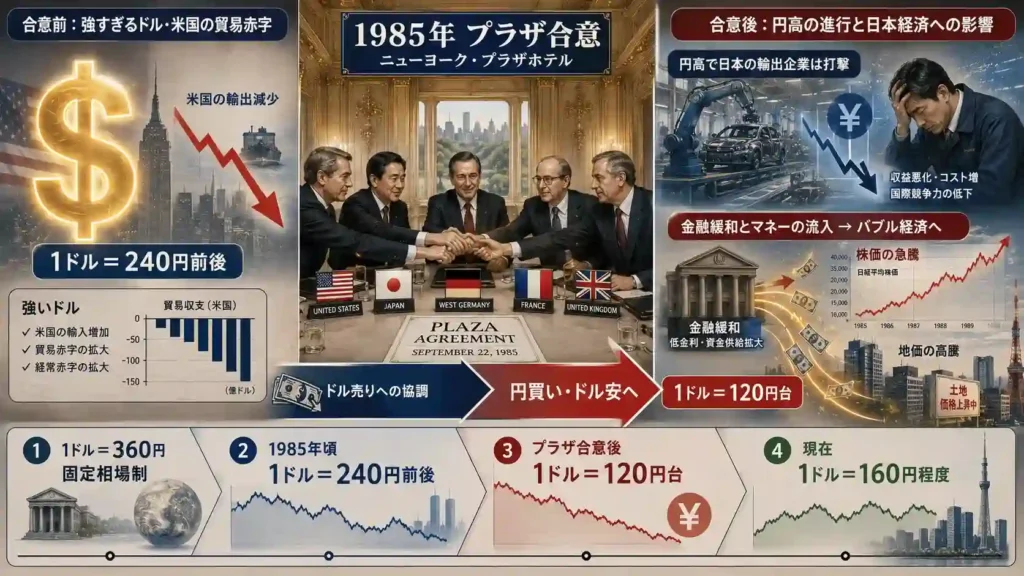
Triggered by the historic Plaza Accord (※) signed in 1985, the domestic market plunged into a rapid yen appreciation and an overnight economic boom. The streets quickly filled with vibrant neon lights and extravagant consumer entertainment.
Western Beats Synchronized with Wild Nights
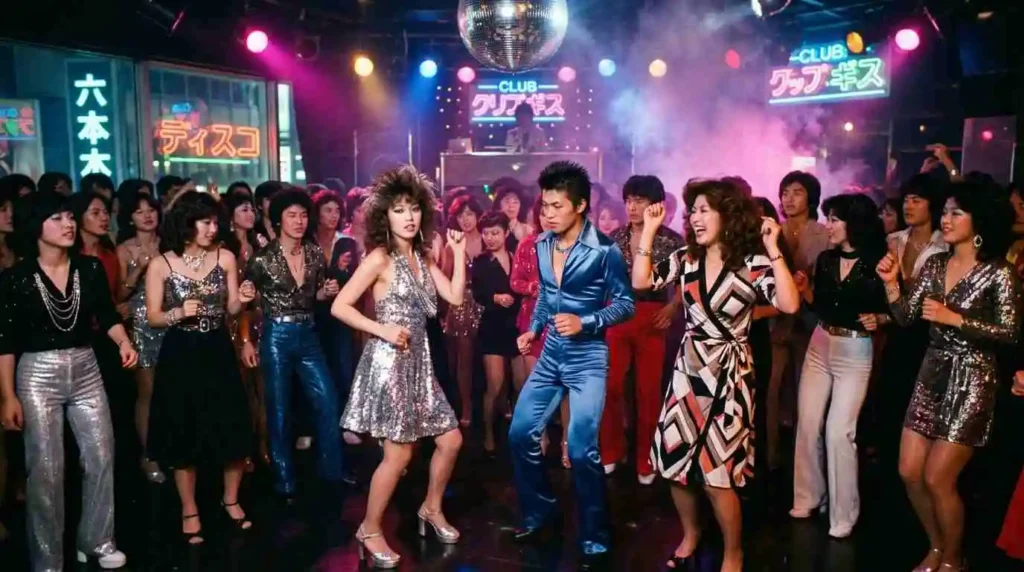
Nightlife in Tokyo was heavily defined by an explosive disco culture. Centers like Roppongi and Shinjuku became magnets for youth dressed in flashy outfits, dancing late into the night. This high-octane lifestyle became the definitive urban trend.
Up until then, Japanese music charts were largely populated by safe, clean pop idols, emotional Enka, or folk-infused New Music. However, this era marked a dramatic shift; the public began demanding something far more energetic—specifically, music that integrated Western-style dance beats with aggressive rock sensibilities.
The “Kayou Rock” sound presented by Ann Lewis aligned perfectly with this hyper-charged social landscape. It beautifully packaged the glittering, slightly decadent, yet incredibly exhilarating atmosphere of metropolitan nightlife into an accessible pop format, offering exactly the kind of thrill the public was craving.
The Sonic Wizardry of Reiko Yukawa and NOBODY
The driving force behind the immense energy of “Ah, Mujou” lies within its powerhouse creative team: lyricist Reiko Yukawa, the composing duo NOBODY, and arranger Jun Sato.
An Unforgettable, High-Octane Guitar Riff
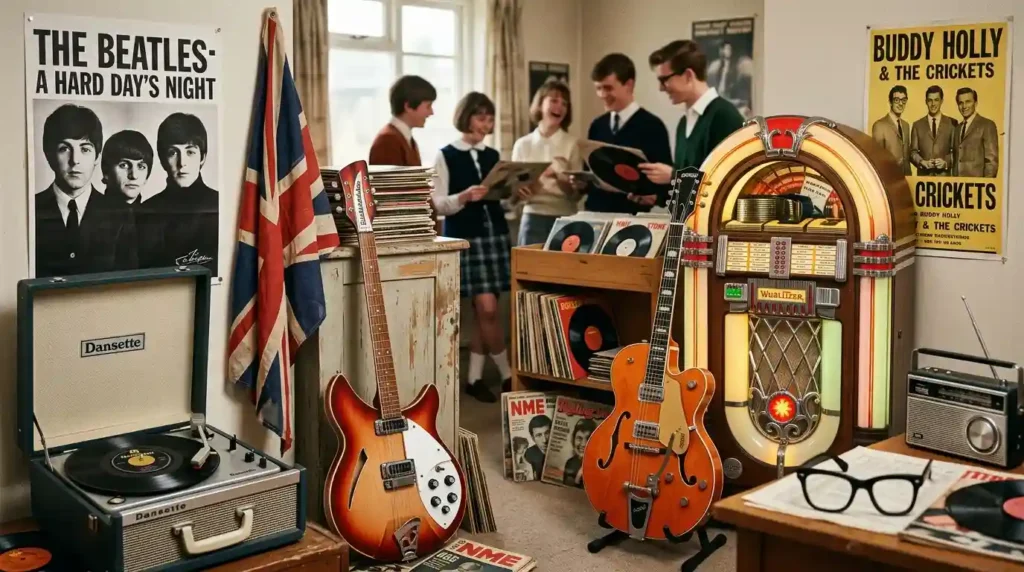
The melody crafted by NOBODY masterfully drew inspiration from 1950s and 1960s British rock and American pop, turning those elements into an instantly memorable signature riff.
The immediate blast of aggressive guitars right from the intro, combined with a heavy, driving bassline and sharp, futuristic synthesizer accents, instantly transports the listener into the heart of a nighttime metropolis. While the vocal line retains the expressive, melancholic melody characteristic of traditional Japanese pop, the underlying rhythm is pure, hard-driven rock.
Lyrics That Map Out an Adult Psychological Game
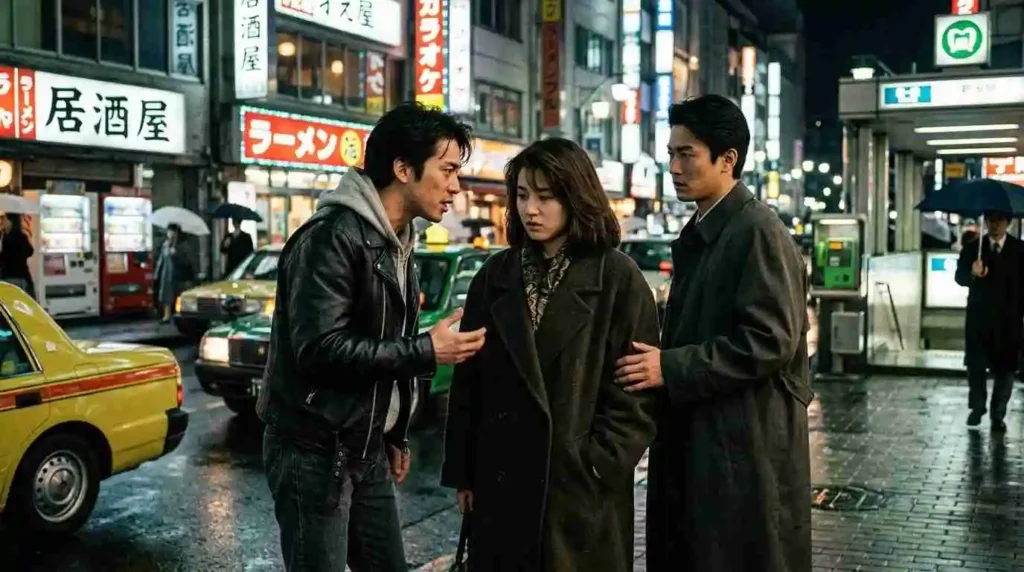
Breathing life into this razor-sharp arrangement are the striking lyrics written by Reiko Yukawa. The world she designs avoids cliché, innocent romance; instead, she focuses on the tense, emotionally raw push-and-pull between mature men and women navigating the city after dark.
The narrative outlines the intricate, passionate mind of a woman who puts up an intensely strong front while struggling to hide her true vulnerability.
She boldly calls herself a “glamorous, fine woman,” yet admits she is the type to “give her all once committed,” even as she dismisses her lover with the line, “men are so deceitful.” This stern yet deeply endearing perspective, coupled with the underlying loneliness, creates a highly theatrical dynamic when set against the fierce rhythm.
Furthermore, lines such as “I have a weakness for him because beneath his sunglasses, he has eyes so innocent it almost makes me laugh” reveal a multifaceted character—showing that she isn’t just aggressive, but possesses a deeply maternal, affectionate side. Even when talking about using extreme measures like “putting him in handcuffs” to stop his unfaithfulness, she ultimately notes she is entirely defeated by how “expertly he acts spoiled,” adding a wonderful touch of humor and human realism to the song.
The emotional peak arrives during the climax, where she introduces a massive timeline, declaring her devotion “for the next 1000 years” to reveal her absolute, unfiltered desire. This fearless, incredibly direct expression of raw emotion gains absolute, undeniable conviction simply because it is delivered by a powerhouse vocalist like Ann Lewis.
Breaking the Mold: A New Frontier and Everlasting Influence
A Stunning Transformation from Pop Idol to Rock Royalty
Ann Lewis didn’t start her career with this fierce, older-sister rock persona. When she debuted in 1971, the industry heavily marketed her as a sweet, pure pop idol, focusing on her charming, bicultural visual background.
With the monumental success of her 1974 classic ballad “Good-by My Love,” she firmly established herself as an exceptionally talented, emotionally resonant vocalist.
A Pioneering Identity Born from Total Self-Production
Yet, her genuine musical ambitions lay in a completely different direction. Possessing a profound personal love for Western hard rock, punk, and new wave, she chose to aggressively overhaul her musical direction as the 1980s began.
Taking complete creative control, she personally styled her own stage outfits, wore incredibly bold makeup, adopted radical hairstyles, and fronted heavy rock bands while delivering intense vocal performances. This level of autonomy was practically unheard of and immensely risky in the mainstream Japanese music scene of the era.
In 1982, she collaborated with Ryudo Uzaki and Momoe Yamaguchi for the standout track “La Saison,” and by 1984, her new creative path erupted into mainstream dominance with the mega-hit “Roppongi Shinju.”
With that unstoppable momentum, she dropped “Ah, Mujou” at the absolute perfect moment. Her voice offered far more than just a rich, gritty texture; it carried an incredible high-register clarity paired with a distinctly coquettish allure. This precise, magical balance served as the engine that transformed a heavy, driving rock track into a universally beloved pop masterpiece.
To contemporary women, her striking appearance and unapologetic attitude made her an icon—a strong, self-reliant individual who refused to compromise for male validation, earning her immense admiration from female fans. She effectively mobilized a cultural shift, using her music to map out a completely new path for women as the country transitioned from the Showa to the Heisei era.
Timeless Performance and Its Legacy in Modern Dance Music
The intense energy radiating from “Ah, Mujou” was never destined to fade away as a mere relic of 1986. Moving effortlessly through the 1990s, the 2000s, and straight into the current Reiwa era, the track has been covered by an endless array of artists, solidifying its place deep within the DNA of Japanese pop history.
A Pure, Organic Groove Inspiring Modern Creators
Amidst the massive global renaissance surrounding “City Pop” and vintage “Showa-era pop,” Ann Lewis’s catalog commands an entirely unique level of respect.
The massive, intricate soundscapes achieved via peak 1980s Japanese analog recording techniques, coupled with an uncompromised, incredibly funky groove, sound entirely fresh today. In fact, compared to modern, highly digitalized pop, the rich dynamics of live instrumentation and her raw vocal power deliver a spectacular, refreshing jolt to younger generations of producers and music fans.
It remains a rhythm designed to move dance floors, beautifully balanced by an aching, unforgettable melody and the masterful wordplay of Reiko Yukawa.
Fusing these elements into a seamless whole, “Ah, Mujou” stands as a definitive pinnacle of Japanese Kayou Rock. In celebration of her birthday on June 5th, it feels incredibly fitting to fire up this ultimate rock anthem at maximum volume, letting yourself be carried back to the electrifying energy of Tokyo’s 1980s nightlife.
※ Context: What Was the Plaza Accord?
Signed on September 22, 1985, the Plaza Accord was a historic international financial agreement reached by the world’s five leading economies (the G5: the United States, Japan, West Germany, France, and the United Kingdom) at the Plaza Hotel in New York City, aimed at systematically depreciating the U.S. dollar.
At the time, the value of the U.S. dollar was unsustainably high, making American manufacturing uncompetitive abroad and generating a severe trade deficit for the United States. In response, these five nations agreed to intervene in the currency markets by collectively selling dollars and purchasing Japanese yen and German marks, effectively steering the global economy toward a weaker dollar and a stronger yen.
The resulting impact on the Japanese economy was monumental, causing the yen to skyrocket almost instantly. The exchange rate, which had hovered around 240 yen per dollar, surged rapidly down to the 120 yen range, dealing an immediate, severe blow to Japan’s export-reliant industries.
To protect the domestic market from an economic slowdown caused by this sudden currency shift, the Japanese government and the Bank of Japan instituted aggressive monetary easing policies. This led to a massive influx of surplus capital flooding straight into real estate and the stock market, serving as the definitive catalyst that ignited the legendary Bubble Economy of the late 1980s.
Now, roughly 40 years later, the exchange rate fluctuates around 160 yen per dollar. While many today feel the economic pressure of inflation driven by a weaker yen, looking back at the era when a dollar cost 240 yen reminds us that the current rate is still significantly stronger than it was back then.
As a point of reference, during the era when I was born, the global financial system operated under a gold standard where the exchange rate was strictly fixed at 360 yen per dollar (a system that effectively ended with the Nixon Shock in 1971 when the U.S. suspended the convertibility of dollars into gold). Reflecting on the fact that it once required a staggering 360 yen just to acquire a single U.S. dollar fills me with a profound sense of awe and perspective today.
30
音楽ファン同士の交流・リクエストはこちら / Connect & Request Songs Here












音楽ファン同士の交流・リクエストはこちら / Connect & Request Songs Here