
~ The Aesthetic of Luxurious Solitude Hidden Within Crafted Clumsiness ~
Click here for Yosui Inoue’s History!
- 🎧 Enjoy This Article in Audio
- Introduction
- No. 30 is “Dansu wa Umaku Odorenai” (I Can’t Dance Well)
- First, Please Listen to the YouTube Video
- Two Arrangements Spinning Different “Colors of the Night”
- Deep Nuance and Dimension Brought by Stripped-Down Words
- Conclusion: An Endless Labyrinth Beginning with No. 30
🎧 Enjoy This Article in Audio
You can quickly grasp the main points of this article through narration.
Recommended for those who want to catch the vibe of the music and the flow of the article before reading.
🎶 English Narration
An English audio introduction to the contents of this article.
⌛ Duration: Approx. 2 mins 30 secs
🎵 Japanese Narration
A Japanese audio introduction to the contents of this article.
⌛ Duration: Approx. 3 mins 30 secs
* Listening to the audio before reading helps you better understand the world of the music and the main points of the article.
Introduction
From this post, I am excited to launch a brand-new series: “My Personal Best 30: Yosui Inoue Edition.”
Yosui Inoue is a true giant who defined the “before and after” of Japanese popular music history, single-handedly expanding the horizon of phonetic resonance and poetic sentiment inherent in the Japanese language.
The numerous words and melodies he has spun over the decades go far beyond mere masterpieces; they continue to exert a profound and definitive influence on the very core of my musical worldview and aesthetic sensibilities.
I invite you to join me for a short while on this 30-part journey as I unravel his intricate and multi-layered musical labyrinth from my own perspective.

No. 30 is “Dansu wa Umaku Odorenai” (I Can’t Dance Well)
When you listen to music over many years, you sometimes find yourself wandering into a blissful labyrinth, wondering, “Which version is the original, and which captures the true essence?”
Among the vast body of work created by the rare genius Yosui Inoue, “Dansu wa Umaku Odorenai”—originally provided in 1977 to Seri Ishikawa, who would later become his wife, and subsequently becoming a massive hit when he self-covered it on his 1984 album *9.5 Carats*—stands as a prime example of such a labyrinth.
Its reputation as a sophisticated, languid, and beautifully melancholic ballad that transcends the traditional boundaries of Japanese pop music remains entirely undiminished to this day.
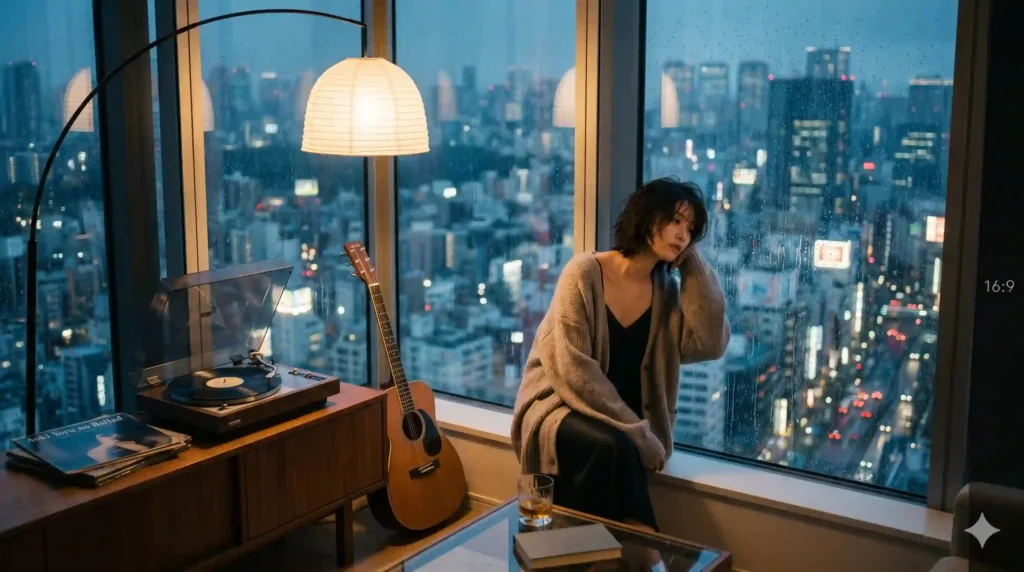
In compiling this Yosui Inoue Best 30 series, I agonized over which song should mark the monumental opening. Several candidates crossed my mind, but ultimately, I settled on this particular track.
This is because I felt that the artist Yosui Inoue’s sensibilities manifest themselves most vividly within a song born from such an intimate distance—written for the woman who would become his lifelong partner, and later reclaimed through his own self-cover.
For me, this song transcends being a mere masterpiece; it possesses a unique magnetic pull, as if gently dropping a stylus onto the memories of the uncertain yet incredibly free days I spent in a quiet corner of Tokyo.
(Though to be completely honest, I actually have a slight preference for Seri Ishikawa’s version).
A Poetic Interpretation of the Lyrics
It is not that I am merely clumsy at dancing; rather, I simply cannot find a place to rest my heart.
Though I long to draw closer to love, a sense of solitude and hesitation causes my body to freeze awkwardly.
The dreams, the summer night, the starlight, the dress—everything is exquisitely beautiful, yet I alone feel left behind.
Even so, just for tonight, I want to try dancing by someone's side, remaining just as awkward as I am.
First, Please Listen to the YouTube Video
Please click the image below.

(*Please note: Currently, the vast majority of Yosui Inoue’s audio sources available on the internet are not official uploads. Therefore, out of respect for copyright considerations, this blog avoids direct video embedding for his version, opting instead to link to the external site via an independently prepared image.)
Credits
Track Title: Dansu wa Umaku Odorenai (I Can't Dance Well)
Vocal: Yosui Inoue
Lyrics & Composition: Yosui Inoue
Arrangement: Joe Hisaishi
Album: 9.5 Carats
Album Release Date: December 21, 1984
Two-Line Commentary
"Dansu wa Umaku Odorenai" is a deeply introspective piece characteristic of Yosui Inoue, portraying the clumsiness of being unable to dance as a delicate, trembling manifestation of romance and solitude. Joe Hisaishi's arrangement infuses a sophisticated, luxurious sense of space and depth into this very awkwardness, beautifully highlighting the quiet sorrow of a mature soul.
Next is the Seri Ishikawa version. This is an official video.
Credits
Track Title: Dansu wa Umaku Odorenai (I Can't Dance Well)
Vocal: Seri Ishikawa
Lyrics & Composition: Yosui Inoue
Arrangement: Makoto Yano
Original Release: 1977 Single
Included in: "Golden☆Best Seri Ishikawa Singles & More"
Label: Universal Music Group / USM JAPAN
Two-Line Commentary
Seri Ishikawa's rendition of "Dansu wa Umaku Odorenai" is a sophisticated urban ballad that transforms the clumsiness of being unable to dance into a delicate air of romantic hesitation and solitude. Her languid, fragile vocals beautifully envelop Yosui Inoue's words and melody, casting a striking silhouette of mature loneliness sinking into the stillness of the night.
A Flawless Gown Named “Clumsiness”
True to its title, the protagonist of this song murmurs, “I can’t dance well.”
Yet, the world painted by the song is neither crude nor unpolished. On the contrary, it possesses an extremely sophisticated, somewhat urban, and cool texture.
Social rules, organizational logic, and the intricate steps of human relationships—there was an era when it was believed that matching the tempo of one’s surroundings and stepping flawlessly and fluidly was the ultimate virtue.
When caught in the midst of that vortex, I think there was a certain obsession that made people feel as though even pausing for a moment was completely forbidden.
The state of “not being able to dance well” depicted here is by no means a defeat or a failure. Rather, it feels like a special privilege reserved for luxuriously savoring one’s own solitude, stepping away from the surrounding clamor.
The image of the protagonist wearing white shoes and swaying all alone inside a room, treating a nightgown as if it were a beautiful dress, represents a supreme state of self-contained completion that entirely shuts out the gaze of others.

Yosui’s vocals do not drench this solitude in excessive sentimentality. Instead, he places his words with a somewhat detached, matter-of-fact tone.
Two Arrangements Spinning Different “Colors of the Night”
When discussing this musical piece, one absolute highlight that cannot be overlooked is the dramatic difference in the arrangement between the original version and the self-cover version.
Even when the melody and lyrics remain identical, it brings a fresh sense of wonder every single time, demonstrating how completely the landscape can transform depending on the clothes a song wears.
A Contrast Between the Original and Self-Cover Versions
1977: Seri Ishikawa × Makoto Yano – A “Languid Sense of Floating”
The arrangement for Seri Ishikawa’s 1977 original version was crafted by music producer Makoto Yano.
The sound here is characterized by a languid rhythm with a distinct sense of floating, boldly incorporating elements of reggae and ska, which were beginning to trend at the time.
Over a steady groove carved out by the bassline, Seri Ishikawa’s languid voice glides effortlessly.
It carries a unique comfort, akin to being brushed by a lukewarm night breeze drifting through a screen window on a humid summer night.

1984: Yosui Inoue × Joe Hisaishi – A “Hard and Abstract Night”
On the other hand, the arrangement for Yosui’s own 1984 version (featured on the album *9.5 Carats*) was handled by Joe Hisaishi, who would later become a world-renowned maestro of film scores.
This version is built upon a sophisticated, yet somewhat hard and cold digital sound characteristic of the 1980s.
In contrast to Yano’s arrangement, which exudes a raw, physical presence, Hisaishi’s arrangement possesses an artificial, perfectly controlled beauty, akin to an urban boutique showroom window.
Yosui deliberately refrains from projecting his voice within this chilly soundscape, singing instead in a near-whisper. This “low temperature” is precisely what pierces the listener’s heart.
If Seri Ishikawa’s version captures a “real night existing right there,” Yosui’s version might be described as painting an “abstract night that exists only within memory.”
Savoring the contrast between these two arrangements is the ultimate luxury of listening to this track.

Deep Nuance and Dimension Brought by Stripped-Down Words
Another reason I am so deeply drawn to “Dansu wa Umaku Odorenai” lies in the complete “exclusion of explanation” within its lyrics.
A Thorough “Exclusion of Explanation”
Many contemporary songs tend to carefully and thoroughly explain the protagonist’s emotions and situations. However, the world Yosui paints is entirely different.
Behind a phrase that appears at first glance to be a simple confession of clumsiness—”I can’t dance well”—lies a vast ocean of unutterable loneliness, resignation, and a strangely comforting sense of solitude.
The protagonist sways alone in a room, styling a nightgown into a dress. Why are they alone? Who are they waiting for, or whom do they wish to forget?
Absolutely no “reasons” are spoken. Instead, the song presents only an exquisitely static scene: a cat dancing at their feet, and stars visible through the window.
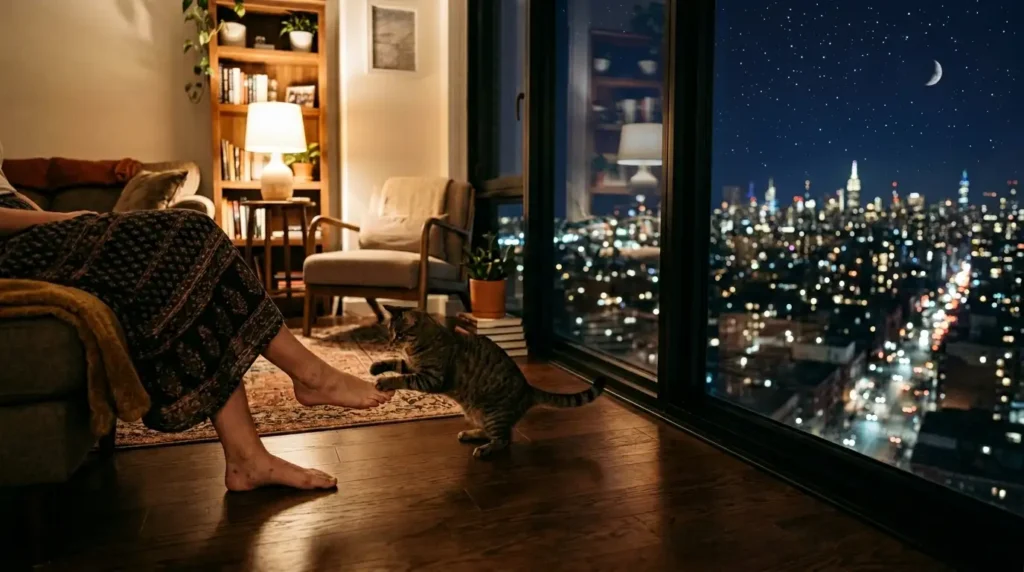
A Sanctuary Entrusted to the Listener
This minimalist stance of leaving so much unsaid is precisely what sparks our imagination as listeners.
Depending on one’s state of mind at any given moment, this song can transform into a poignant ballad of heartbreak or a quiet celebration of serene freedom.
Conclusion: An Endless Labyrinth Beginning with No. 30
That concludes our look at “Dansu wa Umaku Odorenai,” which I have presented as the monumental No. 30 opening of “My Personal Best 30: Yosui Inoue Edition.”
A rare hitmaker and a true wizard of words, Yosui Inoue poured the very essence of his musical life into this song—a piece he originally spun for another, only to eventually reclaim it as his own.
By finding the ultimate interpreter and expressionist in Seri Ishikawa, this track achieved a timeless, universal quality that transcends generations.
While I find myself completely awed by Yosui’s flawlessly constructed world, I ultimately find myself yearning to return to Seri Ishikawa’s somewhat detached, and therefore devastatingly captivating, vocal delivery.
Music is not merely about mechanical perfection matching a score; it is about how beautifully the raw, vital charm of the human being singing it is infused into the track. This song always reminds me of that essential truth.
Thus begins the Yosui Inoue Best 30 series. From here, we shall dive even deeper into the profound depths of his magnificent musical labyrinth.

音楽ファン同士の交流・リクエストはこちら / Connect & Request Songs Here