
- 🎧 Enjoy This Article in Audio
- The History of Yosui Inoue <Part 1>: From His Early Life to “Nishoku no Koma” — The Birth of a Poet Conversing with the Times
- “Showa” as the Origin and the Quickening of Fukuoka Folk
- An Unconventional Debut and a Solitary Style
- Opening the Door as a Poet with “Danze” (Rupture)
- “Yosui II Sentimental” Where Lyricism and Landscape Intersect
- “Koori no Sekai” (Ice World) ── The Maturation of Words and Music
- “Nishoku no Koma” (Two-Colored Spinning Top) ── Spinning Poetry Within the Sway
- The History of Yosui Inoue <Part 2>The Mature Poet Singing of the City’s Light and Shadows — From “Shotaijo no nai Show” to “Shonen Jidai”
- Between Sophistication and Experimentation
- An Era of Entrusting Poetry to Others
- The Eternal Standard “Shonen Jidai” (Boyhood)
- A Voice Continuing to Resonate as a Quiet Presence
- Final Chapter ── Poetry Echoing Within Silence
🎧 Enjoy This Article in Audio
You can quickly grasp the main points of this article through narration.
Recommended for those who want to catch the vibe of the music and the flow of the article before reading.
🎶 English Narration
An English audio introduction to the contents of this article.
⌛ Duration: Approx. 3 mins
🎵 Japanese Narration
A Japanese audio introduction to the contents of this article.
⌛ Duration: Approx. 3 mins 40 secs
* Listening to the audio before reading helps you better understand the world of the music and the main points of the article.
The History of Yosui Inoue <Part 1>: From His Early Life to “Nishoku no Koma” — The Birth of a Poet Conversing with the Times
Childhood and the Awakening to Sound and Words — A Boy Born in Fukuoka, Raised by Imagination
On August 30, 1948, Yosui Inoue was born in Kobukuro-machi, Kaho-gun (now Iizuka City), Fukuoka Prefecture. His real name is Akimi Inoue. The stage name “Yosui” (using an alternative reading of the same kanji) has a cool, ethereal ring to it, deeply resonating with his musical world.
His father worked for the board of education and was known to be strict and methodical. Yosui, from a young age, loved to daydream and was drawn to things that were different from the norm. Surrounded by his father’s work tools and printed materials, he naturally developed an affinity for, and a sense of distance from, words.

A Universe of Sound Expanding from the Radio
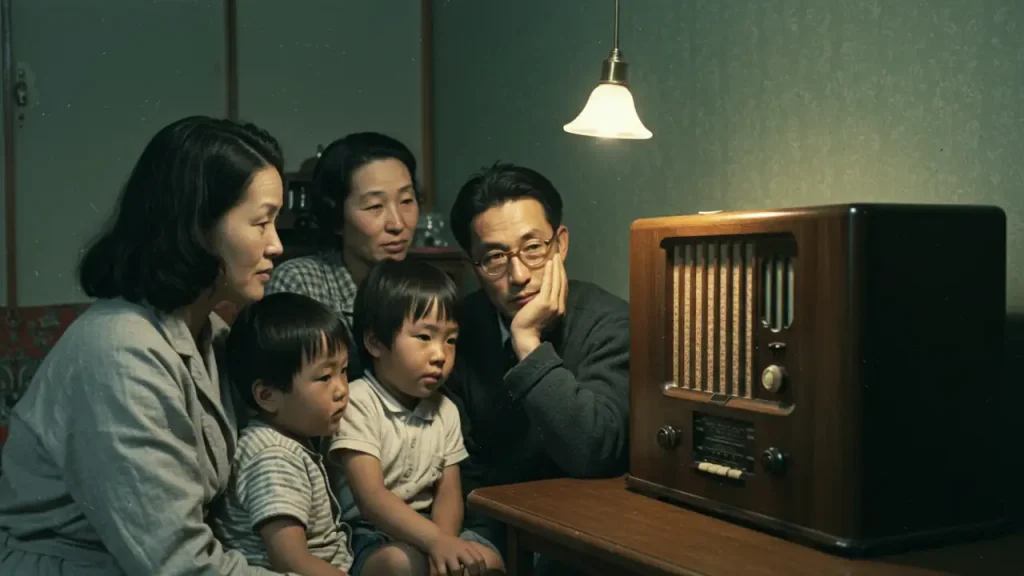
Post-war Chikuho, while facing the decline of the coal industry, still retained the unique heat and chaotic vitality of a coal mining town. The bustle of the streets, the murmurs of the Onga River, and the diverse music flowing from the radio were deeply etched into the young Yosui’s ears, forming the foundation of his later creative world.
At the time, televisions were not yet widespread in households, making the radio the sole source of entertainment. Enka, rokkyoku (traditional narrative singing), and Western music all mixed together there, and the diverse fragments of sound arriving via the airwaves stimulated his sensibilities.
The World Opened by The Beatles and Dylan
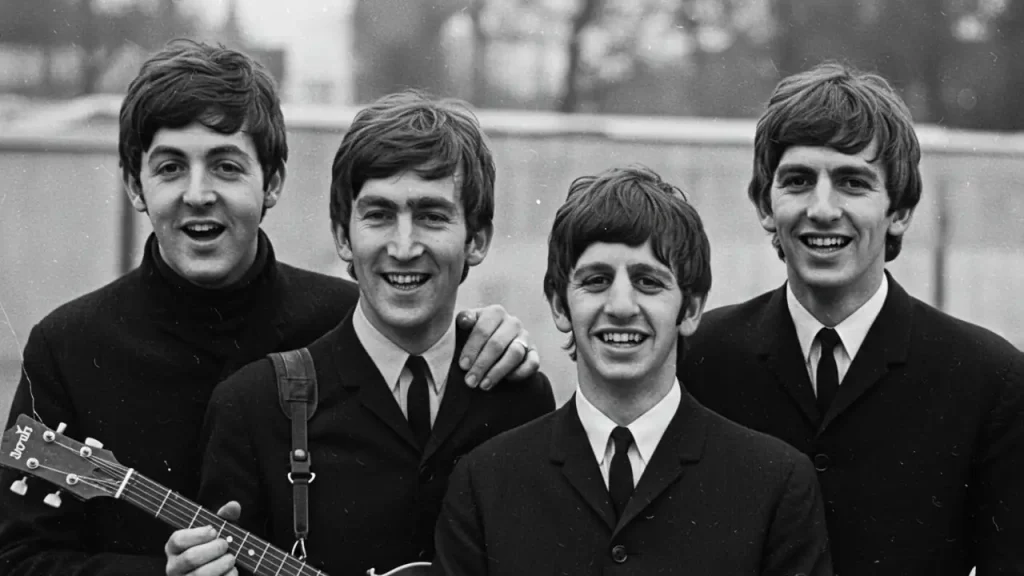
During his high school years, he encountered foreign musicians like The Beatles and Bob Dylan, receiving a profound shock. That world, where words and melodies became one, taught him that music was not merely entertainment, but a means to echo one’s inner voice.
“Showa” as the Origin and the Quickening of Fukuoka Folk
A Musical Life Begun in a Coffee Shop
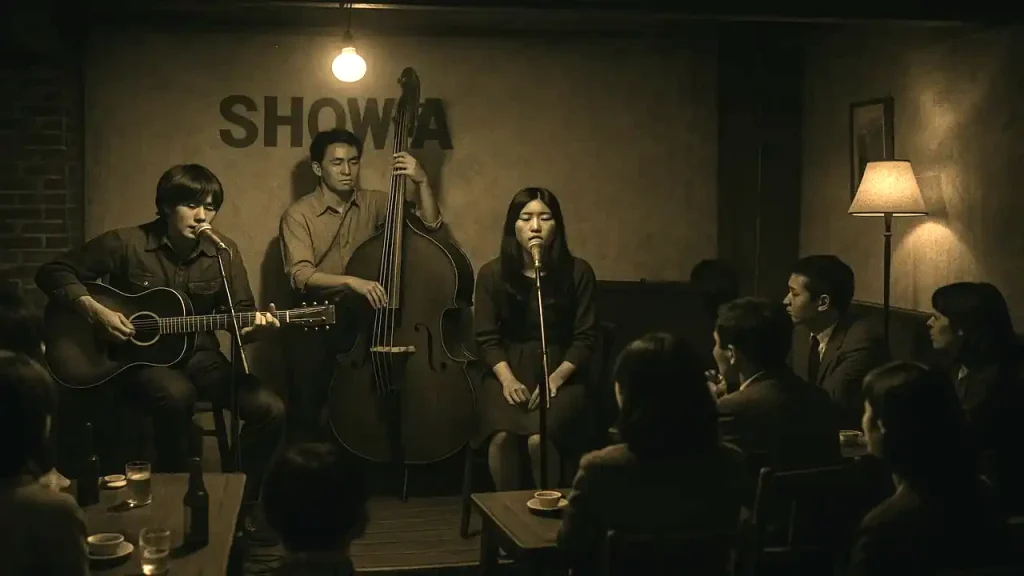
The catalyst for Yosui’s deep immersion into music was the live coffee shop “Showa” located in Tenjin, Fukuoka City. Around 1970, as one of the few places where amateurs could take the stage, it naturally became a gathering spot for young people with talent and enthusiasm. (For the history of Showa, ➡click here!)
Yosui began playing the guitar and performing his own songs at this shop. Listening closely to the audience’s reactions, exploring the pauses and spaces between words, and experimenting with forms of expression day by day, his music underwent its own unique evolution.
Talents Nurtured by Showa
“Showa” produced not only Yosui but also artists who would later become nationally famous, such as Kazuo Zaitsu, Tsuyoshi Nagabuchi, Yoshihiro Kai, and Tetsuya Takeda. Even to them, Yosui was an object of respect from early on as a uniquely distinct presence.
An Inclination Toward “Unshouted Folk”
During this period, Yosui felt a strong sense of discomfort with the conventional “folk music that loudly proclaimed a message.” What he aimed for was a more introspective, poetic expression. The “aesthetics of silence” nurtured in the intimate space of a coffee shop became the prototype for his later musical style.
Furthermore, the cultural independence inherent to the region of Fukuoka—distinct from Tokyo or Osaka—also gave Yosui’s music a unique color.
An Unconventional Debut and a Solitary Style
First Appearance with “Candre Mandre”
In 1969, his debut song “Candre Mandre,” released by CBS Sony under the name “Andre Candre,” was an experimental track with a Latin flair. Although it was not a commercial success, through this experience, he made a re-debut in 1972 from Polydor under the stage name “Yosui Inoue,” and began exploring a new path.
An Expresser Distancing Himself from the Audience
Post-re-debut, Yosui radiated a unique presence on stage. Wearing sunglasses, barely conversing with the audience, and singing with detachment—this figure was highly unconventional compared to the folk norms of the time.
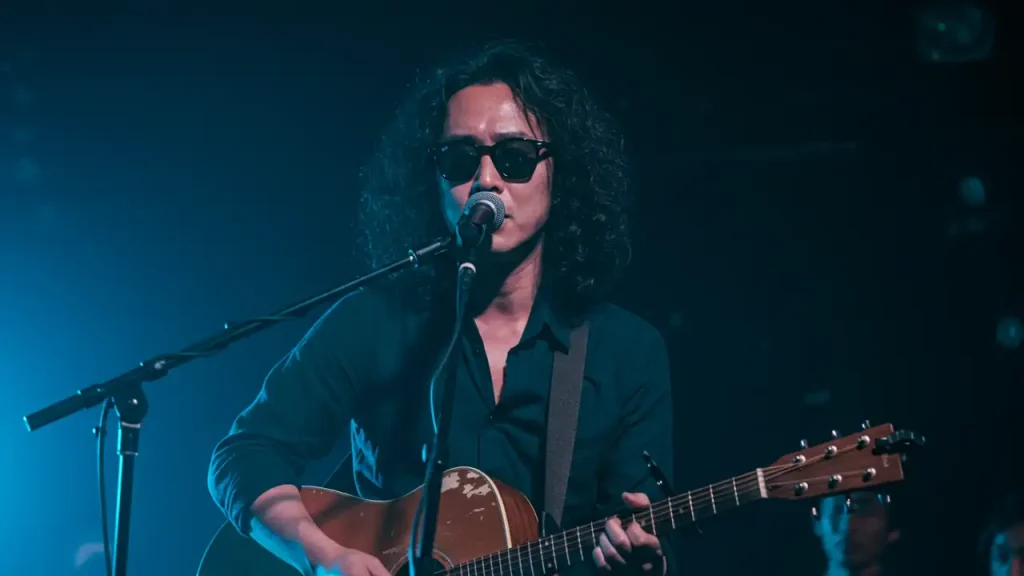
A mysterious charm and persuasiveness dwelled in that solitary, otherworldly impression. His music permeated the hearts of listeners quietly, not as a “narrative,” but as “poetry.”
The Beginning of Philosophical Pop
By this time, Yosui was already a presence better described as an “explorer of words” rather than simply a singer. His music, which consciously balanced words and silence without resorting to gimmicks, was sometimes criticized as difficult to understand. However, it pierced deeply into the hearts of listeners looking inward. (Indeed, the lyrics of “Higashi e Nishi e” were quite a surprise!!)
His appearance quietly shook the common sense that “folk equals social message,” demonstrating the potential for new expressions that transcended existing frameworks.
Opening the Door as a Poet with “Danze” (Rupture)
A Debut Album Looking at the “I” Rather Than Society
In 1972, Yosui released his first album, “Danze”, from Polydor. This work drew attention as a unique presence amidst the folk boom of the time.
The representative song “Kasa ga Nai” (No Umbrella) is memorable for its lyrical world that prioritized personal, urgent emotions against the backdrop of social turmoil and anxiety. In “Jinsei ga Nido Areba” (If I Could Live Life Twice), he demonstrated a perspective that questioned his own existence overlapping with his father’s life, his poetic sensibility already standing out.
The Depth Within “Incomprehensibility”
The lyrics of “Danze” were by no means easy for listeners of the time to understand. However, it was this very “incomprehensibility” that gave depth to Yosui’s poetry. Rather than speaking political messages directly, many of his words approached the root of human existence. His style of quietly depicting the discomforts and contradictions lurking in everyday life left a profound resonance with listeners.
Moreover, his expressions, which skillfully wove irony and humor together, came to be known as the unique “Yosui Bushi” (Yosui style), making one feel that his distinct linguistic sense had already been established early on.
“Yosui II Sentimental” Where Lyricism and Landscape Intersect
The Power to Turn City and Memory into Poetry
In his second album, “Yosui II Sentimental”, released in 1972, his poetic world deepened further, vividly demonstrating the fusion of lyricism and landscape depiction.
In “Higashi e Nishi e” (To the East, To the West), he depicted the isolated youth in the city with a dry touch, while “Kami Hikouki” (Paper Airplane) delicately spun memories of boyhood. Above all, “Nokonoshima no Kataomoi” (Unrequited Love on Nokonoshima), set on a real island in Fukuoka, portrayed memories of faint love and nostalgia, seamlessly linking the place name to a mental landscape.
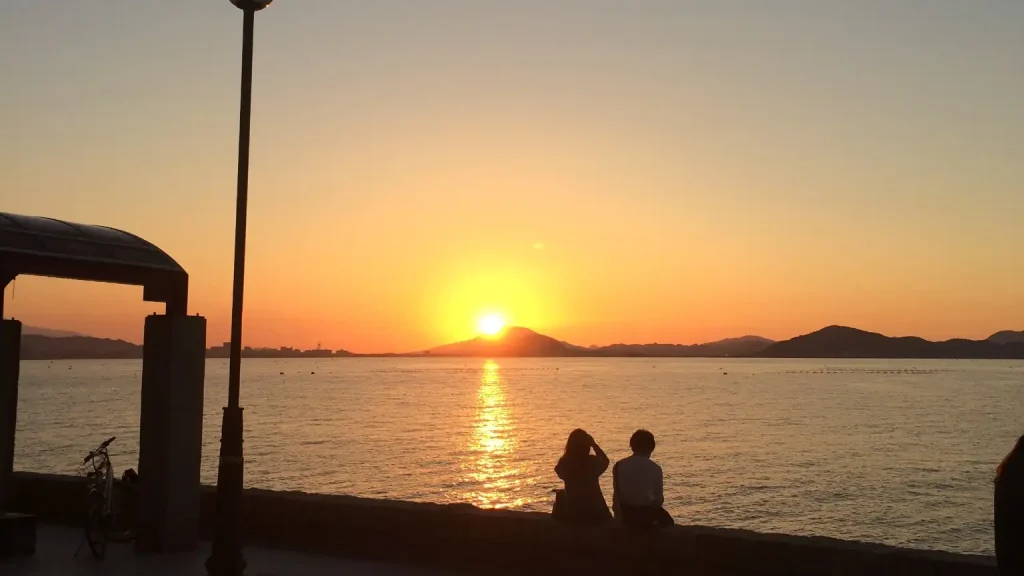
The photo above was taken by me in October 2015 from Odo Park, looking toward Nokonoshima, back when I was still transferred to Fukuoka.
The Establishment of “Lyrics” as Poetry
With this album, Yosui established a world of “poetry” that transcended the realm of mere song lyrics. The words, spoken quietly with suppressed emotional highs and lows, leave room for the listener’s imagination. Not overly swayed by emotion, yet not pushing it away either, Yosui faced his feelings with an exquisite sense of distance and set them to music.
“Koori no Sekai” (Ice World) ── The Maturation of Words and Music
The Turning Point to a National Artist
Released in 1973, “Koori no Sekai” became Japan’s first million-seller album, instantly elevating Yosui to a national artist. In the title track, he sang of a sense of entrapment and discomfort with society with detachment, intentionally leaving a strong impression by not letting his emotions explode.

Encounter with Kiyoshiro Imawano
The included track “Kaerenai Futari” (Two Who Cannot Return) is a co-written piece with Kiyoshiro Imawano, whom Yosui had been keeping an eye on. With lyrics by Kiyoshiro and music by Yosui, their individualities blended beautifully. This song is still loved by many fans today as a masterpiece ballad that quietly depicts a parting. (It’s one of my absolute favorite songs!)
The group of songs contained in “Koori no Sekai” possesses a rich musicality that transcends the boundaries of folk, rock, jazz, and pop genres, boasting a high degree of perfection in arrangement, lyrics, and composition alike.
“Nishoku no Koma” (Two-Colored Spinning Top) ── Spinning Poetry Within the Sway
Words Echoing in the Space Between Illusion and Reality
In the album “Nishoku no Koma”, released in 1974, a more fantastical and surreal worldview grew stronger. Delicate poetic sentiment is woven into bizarre imagery in songs like “Zenmai Jikake no Kabutomushi” (Clockwork Beetle) and “Yudachi” (Sudden Evening Shower).

In this work, diverse sounds pulse along with the poetry, unbound by genre, inviting the listener’s consciousness into the extraordinary.
A Presence That Keeps Spinning Like a Top
The motif of a “spinning top” seems to symbolize Yosui himself. While having a straight core, it constantly sways, leaving room for playfulness and blank space as it continues to spin. That very stance seems to speak to the essence of Yosui Inoue as an expressive artist.
Drifting between poetry and music, never staying in one place. That free and flexible creative stance pushed him to become an isolated presence as the “Poet of Words and Silence.“
The History of Yosui Inoue <Part 2>The Mature Poet Singing of the City’s Light and Shadows — From “Shotaijo no nai Show” to “Shonen Jidai”
Independence and the Establishment of For Life
A New Challenge Led by Artists
In 1975, Yosui Inoue, along with Takuro Yoshida, Shigeru Izumiya, and Hitoshi Komuro, established “For Life,” a music agency and record company. For artists to participate in label management themselves was an extremely groundbreaking event in the Japanese music industry at the time.

This new endeavor was based on the philosophy of “freedom of expression and independence,” and garnered significant attention for blowing a hole in the structure of the existing music industry. For Life distanced itself from standard show business frameworks, becoming a place that promoted creator-led production.
The Change in “Shotaijo no nai Show” (A Show Without an Invitation)
The following year, in 1976, Yosui released his first work from For Life, “Shotaijo no nai Show.” This album poetically depicted the anonymity and loneliness of the city, demonstrating a mature perspective that distinguished it from his early works.
In representative songs like “Aozora, Hitorikiri” (Blue Sky, All Alone) and the title track, the loneliness and emotional dryness of an individual living in the city are expressed with restrained humor, establishing a new style different from conventional folk sentimentality.
Between Sophistication and Experimentation
The Musical Adventure of “Sneaker Dancer”
With “Sneaker Dancer”, released in 1979, further changes appeared in Yosui’s musicality. This album actively incorporated elements of funk, disco, and Black music, depicting the rhythms and exhaustion of urban life at the time with lighthearted words.

The twisted wordplay and dry sound seen in songs like “Nazeka Shanghai” (For Some Reason, Shanghai) maintain a perspective that looks at modern society with irony, yet never becomes preachy, sticking to a stance that never forgets humor and playfulness.
“EVERY NIGHT” and the “Poet of the Night”
In 1980, he released “EVERY NIGHT”, appealing to an even wider audience. Ballads that quietly narrate inner emotions, such as “Crazy Love,” line the tracklist, and it gathered support through late-night radio as “music to accompany the night.” Furthermore, the single “Jealousy,” released the following year in 1981, also symbolizes the sophisticated sound of this period.
During this time, he teamed up with top-tier arrangers like Akira Inoue, creating a succession of sophisticated works where poetry and sound resonated perfectly. Haruomi Hosono and Masayoshi Takanaka also participated in the performances, making it an album boasting an extremely high degree of perfection on the sound front as well.
An Era of Entrusting Poetry to Others
“9.5 Carat” and the Chain of Hit Songs
In 1984, Yosui released the compilation album “9.5 Carat”, a collection of his past songs and tracks provided to others. This album became a massive hit exceeding 2 million copies, once again making Yosui’s presence known to the world.

In particular, songs like “Kazari ja Nai no yo Namida wa” (Tears Are Not a Decoration) provided to Akina Nakamori, and “Wine Red no Kokoro” (Wine Red Heart) and “Koi no Yokan” (Premonition of Love) co-written with Anzen Chitai, became the catalyst for making his talents as a lyricist widely known. These songs go beyond mere love songs, filled with expressive power that sharply depicts the inner lives and passions of women.
Evolution as the “Poet Who Doesn’t Sing”
During this era, Yosui transcended the framework of a singer, establishing a position as an expressive artist who entrusts his poetry to others. By expanding his poetic world through the voices of other artists, he became a pioneer of the writer culture in the golden age of J-POP.
All the lyrics he provided were rich in “blank spaces to be read between the lines,” giving listeners room for diverse interpretations. That stance was deeply connected to Yosui’s aesthetic of “not speaking for himself, but letting the poetry speak.”
The Eternal Standard “Shonen Jidai” (Boyhood)
A Phrase Resonating Beyond Memory
In 1990, the eponymous song “Shonen Jidai,” written as the theme song for the movie “Shonen Jidai,” became a masterpiece symbolizing Yosui’s career. From the opening line, “Natsu ga sugi, kaze azami” (Summer passes, the wind thistle), a poetic world is already complete, possessing the power to evoke different scenes in the hearts of each listener. I suppose it is a mental landscape of Fukuoka.
It wasn’t a huge topic initially, but it gradually permeated through commercials, graduation songs, and TV programs, and is now firmly established as a “seasonal song” in Japan. Beyond nostalgia, it is loved by many as a hymn to “time” itself.
The Universality Woven by Poetry and Melody
“Shonen Jidai” has a unique structure akin to both children’s songs and classical music, holding a profound depth where interpretations change depending on the listener’s age and standpoint. Not over-explaining, not dictating, yet strongly appealing to the emotions, this song can truly be called the pinnacle of the “harmony of poetry and sound” that Yosui reached.
A Voice Continuing to Resonate as a Quiet Presence
A New Phase ── Reinterpretation and the Aesthetics of Silence
From the 1990s onward, while continuing album production and live activities, Yosui has also tackled diverse forms of expression, including commercial appearances and cover projects. In the 2001 release “UNITED COVER,” he reconstructed Showa-era kayokyoku (popular songs), overlaying his own poetic world while paying respect to the original songs.
He has continued his quiet exploration of words and sound in subsequent works like “LOVE COMPLEX” and “Maryoku” (Magic). Despite modest major promotional efforts, his presence deepens year by year, solidifying his reputation as a unique “Man of Words.”
Influence on the Next Generation
There are many artists who have been influenced by Yosui’s expressions. Among the new generation of musicians with introspective and poetic lyrical worlds, such as Spitz, Quruli, and Yorushika, quite a few openly acknowledge his influence.
“That which is Yosui-esque” ── namely, the ambiguous, polysemic, unstable, yet beautiful resonance of words. It continues to be quietly inherited today as a lineage of J-POP.
Final Chapter ── Poetry Echoing Within Silence
Who is Yosui Inoue? That is a question that takes on new contours every time it is discussed. A folk singer, a pop writer, an experimenter with words, and an observer of the times.
He has sharpened his words amidst the times, carving out his own existence in the space between silence and sound. A line of poetry, a momentary melody, suddenly resonates ten years later, or at a turning point in life ── Yosui Inoue is a poet who knows the magic of time.


音楽ファン同士の交流・リクエストはこちら / Connect & Request Songs Here