
■For more details about [The Carpenters]…
➡🌈 The Siblings Who Changed the World with Gentleness — The Miracle of the Carpenters 💛
🎧 Enjoy This Article in Audio
You can quickly grasp the main points of this article through narration.
Recommended for those who want to catch the vibe of the music and the flow of the article before reading.
🎶 English Narration
An English audio introduction to the contents of this article.
⌛ Duration: Approx. 2.5 mins
🎵 Japanese Narration
A Japanese audio introduction to the contents of this article.
⌛ Duration: Approx. 2.5 mins
* Listening to the audio before reading helps you better understand the world of the music and the main points of the article.
🎸 [The Carpenters Edition] No. 15 “Sing”
No. 15 in The Carpenters Edition is “Sing”.
It is a song loved not only by pop fans but by many generations.
When thinking of the song with the “simplest brightness” among the Carpenters’ works in the 1970s, “Sing” is the first to come to mind.
With its light melody and clean vocals, listeners are freed from complex thoughts and feel as if they can simply surrender to the flow of the sound.
The reason it has been loved for so long is that it possesses a universal message, making it hard to believe it was originally created for an educational program.
Summary
The protagonist in this song tries to convey to those who are not good at singing that "the action itself is more valuable than the result."
They believe that what matters is not whether you can sing well, but the experience of moving your feelings outward.
The protagonist focuses on the perspective that the act of singing does not necessarily encourage someone else, but becomes a small habit that soothes the mind of the person singing.
Even for those with complex worries, there is a moment when speaking or singing out loud makes them feel a little lighter—this image supports the entire song.
🎥 First, as always, please watch the official video on YouTube.
🎬 Official Video Credits (Official Audio)
"Sing" / Carpenters
Provided to YouTube by Universal Music Group
Album: Gold – Greatest Hits
© 1973 A&M Records
Released on: 2000-01-01
💬 2-Line Commentary
It is a masterful arrangement that preserves the simplicity of the original song while elevating it to a "song for adults" with Karen's clean vocals. The overall brightness of the song and the gentle chorus make it a piece that naturally reminds us of the joy of singing itself.
Basic Information of the Song
Release / Featured Album
“Sing” was released as a single in 1973 and is included in the album “Now & Then” (1973).
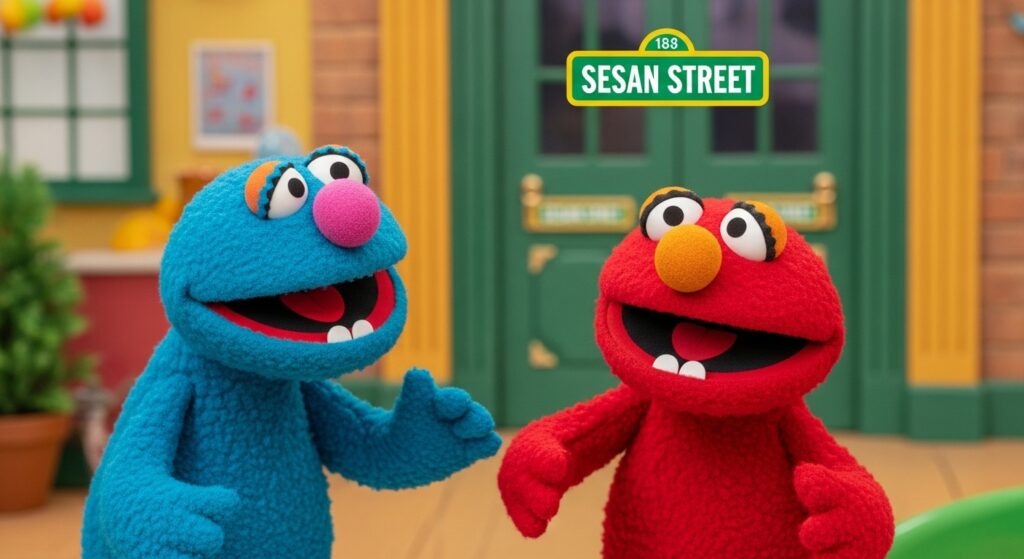
The original song was used in the educational program “Sesame Street” and was structured with a melody that was easy for children to remember. However, the Carpenters reconstructed it not merely as a children’s song, but as a pop song where even adults could feel its warmth and core message.
In the arrangement, Richard Carpenter centered the song around the piano while utilizing a simple chord progression and leaving out unnecessary ornamentation.
That purity draws out the essential charm of the song and raises its perfection as a “song you can naturally hum.”
Chart Performance and Historical Background
The early 1970s was a time when pop music was becoming more complex, leaning toward social issues and highly sophisticated arrangements.
In the midst of this, by intentionally choosing a carefully stripped-down structure, “Sing” ironically gained a special uniqueness.
The fact that this simple song resonated with the atmosphere of the times is part of the reason it achieved a top 10 spot on the Billboard Hot 100.

In an era heavily shadowed by the Vietnam War and social tension, a song that offered nothing but the “joy of singing” without any complicated narratives was likely received like a moment of rest.
The fact that Karen’s transparent voice lightened the listeners’ hearts without relying on excessive emotional expression also led to its widespread support.
Theme and Worldview of the Song
The Protagonist’s Background
This song does not present a specific protagonist or a life story.
However, from the direction of “encouragement” embedded in the lyrics, the protagonist can be depicted as someone who wants to convey that “you don’t need to be formal about singing.”
This character seems to have experience watching over someone who used to be self-conscious about singing, and gives the impression of naturally accepting the other person’s nervousness or timidity.
What the protagonist wants to convey is not “singing well,” but “trying to let your voice out first.”
That value remains the same whether the person singing is a child or an adult.
There is a perspective that suggests an “it’s okay to be free” attitude toward a culture that worries about the skill of singing.
Introduction to the Story
At the beginning of the lyrics, the protagonist quietly encourages, “Let’s sing.”
A short, permissible quote is the phrase “Sing a song” (short translated meaning: just try singing).
This is not a command, but takes the form of a light suggestion to get moving.

After that, the protagonist repeats the message that “you don’t need to be a good singer,” gradually expanding the meaning of singing.
The focus is placed on the tactile sensation that the world changes just a little the moment you let your voice out, rather than whether you sing well.
This allows the listener to distance themselves from the stereotype that “singing is something to be evaluated” and gives them the mental space to turn their awareness back inward.
Core Parts and Interpretation of the Lyrics
Symbolic Phrases
The phrases treated symbolically in the lyrics of “Sing” are short expressions with elements stripped down to the absolute limit.
An example of a quotable range is a short passage like “Sing out loud”.
This phrase is not technical advice, but exists to free people from “the habit of holding back and keeping their voices locked inside.”
What makes this song interesting is that, despite the words being very simple, the essence of what the protagonist wants to convey to the other person is entirely contained within that simplicity.
Not with long persuasion or logic, but unraveling the other person’s tension with just a few words—such an image is maintained throughout the entire song.
The Protagonist’s Psychological Changes
In the first half of the song, the protagonist speaks mainly of a personal message: “You should sing for yourself.”
However, in the second half, the gaze gradually expands from the individual to society, and a desire for a “world where everyone can sing together” begins to emerge.
This is a point where the narrative structure changes, suggesting an expansion of the heart within the protagonist as well.

The protagonist is depicted as understanding that singing can “shorten the distance between people just a little.”
When someone lets their voice out, someone else reacts to it.
Through that chain reaction, the temperature of the space gradually rises, creating an atmosphere that is just a little more positive than usual.
This “small change” is exactly the essential message of the song “Sing.”
The protagonist’s psychology is not depicted as something forced onto others, but as a warmth that spreads slowly, and therein lies the gentleness of the song.
Charm of the Sound and Vocals
Characteristics of the Arrangement
“Sing” is particularly appealing for its “stripped-down arrangement” among the Carpenters’ songs.
This song does not require complex modulations or technical developments.
Rather, the entire song is designed with an awareness of a “form that anyone can reproduce” in order to lower the hurdle for singing.
Richard’s piano is modest, dedicating itself to the role of a foundation without interfering with the melody line.
The drums and bass play extremely simple rhythms, designed to give the listener a “sense of security” rather than “empty space.”
With the addition of the children’s chorus, it creates a soundscape where the soft expansiveness of the song seems to be visualized.

Because the arrangement is not flashy, the charm of Karen’s voice stands out.
Karen’s singing, which delivers her voice straight without using excessive vibrato or strong intonation, perfectly matches the song’s theme that “singing is an act anyone can do.”
Nuances Conveyed by the Vocals
Karen’s voice carries the words with natural intonation, without strengthening her tone.
This attitude does not add unnecessary tension to the protagonist’s message, giving it a gentle persuasiveness.
Although the lyrics themselves have a repetitive structure, Karen does not give a homogeneous expression to that simplicity, but scatters subtle differences in nuance throughout each phrase.
The slight changes in expression that Karen shows within the melody work to lower the psychological hurdle, making the listener feel like, “Maybe I’ll naturally try singing too.”
By choosing a way of singing that delivers the meaning of the words directly, rather than showing off vocal technique, she musically embodies the “ease of participation” that lies at the core of the song.
Reasons for Making the Top 20
Differentiation from Other Songs

The Carpenters’ catalog contains many songs with strong dramatic ballads and songs that highlight Richard’s highly sophisticated arranging skills.
Compared to those, “Sing” does not appear to have an outstanding level of difficulty technically.
However, this “not too difficult design” is exactly what directly connects to its special charm.
When many listeners seek salvation in music, they do not necessarily need grand drama. Rather, there are moments when they seek an “accessible sound” for a slight change of mood or an escape from tension.
“Sing” is a song that exists in that most familiar position, possessing a flexibility that does not discriminate based on the listener’s age or situation.
Also, there are actually not many examples where the Carpenters’ vocal quality and the structure of the song are in such perfect harmony.
Karen’s calm voice elegantly elevates simple words, giving them a universality that makes you forget the background of it being a children’s song.
This evaluation criterion is a point that clearly differs from songs in other rankings and contributes greatly to the reason for its inclusion in the Top 20.
A Word That Will Make Readers Want to Listen Again
If there are moments in your daily life when you feel your heart has hardened for no reason, “Sing” is a song that can readjust the atmosphere in just a few minutes.
Without demanding excessive drama, it simply reminds you of the comfort of letting your voice out.
That “light resilience” makes this song something you can reach for at any time.

After finishing listening, a feeling remains as if you have naturally taken a deep breath—
“Sing” possesses such a gentle power.


音楽ファン同士の交流・リクエストはこちら / Connect & Request Songs Here