
- 🎧 Enjoy this article via audio
- Today is Stevie Wonder’s Birthday.
- First, please watch the official YouTube video.
- When I First Heard This Song
- The Historical Background and the Rise of “New Soul”
- The Bizarre Intersection with Jeff Beck
- The Magical Percussive Sound of the Hohner Clavinet D6
- An Alarm Against Unseen Fears
- In Closing: A Tribute on His Birthday
🎧 Enjoy this article via audio
You can quickly check the main points of this article through narration.
Recommended for those who want to grasp the essence before reading.
🎶 English Narration
The content of this article is explained in English audio.
⌛ Duration: Approx. 2 min
🎵 Japanese Narration
You can also listen to the narration in Japanese.
⌛ Duration: Approx. 2 min
* Listening to the audio before reading the text helps you understand the song’s world and the article’s key points more vividly.
Today is Stevie Wonder’s Birthday.
On May 13, 1950, a genius who would fundamentally overturn the concept of popular music history was born in Saginaw, Michigan, USA. His real name was Stevland Hardaway Judkins, later known as Stevie Wonder.
He lost his sight shortly after birth due to retinopathy of prematurity caused by a premature birth. However, instead of light, he was gifted with sharpened hearing and extraordinary rhythm, teaching himself to play instruments like the piano, harmonica, and drums from a young age. His exceptional talent soon became known to those around him, and at age 11, he was discovered by the prestigious Motown Records, making a striking debut as “Little Stevie Wonder.” Then, at just 13 years old, he sent his single “Fingertips” to number one in the US, sending a tremendous shockwave through the music world.

Entering his youth, he sought to break away from the record company’s uniform production system. Gaining complete artistic rights on his 21st birthday, he produced a series of masterpiece albums in the 1970s that shine brilliantly in music history, such as Talking Book, Innervisions, and Songs in the Key of Life. His pioneering introduction of electronic instruments and deep lyrics embedded with social messages continue to have a profound influence on musicians worldwide today.
To celebrate his memorable birthday, the song I am introducing today is “Superstition,” released in October 1972 as the lead single from the aforementioned masterpiece album Talking Book. It achieved a massive hit, proudly claiming the number one spot on both the US Billboard Pop and R&B charts. As the starting point where Stevie opened a new door in music with his own hands and began to sweep the world with his overwhelming talent, this innovative number is the most fitting song to reflect upon on his birthday.
Free Translation of “Superstition”
The more you cling to superstitions, the more miserable your life becomes.
Broken glasses and black cats, it's not bad luck, just your own assumptions.
Don't bind yourself by believing in things you don't even understand.
Nobody is saved by such superstitions.
First, please watch the official YouTube video.
Credits
Song Title: Superstition
Artist: Stevie Wonder
Album: Talking Book
Provided by: Universal Music Group
Written, Composed, and Produced by: Stevie Wonder
Two-Line Commentary
This is Stevie Wonder's representative funk-soul track, whose sharp clavinet riff and heavy groove are etched into music history. While singing about human psychology swayed by superstitions, it is a definitive song that demonstrated Wonder's sudden creative maturation in the 1970s.
When I First Heard This Song
| My Age | Elementary School | Junior High | High School | University | 20s | 30s | 40s | 50s | 60s~ |
| Song Release Year | 1972 | ||||||||
| When I Heard It | ● |
I first heard this song in 1972, the year it was released, when I was in my second year of junior high school.
At that time, the Japanese music scene was heavily gripped by folk songs, with Takuro Yoshida’s “Kekkon Shiyou Yo” (Let’s Get Married) becoming an explosive hit. (I was one of those captivated youths.)
Simultaneously, glamorous idol pop songs were at their peak on television music programs.
Amidst this, the intro to “Superstition” suddenly jumped out of the late-night radio I was playing as background music while studying. At the time, I had just started listening to Western music, mostly following elegant pop like Elton John and the Carpenters. However, the strange, earthy instrument tone ringing out at the beginning of this song—like twanging metal—and the earth-rumbling drum beat shook my musical values.

It wasn’t a passive listening experience of “quietly appreciating a beautiful melody,” but a strong physical impact, as if a block of sound was hitting my body directly, forcefully shaking me.
I couldn’t understand the meaning of the English lyrics at all, but I was swallowed by Stevie Wonder’s surging vocals and the overwhelming, relentless dynamism. It was a decisive moment of encounter with Black music and the genre of funk for me.
The Historical Background and the Rise of “New Soul”
The music scene in the early 1970s was in a turbulent transitional period. Following the civil rights and anti-Vietnam War movements of the 1960s, society as a whole was enveloped in an atmosphere demanding a transformation of existing values. In the world of Black music, too, a new trend called “New Soul” was born, moving away from mere mass-oriented dance music to expressing sharp perspectives on one’s inner self and society.
Motown’s Tradition Destruction and Absolute Freedom
Motown Records, which was at the center of this, had achieved massive success with a “factory production system” where an exclusive team of composers wrote the songs, a house band played them, and the singers simply sang the assigned tracks. However, senior labelmate Marvin Gaye blew a hole in that system in 1971 by releasing What’s Going On, a concept album dealing with social issues.
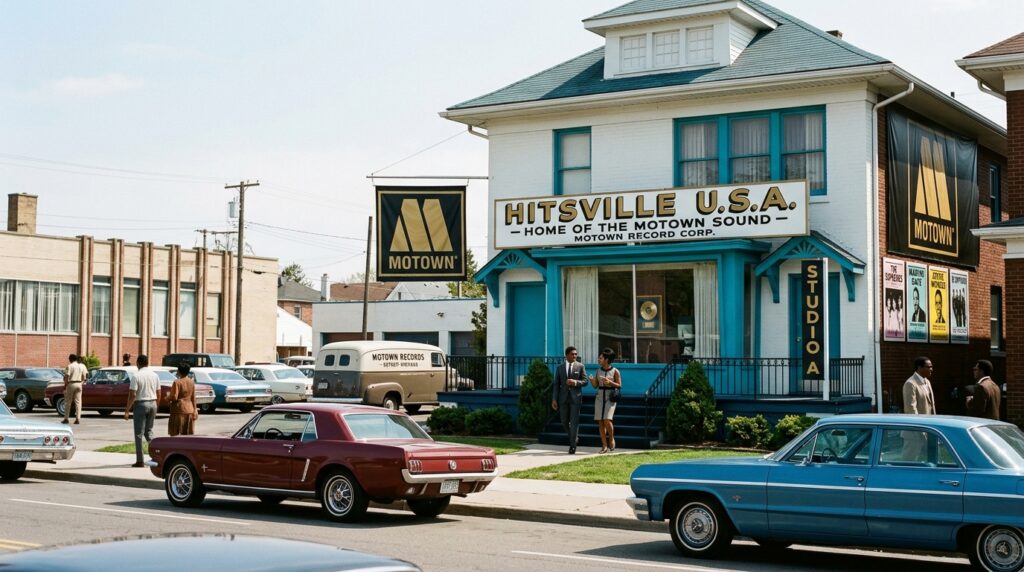
Strongly inspired by this, Stevie Wonder also negotiated fiercely with Motown to manifest his musical vision without compromise, winning complete artistic freedom and self-producing rights.
The Fusion of Synthesizers and Funk
With freedom in hand, Stevie became deeply devoted to the synthesizer, an innovative electronic instrument that had just been developed. Instead of hiring large string sections and horn sections, which had been synonymous with the Motown sound, he adopted the unprecedented method of operating the synthesizer himself to build everything from the basslines to chordal instruments through multitrack recording.
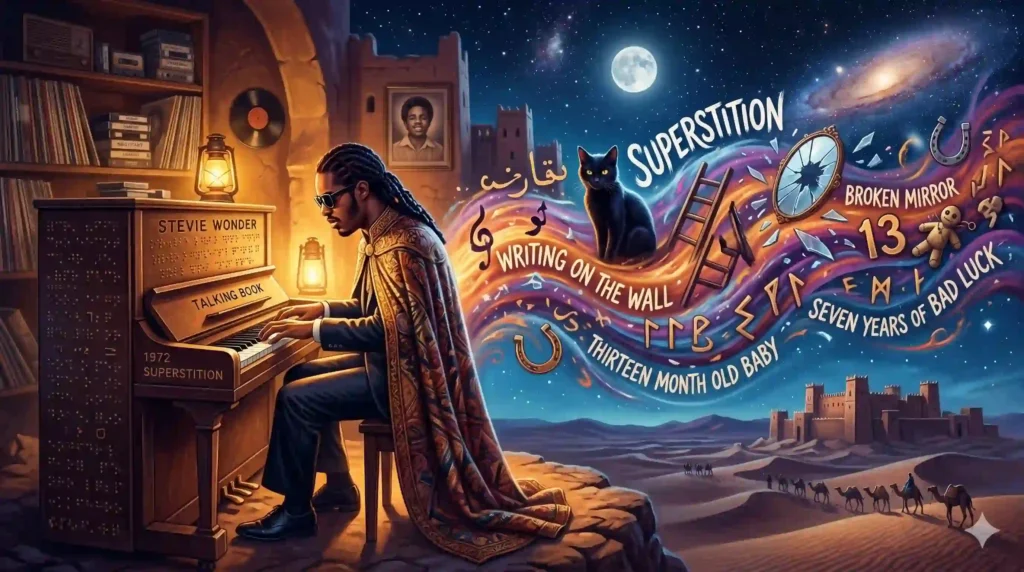
The 1972 album Talking Book, which features “Superstition,” is the exact moment that experiment reached its highest peak. It was a historical turning point where a single genius breathed human blood into a cold machine, creating an entirely new universe of funk.
The Bizarre Intersection with Jeff Beck
The birth of this historic masterpiece is deeply intertwined with a strange connection to Jeff Beck, a representative British rock guitarist.
In 1972, Stevie, with a clear intention to cultivate a white rock fan base, held a studio session with Jeff Beck, who was looking for strong original songs of his own. At that time, when Stevie improvised a keyboard riff over a simple beat pounded out by Jeff Beck sitting at the drum set, the skeleton of that magical intro was born.
Stevie originally promised to give this song to Jeff Beck. However, upon hearing the powerful completed demo, Motown management instantly sensed its overwhelming perfection and potential for a massive hit. They strongly insisted, “We cannot give this to anyone else,” and as a result, it was pre-released as Stevie’s own single.
The Magical Percussive Sound of the Hohner Clavinet D6
A Keyboard as a Percussion Instrument
What determines the absolute individuality of the song “Superstition” is the riff played by an electronic keyboard instrument called the “Hohner Clavinet C.” Due to its physical structure, where internal metal strings are struck by hammer-like parts, the clavinet possesses a very crisp, percussive sound.

Stevie maximized the potential of this instrument to its absolute limit. Normally, a keyboard is used to play chords with both hands for accompaniment, but he treated the clavinet almost like a percussion instrument. He recorded multiple tracks layered on top of each other, threading through the fine mesh of a 16-beat rhythm. He played undulating riffs in the lower register and carved sharp cuts in the upper register. While the direction is different from the aesthetic of subtraction—which I usually value—where unnecessary sounds are stripped away, the precise compositional skill where each sound fits together as a perfect puzzle is magnificent.
Furthermore, the earth-crawling bassline is also played by a Moog synthesizer. The unique dynamism where the mechanical precision of the electronic bass and clavinet mesh perfectly with human warmth. This was the overwhelming invention that rewrote the definition of Black music in the 1970s.
An Alarm Against Unseen Fears
An Intellectual Perspective and a Cold Message
While the overwhelming sound tends to steal one’s attention, the lyrics of this song contain a very intellectual and sharp message. True to the title, the lyrics list numerous “superstitions” passed down in Western society since ancient times, such as “writings on the wall,” “walking under a ladder,” and “breaking a mirror.”
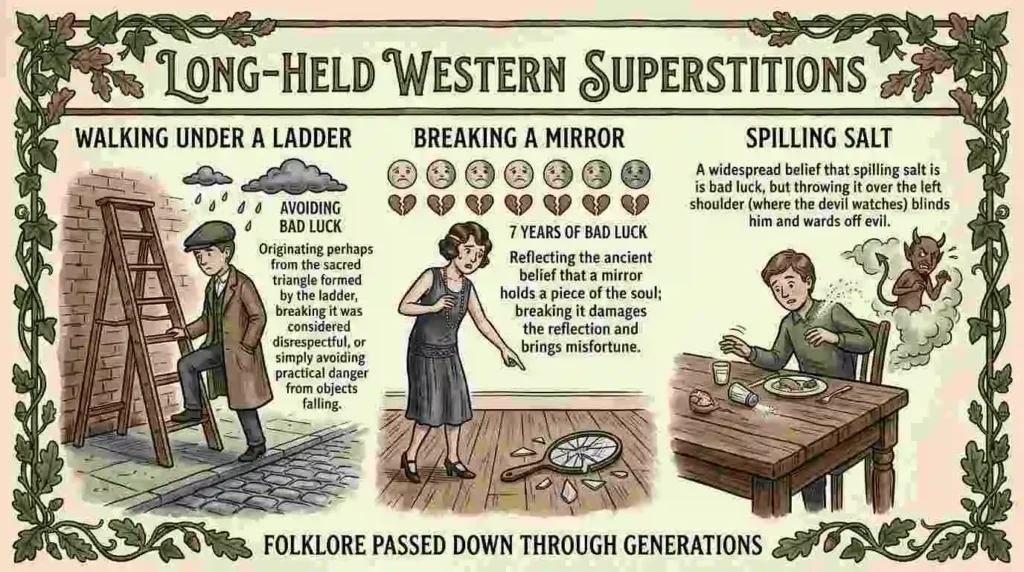
These are all old jinxes that incite baseless anxiety and fear. However, after lining up these superstitions, Stevie thrusts a clear, core message in the chorus.
“When you believe in things that you don’t understand, Then you suffer.”
He bitterly criticizes the intellectual negligence of humans who are controlled by unseen fears and baseless rumors. Considering the historical background of the early 1970s, when society as a whole was covered in an unforeseeable anxiety due to political distrust and the quagmire of the Vietnam War, these lyrics hold a deep social meaning beyond a mere warning against jinxes.
The strong will of enlightenment—”Do not be misled by rumors or prejudice, but look firmly at reality with your own reason and eyes”—flows beneath that fierce beat.
In Closing: A Tribute on His Birthday
Blind, yet seeing the truth of society more accurately than anyone else. The persuasive power of Stevie Wonder singing, “Don’t believe in things you don’t understand,” is immeasurable.
Superstition is one of the highest peaks in popular music, where musical innovation and profound philosophical messages embedded in the lyrics beautifully fuse together. It is astonishing anew to realize the intense energy radiated by that first step he took—gaining independence from the record company’s mass production system, operating the latest electronic instruments with his own hands, and beginning to broadcast to the world in his own words.
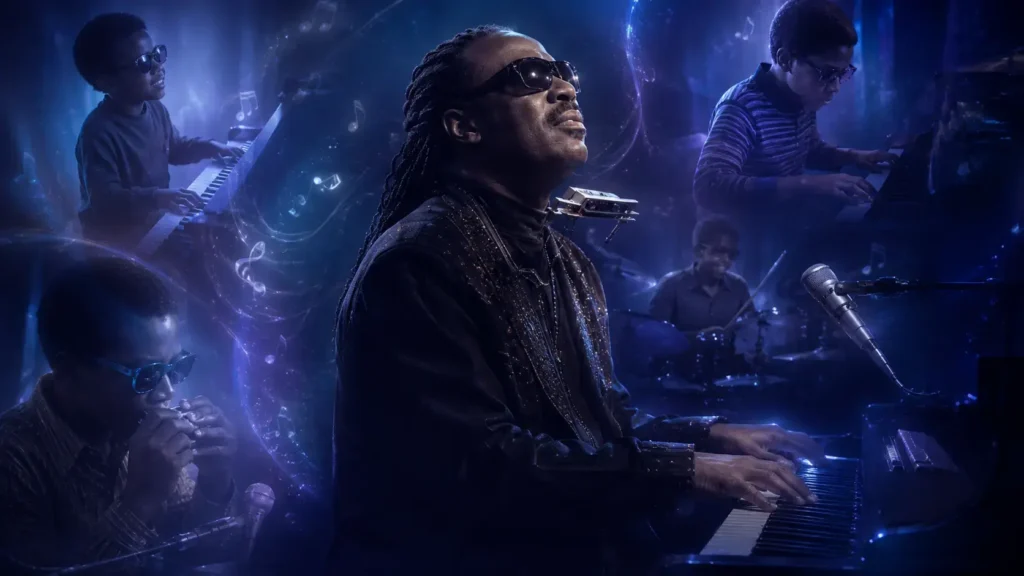
Riding on the sharp clavinet beat, it inspires human intellect and reason. That is exactly the greatest reason why this song pierces the hearts of us modern people so sharply, without fading at all, even after more than half a century. On this day celebrating his birthday, why not surrender yourself once again to his overwhelming musical world, which encompasses all the pulse of funk and the brilliance of pop?


音楽ファン同士の交流・リクエストはこちら / Connect & Request Songs Here