🎧 Enjoy this article via audio
You can quickly check the main points of this article through narration.
Recommended for those who want to grasp the essence before reading.
🎶 English Narration
The content of this article is explained in English audio.
⌛ Duration: Approx. 3 min
🎵 Japanese Narration
You can also listen to the narration in Japanese.
⌛ Duration: Approx. 3 min
* Listening to the audio before reading the text helps you understand the song’s world and the article’s key points more vividly.
Today is Shigeru Izumiya’s Birthday
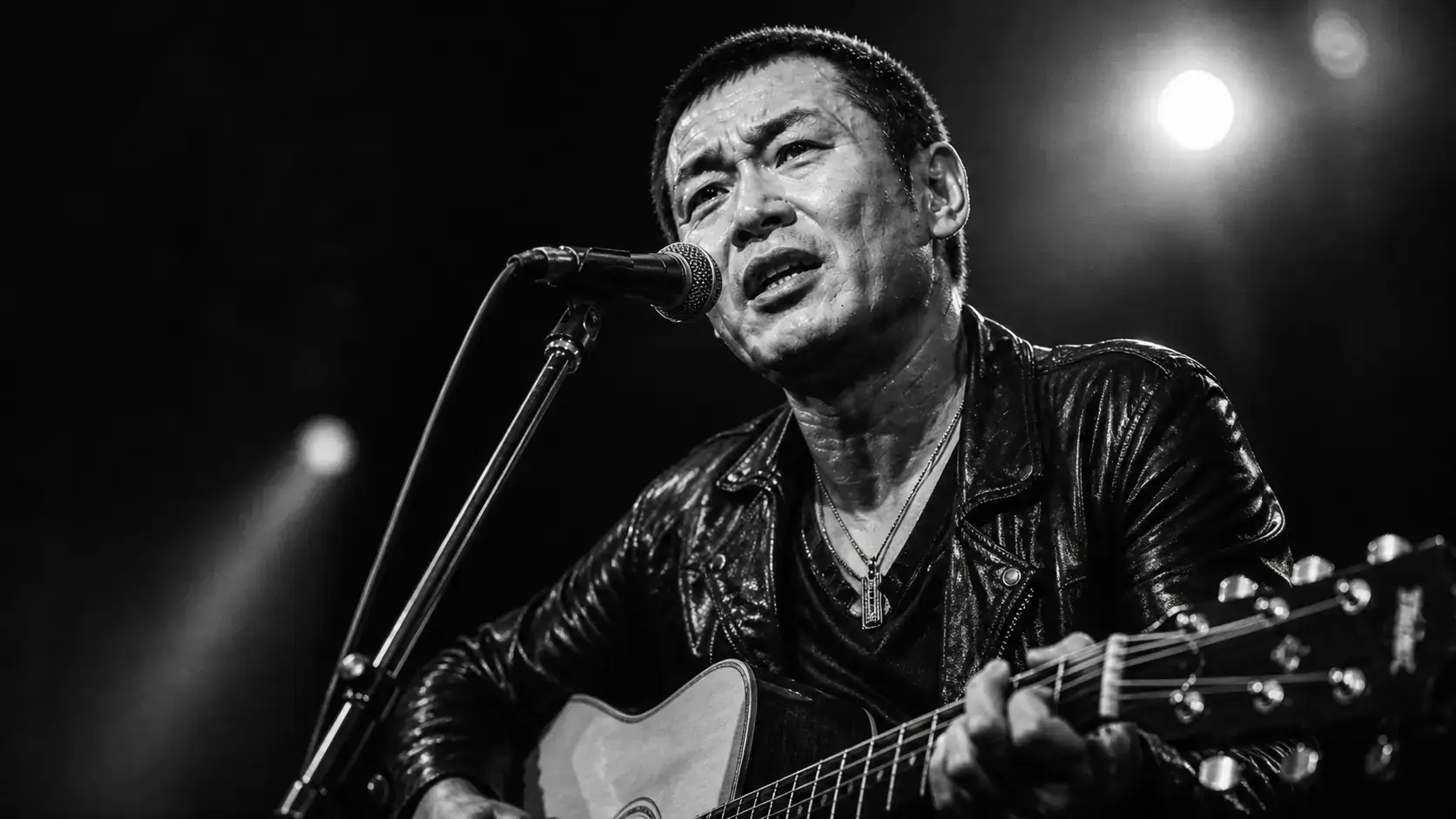
Born on May 11, 1948, in Aomori Prefecture and raised in Meguro, Tokyo, a “stray dog” left an indelible mark on Japanese music history. That man is Shigeru Izumiya.
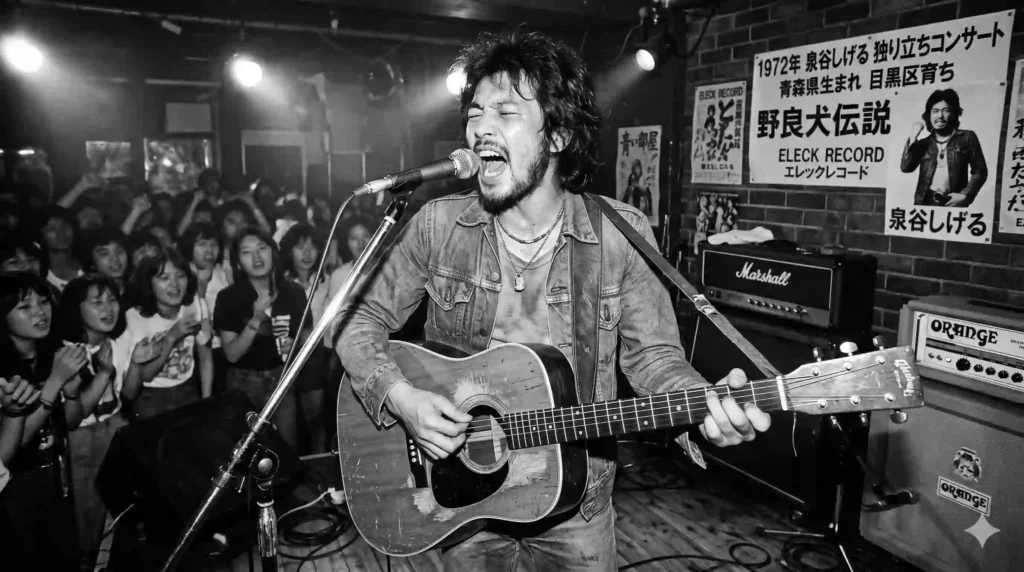
Since his debut in 1971, he has been a solitary artist who effortlessly leaped over the boundaries of folk, rock, acting, and painting, always spreading a mixture of “poison” and “love.”
The danger of his youth, like a sharpened knife, and his destructive energy that hasn’t faded with age, act as a wake-up call to the peaceful daily lives of his listeners.
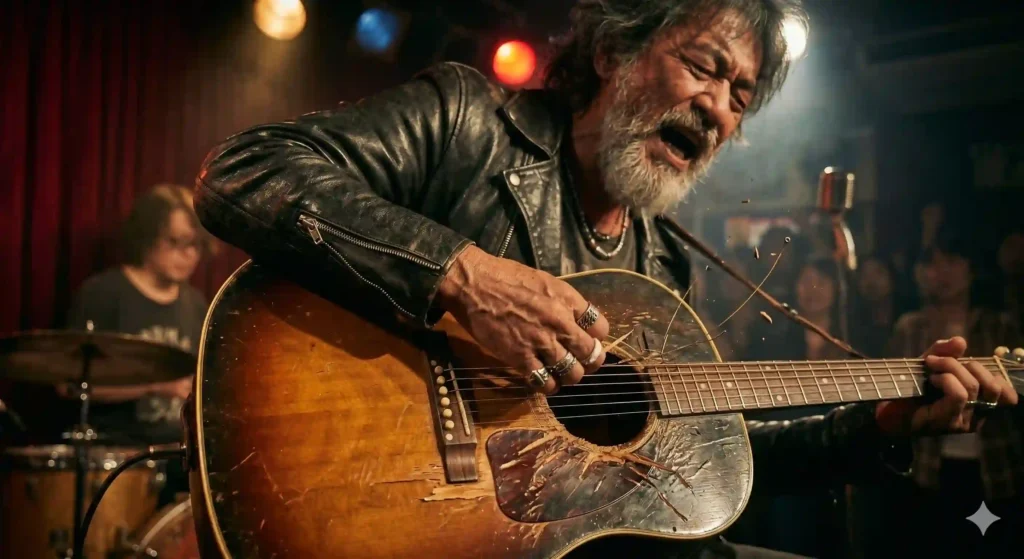
While known for his wild stage performances—shouting abuse and smashing guitars—his actions are rooted in a “bare humanity,” such as being among the first to launch charity activities during major disasters.
Despite calling himself an “outcast of the folk world,” he was also a revolutionary who took a grand gamble to rewrite the mechanisms of the music business by founding “For Life Records” alongside Takuro Yoshida, Yosui Inoue, and Hitoshi Komuro. The colors of his music are never faint pastels. They are filled with an overwhelming sense of reality, reminiscent of weeds growing in the cracks of concrete or the smell of exhaust fumes in a sunset alleyway.

His masterpiece “Shunka-Shuto” (The Four Seasons) was included in his 1971 debut album and released as a single in 1972, becoming a massive hit.
It became a monument of the folk movement at the time and remains a signature song covered by countless artists across generations.
Interpreting the Lyrics
I started walking without a place to return to or a love I could believe in.
Trying to live for someone else, I finally touched a small kindness.
Yet, the loneliness and pain do not fade; only the seasons pass by.
Even if everything ends today, even if it breaks, I can start again from there.
First, please watch the official YouTube video.
English Credits
Shigeru Izumiya "Shunka-Shuto (2025 Remaster / Live)"
Album: "Live!! Izumiya ~Night of the Kings~"
Provided by: FOR LIFE MUSIC ENTERTAINMENT, INC.
℗ FOR LIFE MUSIC ENTERTAINMENT, INC.
Quick Summary
An official release of Izumiya's signature song "Shunka-Shuto," available as a 2025 remaster of the live version.
The rough vocals and the heat of the venue resonate even more strongly with the loneliness and vitality of the original.
When I First Heard This Song
| My Age | Elem. School | Middle School | High School | College | 20s | 30s | 40s | 50s | 60s~ |
| Release Year | 1972 | ||||||||
| When I Listened | ● |
I believe I first heard this song when I was in the 7th or 8th grade.
At the time, I was already devoted to Yosui Inoue and Takuro Yoshida, so I likely encountered it naturally through that connection.
I don’t think I was particularly conscious of it then, but as time passed and I heard it again and again, it became a song filled with the essence of Showa-era folk music for me.
The Early 70s: Portrait of an Era Deprived of Seasons
The Collapse of “Original Landscapes” in the Shadow of Economic Growth
Japan between 1971 and 1972, when “Shunka-Shuto” was released, was in the midst of intense transformation.
While the excitement of rapid economic growth—symbolized by the 1970 Osaka Expo (which I attended as a 6th grader!!)—was settling down, the natural landscapes and community ties that Japanese people had long protected were being physically scraped away by bulldozers.
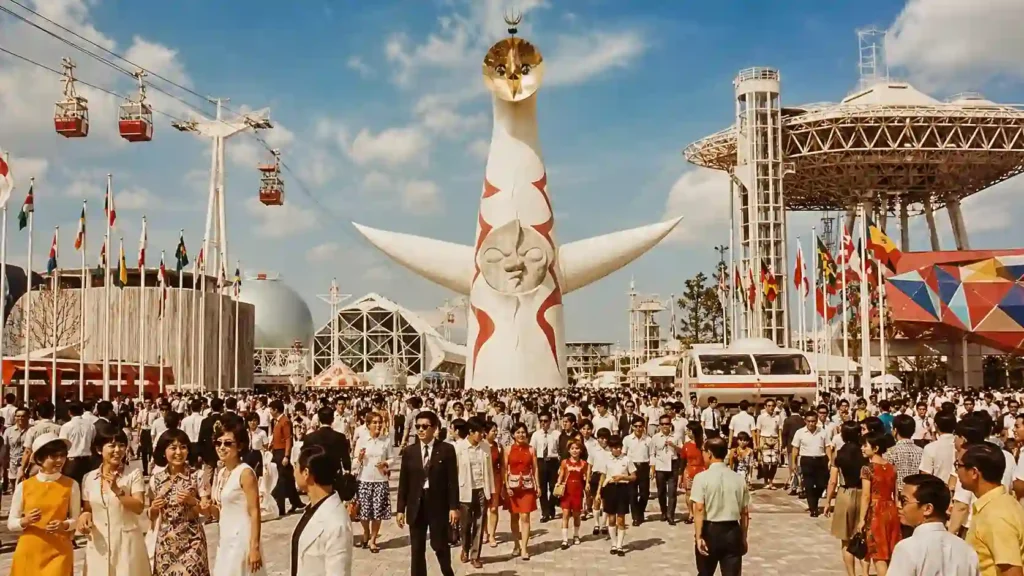
The political passions of the 1960s—the naive illusion that “united, we can change the world”—completely collapsed with the end of the Anpo protests.
Young people, left with nowhere to channel their energy, were swallowed by cities rapidly being paved over with concrete. Smog covering the sky, heat rising from asphalt, and life in uniform apartment complexes where people didn’t even know their neighbors’ faces. It was a period of forced transition into a cold, inorganic space, detached from human warmth.
The Moment “Japanese Folk” Bared Its Fangs
The music scene of the time was dominated by the clean melodies of college folk and protest songs that directly denounced social issues. However, the music of Shigeru Izumiya, emerging from the independent Elec Records, fit neither of those molds.
Before loudly denouncing the social system, he first ruthlessly exposed the “emptiness” and “cunning” within his own soul.
He fiercely rejected beautiful harmonies, choosing instead rough acoustic guitar strokes that felt like forcibly cutting a thick log with a rusted saw. Combined with his raw, gravelly vocals, this “violent dive into the inner self” emitted a unique light in the music movement, completely pre-empting the spirit of later punk rock.
A “Paradox” for Surviving the Nihilistic Concrete Jungle
Truths of the City Exposed by “Negative” Phrasing
The beginning of “Shunka-Shuto” starts with a startling series of negations.
“Born in a town without seasons”
“Raised on a hill without wind”
“Leaving a home without dreams”
“Meeting people without love.”
These phrases list what rapid urbanization took away, as coldly and cruelly as cataloging evidence at a crime scene.
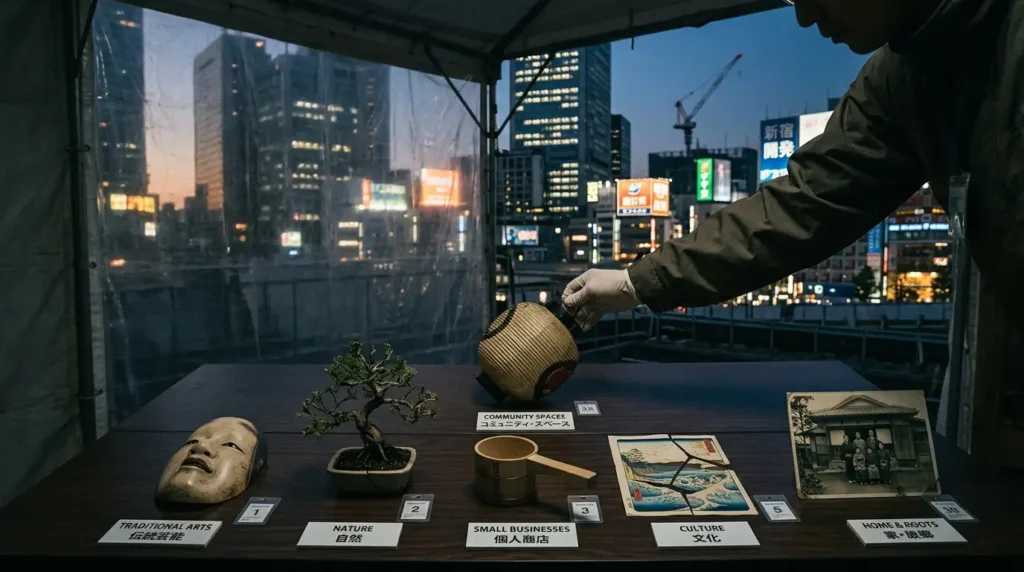
The fear of Japan’s rich, seasonal traditions being buried in the shadows of buildings. It felt like a cityscape of taxidermy, injected with massive amounts of preservatives.
Izumiya perfectly defined his own origins within this sterile prison through these paradoxical “negatives.” This specificity successfully visualized the indefinable anxiety felt by youth at the time—the sense that “something is decisively missing.”
Good Intentions Spinning Out: “Running from West to East”
The line “Thinking it’s for someone else’s sake, running around from west to east” still strikes a chord with intense reality in modern society.
It represents the energy of people struggling to contribute to society, or the fever of past student movements, spinning its wheels. (Come to think of it, Yosui Inoue’s “To the East, To the West” was also released in 1972.)
However, the “kindness” desperately grasped through those good intentions meets a miserable end: “it withered all too easily.” In the dry urban wind, human sincerity loses its freshness instantly. This despair robs the listener of their warmth, like a cold wind blowing through cracks in the asphalt.
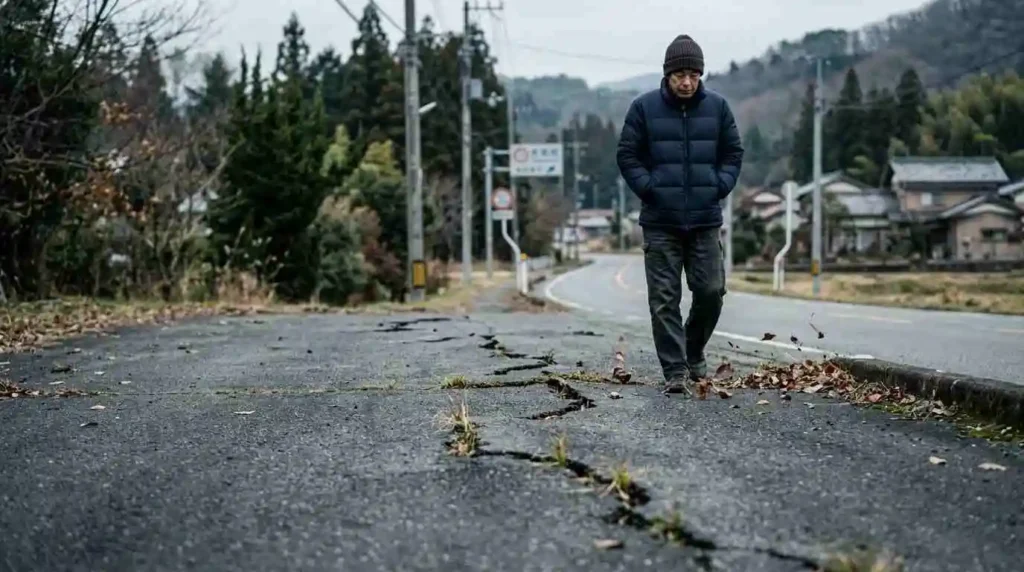
Seasons as Steps Toward “Loss”
The title “Shunka-Shuto” (Spring, Summer, Autumn, Winter) should normally imply a positive cycle of life and harvest. However, Izumiya redefined these four seasons as a “process of destruction and deprivation” for humans cornered in the city.
- Spring: “No margin to even look at spring”—Days of being so busy that the time to enjoy budding life is stolen.
- Summer: “No strength to even survive summer”—Facing a serious decay of mind and body during the season when vitality should peak.
- Autumn: “Wrapping oneself in autumn’s dead leaves”—An escape and resignation, turning oneself into part of the landscape’s wreckage.
- Winter: “Exposing one’s bones in winter”—The ultimate exposure and pain, with all decorations stripped away.
_202605032125-1024x572.webp)
This structure coldly depicts humans being worn down within the massive gears of society. In the depiction of winter, his choice of “exposing” rather than “protecting” himself with warm clothes reveals a resolve bordering on madness. It is only at this lowest point—where there is nothing left to hide—that the song achieves an incredible turnaround.
The Explosion of “Today”—Alchemy Using Despair as Fuel
What makes this song an immortal masterpiece is, above all, the intense refrain of the chorus.
“Everything ends today / Everything changes today / Everything is rewarded today / Everything starts today.”
The word “Today” repeated here does not refer to a mere date on a calendar. It is the moment the fuse of dynamite is lit, burning away all past baggage and future anxieties. Ending and starting collide in the same single instant. This paradigm shift possesses a savage vitality, like jump-starting a long-neglected car engine and watching it roar back to life amidst a cloud of black smoke.
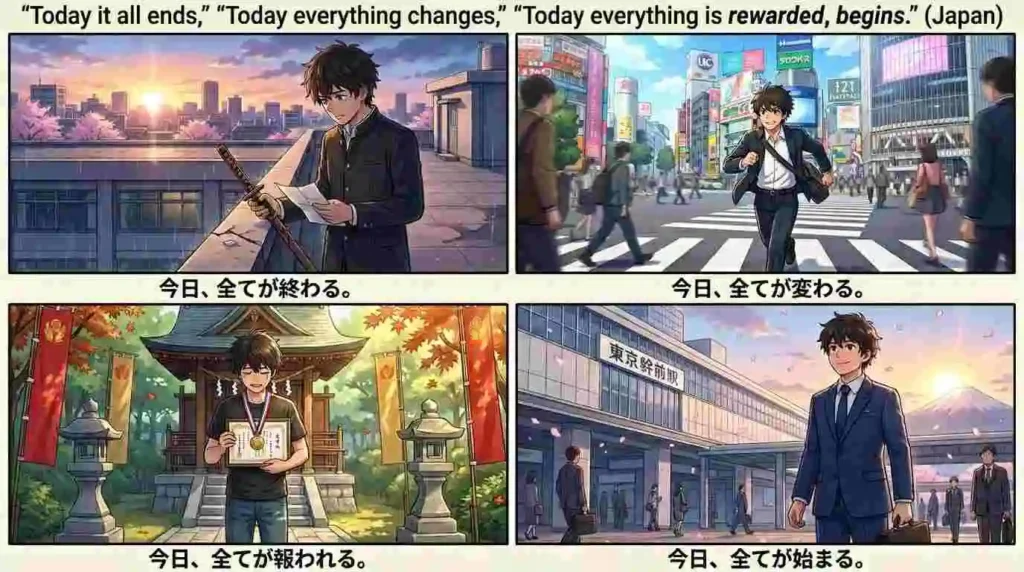
Resolved to Live Embracing One’s Own Cunning
Also noteworthy is the perspective on human “cunning” presented in the latter half. “Glancing sideways at the neighbor / Checking my own path / And so, I became a little more sly / A sheepish grin will continue for a while.”
Humans cannot survive while remaining pure and innocent. We compare ourselves to others, compromise at times, and move forward covered in mud with a forced smile. Izumiya doesn’t denounce this “cunning” from a moral high ground; he accepts it as a survival tactic. Instead of preaching beautiful ideals, he reflects his own clumsy and ugly self in the mirror and thoroughly affirms even that. This is the ultimate reason he continues to garner fanatical support.
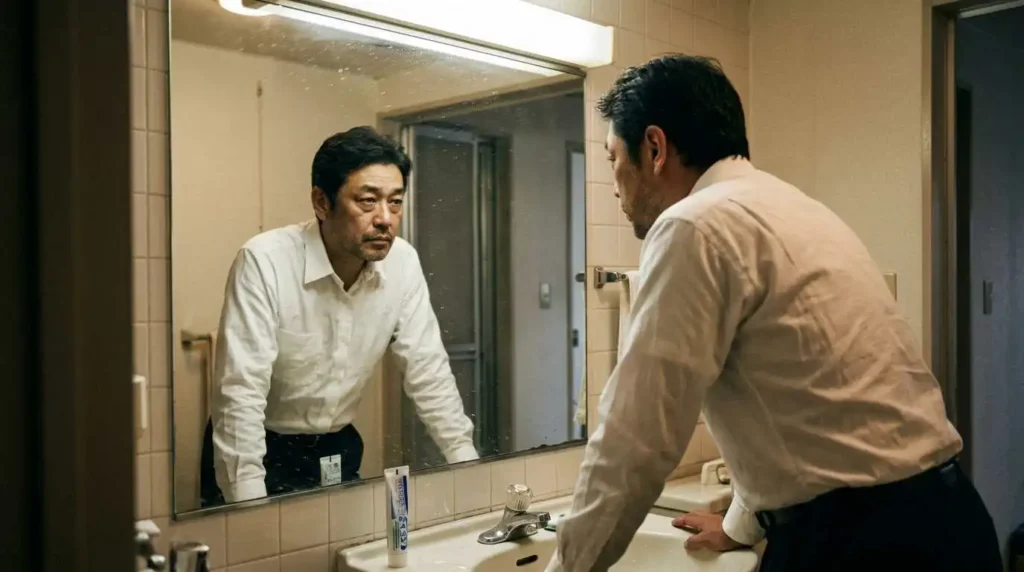
Finally, he throws out a clumsy invitation: “It’s a dirty place, but please drop by if you have time.” He continues, “Just in passing is fine / Please drop by once.” These words capture a longing for a new connection with others, found at the end of absolute isolation.
It is the most honest and sharp voice, coming from a human who has completely cast off their heavy armor.
Closing: Why Shigeru Izumiya Continues to Sing “Today”
More than half a century has passed since its release, and the world has moved beyond a “town without seasons” into a “town of virtual spaces without substance.” Yet, no matter how much technology evolves or life is conveniently packaged, the fundamental loneliness and the instinctive craving to live a raw life remain unchanged from that day in 1971.

The meaning of listening to “Shunka-Shuto” on Shigeru Izumiya’s birthday.
It is not to receive sugary comfort. It is to be confronted with the harsh truth that a real “beginning” only exists after thoroughly destroying the thick pretenses covering oneself and exposing one’s bones. This song has no kindness that strokes your wounds.
“Everything starts today.” When we speak these words, we are liberated from the ghosts of the past. Shigeru Izumiya, well into his 70s, still shouting on stage and burning through “Today” more seriously than anyone, is the strongest proof of this song. While celebrating his birthday, we should also light the fuse of “Today” within ourselves once again.
_202605032-1024x572.webp)


音楽ファン同士の交流・リクエストはこちら / Connect & Request Songs Here