- 🎧 Enjoy this article in audio
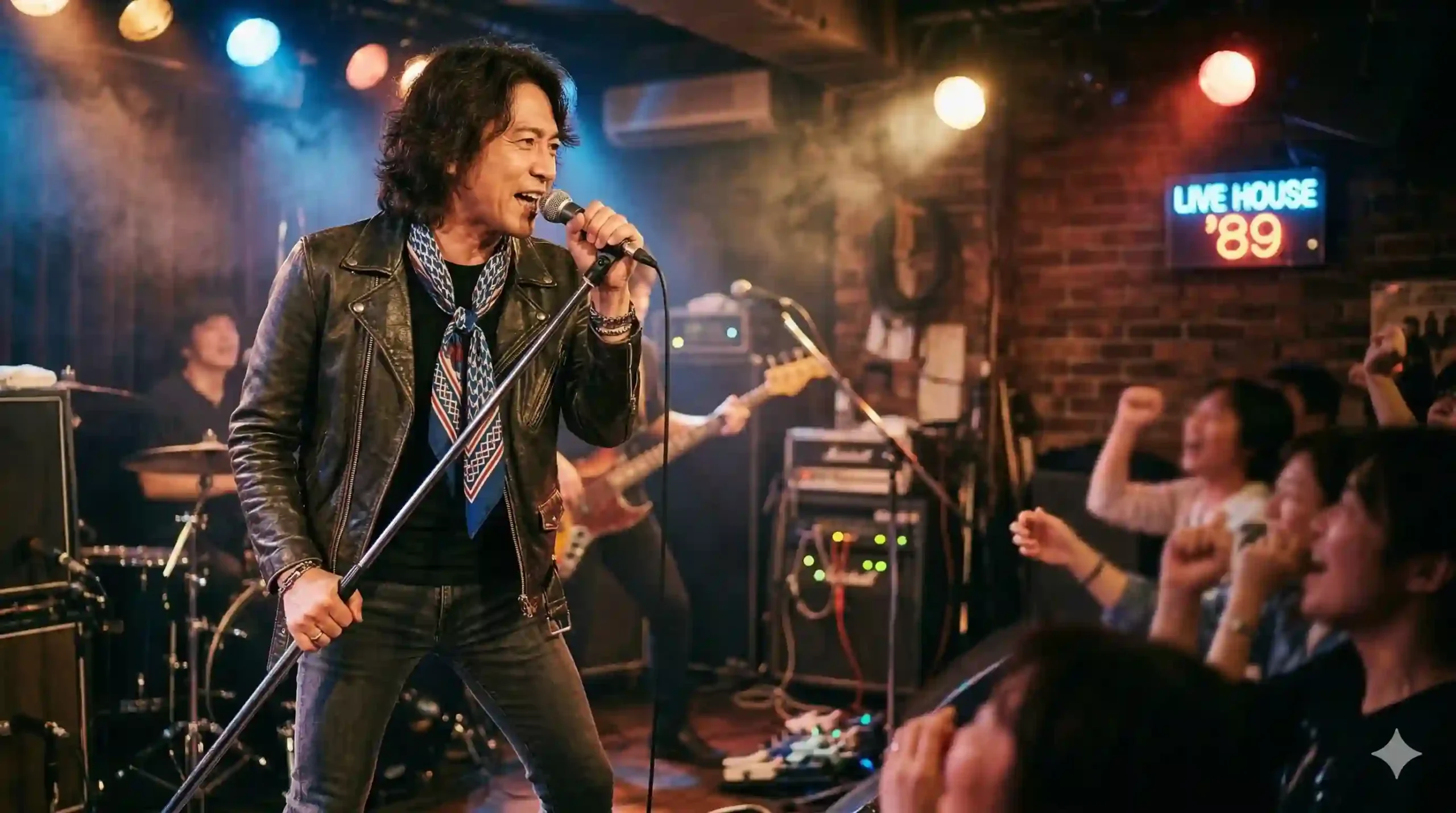
- Today is Motoharu Sano’s birthday.
- Today’s featured song is… “Yakusoku no Hashi (Bridge of Promise)”.
- When I first heard this song
- The birth of a “sincere message” at the peak of the bubble economy
- The drama “Hatachi no Yakusoku” and the miraculous revival of 1992
- Lyrical structure analysis: “Your” actions and “My” resolve
- The overwhelming uniqueness of Motoharu Sano’s vocals and sound
- Conclusion: A rainbow-colored bridge leading to the future
🎧 Enjoy this article in audio
You can easily catch the main points of this article through audio first.
Recommended for those who want to quickly grasp the key takeaways before reading.
🎵 English Narration
A summary of this article in English audio.
⌛ Playtime: Approx. 3 minutes
🎶 Japanese Narration
You can also listen to the same content with a Japanese narration.
⌛ Playtime: Approx. 3 minutes
* Listening to the audio before reading the text will help you understand the song’s background and key appreciation points more dimensionally.
Today is Motoharu Sano’s birthday.
Motoharu Sano (Real name: Tomoharu Sano), born on March 13, 1956, in Tokyo, is one of Japan’s leading rock musicians and singer-songwriters. Since his debut in 1980 with the single “Angelina,” he has brought revolutionary changes to the Japanese pop music scene.
His greatest defining trait is the establishment of a groundbreaking style: perfectly blending the unique beat and groove of English rock ‘n’ roll with Japanese lyrics without any sense of incongruity. His distinctive vocal style, firing off words in rapid succession like a machine gun, delivered a massive shock to music fans of that era.

In the 1980s, he released historical masterpieces such as “SOMEDAY” and “Glass Generation” one after another, gaining tremendous support as the spokesperson for the youth. In addition, through his work as a radio DJ and the establishment of his own record label, he has constantly carved out his own path at the forefront of the music industry. Even now, more than 40 years after his debut, his creative drive shows absolutely no signs of fading. He is a truly charismatic artist who continues to pursue energetic live performances and new sounds.
Today’s featured song is… “Yakusoku no Hashi (Bridge of Promise)”.
Essence of the Lyrics
You are moving forward even as you lose your way.
Even while hurt and feeling lonely, you are trying to spread your wings.
The path you've taken so far hasn't been a mistake, and you will surely cross over into the future.
Someone will build a bridge for you, and you yourself will cross into a new world.
First, please watch the official YouTube video.
■ Japanese Credits
Title: "Yakusoku no Hashi" (Bridge of Promise)
Artist: Motoharu Sano
Lyrics / Composition / Arrangement: Motoharu Sano
Release: April 21, 1989 (Original), October 28, 1992 (Re-release)
Label: EPIC/SONY RECORDS
Motoharu Sano & THE COYOTE GRAND ROCKSTRA
(2016 Tokyo International Forum Performance)
■ Two-Line Commentary
Live footage from the final performance of Motoharu Sano's 35th-anniversary tour, featuring a reconstructed performance of his signature song with his current band formation.
One of his defining live recordings from recent years, highlighting a mature ensemble and a deep sense of unity with the audience.
Released in 1989 as the lead single from the album “The Day We Swim with Napoleon Fish” (*), it was re-released in 1992 after being used as the theme song for the Fuji TV drama “Hatachi no Yakusoku” (The Promise of a 20-Year-Old). It became a massive hit, recording his personal best of over 700,000 copies sold. Driven by a powerful horn section and an exhilarating beat, it is one of Motoharu Sano’s signature songs that belts out a message of absolute affirmation to awkward youths.
* By the way, as a slightly geeky detail, the single version jumps straight into the intro, but the version included in the album “The Day We Swim with Napoleon Fish” starts with the voice (count) of Motoharu Sano himself saying, “One, two, one, two” at the very beginning of the song. ( ;∀;)
When I first heard this song
| My Age | Elementary | Junior High | High School | University | 20s | 30s | 40s | 50s | 60s~ |
| Release Year | 1989 | ||||||||
| When I Listened | ● |
I first heard this song when I was in my 30s, hustling and struggling through my daily life.
I had heard it on the radio during its original release in 1989, but my strongest memory is hearing it play frequently around town when it became a massive social phenomenon as a drama theme song in 1992. In the midst of those busy days, the phrase “Your path up to now hasn’t been a mistake” (Ima made no kimi wa machigai janai) suddenly jumped into my ears, and it really lifted my spirits!
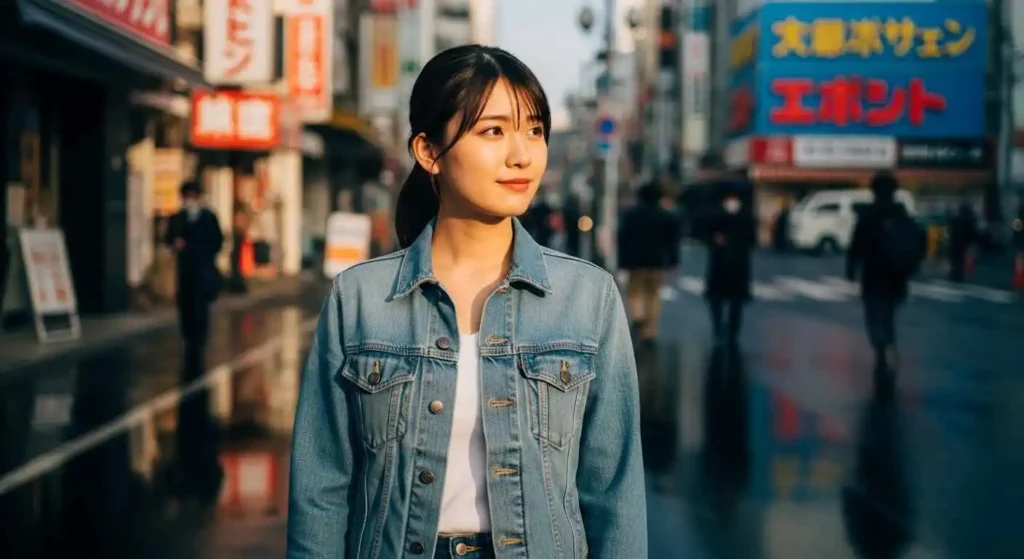
In 1992, when this song was a huge hit via the drama, I was living in Osaka due to a job transfer. Writing this article made me realize once again that I was listening to it during such a restless period, knowing I would be transferred again just a year later.
The birth of a “sincere message” at the peak of the bubble economy
The turbulent historical background of 1989
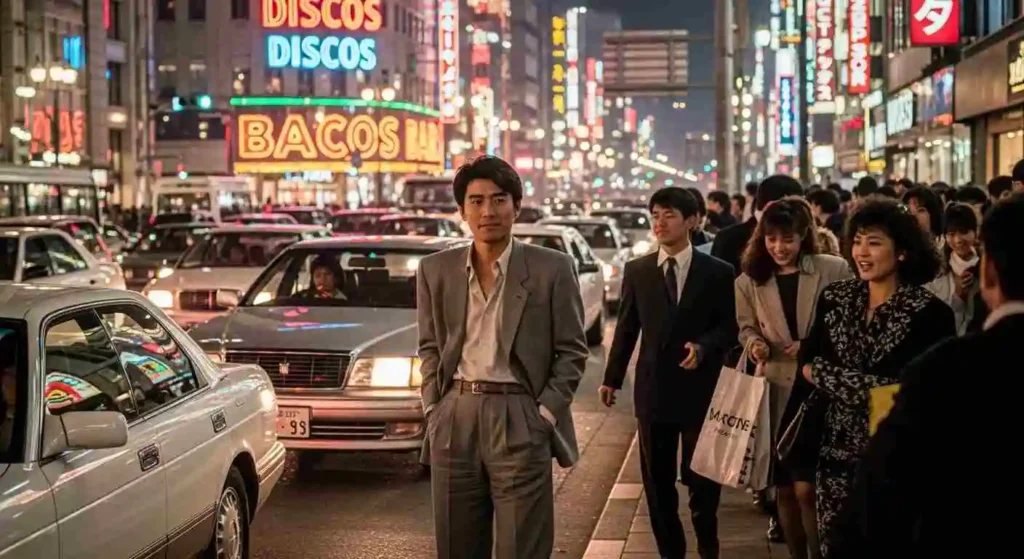
When “Yakusoku no Hashi” was first released to the world in 1989 (the first year of the Heisei era), Japan was in a frenzy over an unprecedented economic boom, at the very peak of the so-called “Bubble Economy.” Luxury cars flooded the streets, people danced the night away in discos every night, and a somewhat restless, floating atmosphere covered the entire country. In the music scene as well, glamorous, hedonistic dance music and fashionable love songs—acting almost like extensions of trendy dramas—dominated the charts.
An honest rock ‘n’ roll answer to a festive society
Against such a backdrop, this song presented by Motoharu Sano radiated an overwhelming sincerity, like a sturdy anchor dropped into a sea of frenzy.
He sharply focused on the “individual inner conflict” and “whereabouts of the soul” that were so easily lost amidst superficial affluence. In an era when everyone acted like a winner, he deliberately depicted the figures of people living while “bewildered in the stolen darkness” and “frustrated in a cracked illusion.”

This was an expression of his pride as a rock musician, trying to scoop up the emotions of the people who were about to fall by the wayside as society as a whole rushed blindly forward. Without pandering to the trends of the times, he unleashed a message that directly shook the souls of his listeners with an earthy yet warm band sound centered around acoustic guitars and a powerful horn section.
The drama “Hatachi no Yakusoku” and the miraculous revival of 1992
The moment the era caught up with the song
It was in 1992, three years after its original release, that this song was truly recognized as a national anthem. Its appointment as the theme song for the Fuji TV drama “Hatachi no Yakusoku” (starring Goro Inagaki and Riho Makise) triggered an explosive hit.
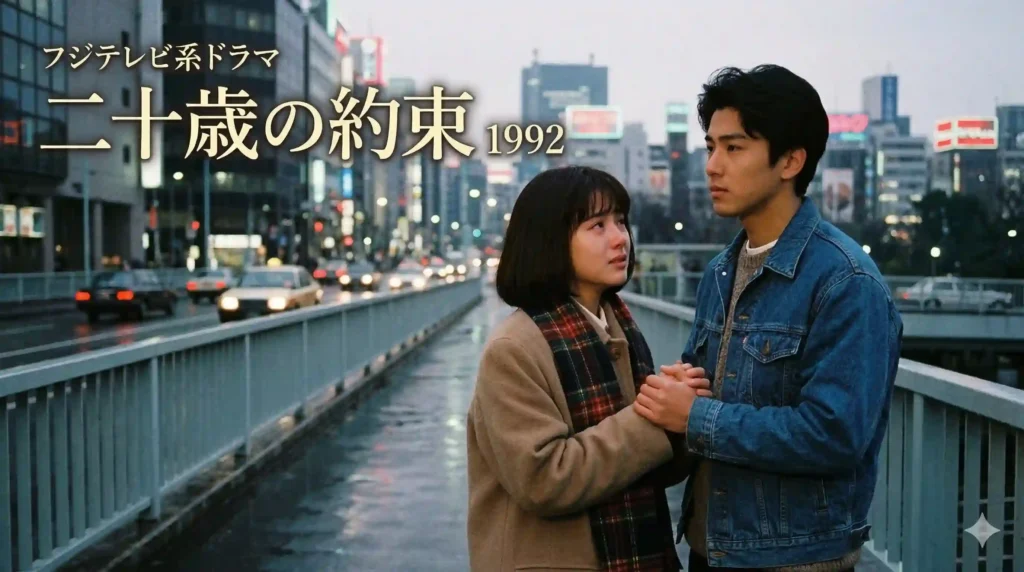
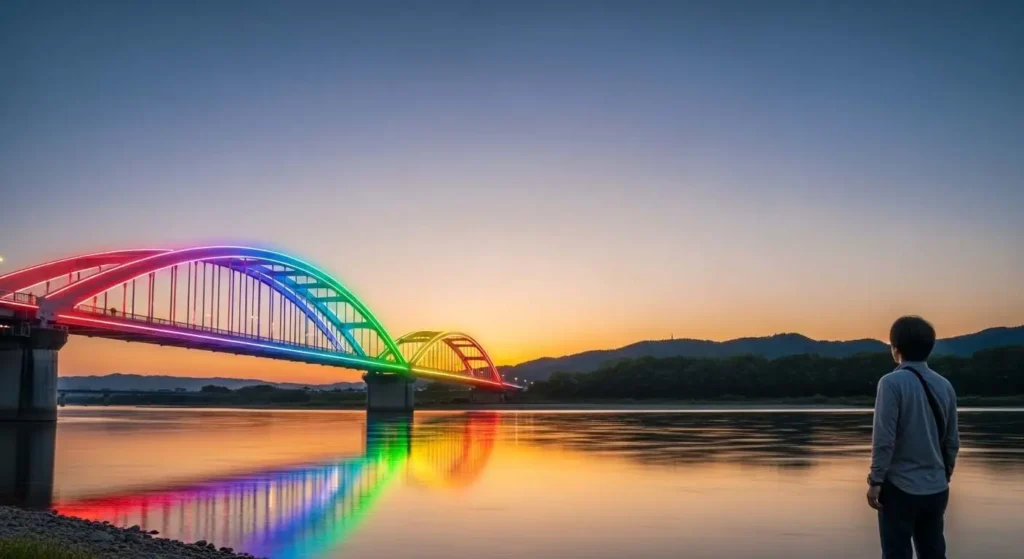
In 1992, the bubble economy had begun to collapse, Japanese society was rapidly cooling down from its past enthusiasm, and anxiety about an uncertain future was starting to spread among the youth. Right at that timing when the era took a sharp turn, Motoharu Sano’s words, “I will build a rainbow-colored bridge and cross the river for you,” resonated with a far more urgent reality than back in 1989.
A stunning chemical reaction with the drama’s story
The drama “Hatachi no Yakusoku” depicted the purity and cruelty unique to the age of “20”—the boundary line between adulthood and childhood—as well as youthful rebellion against society and the resulting setbacks. In response to the walls and sorrows the characters faced in the story, the guitar cutting in the intro of “Yakusoku no Hashi” playing at the end of the episode functioned almost like a bell of salvation. Motoharu Sano’s singing voice powerfully affirmed the characters’ pain, creating a magnificent synergistic effect that seemed to wrap them in an embrace.
As a result, the universal energy of this song was directly transmitted to a new generation of listeners who hadn’t deeply known Motoharu Sano before, leading to the astonishing sales figure of 700,000 copies.
Lyrical structure analysis: “Your” actions and “My” resolve
A story guided by three verbs: “Go,” “Dance,” and “Sing”
When you decipher the lyrics, you realize that this song has a highly logical and theatrical structure. The song is broadly divided into three sections, each starting with the simple verbs: “You go,” “You dance,” and “You sing.”
First Section: “You Go”
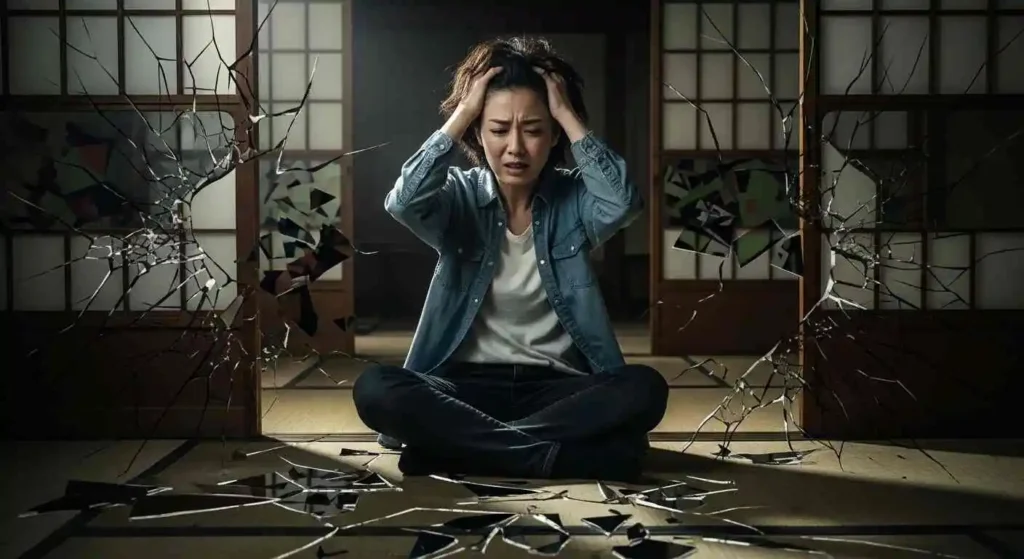
Here, movement under difficult circumstances is depicted, such as “stolen darkness” and “cracked illusion.” Like a single car speeding through the wilderness, it portrays a figure pushing forward restlessly “from the western edge to the eastern edge.”
Second Section: “You Dance”
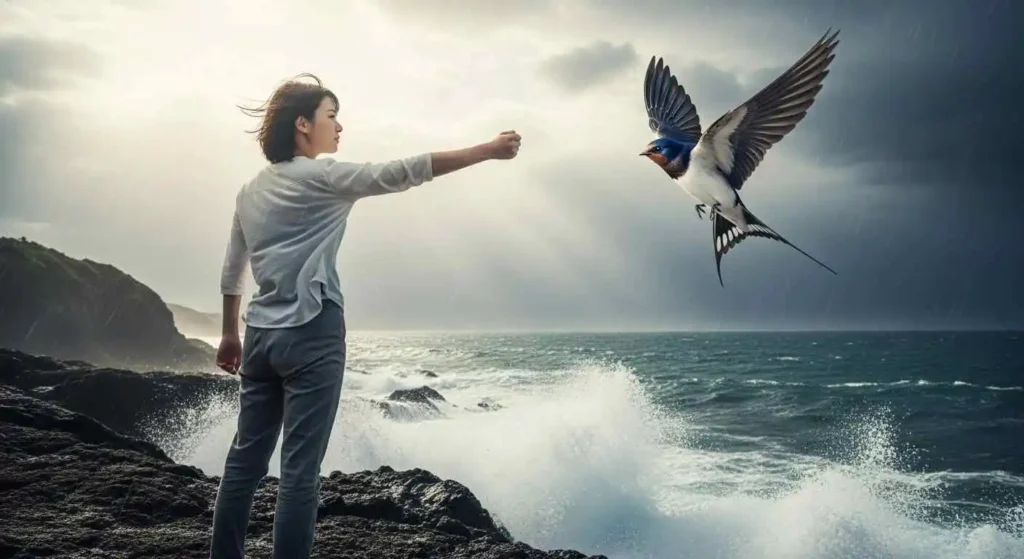
Next, the scene shifts, introducing symbolic expressions like “closed rosebuds” and “a swarm of bees.” Here, it portrays an attitude of trying to survive lightly but powerfully, like a “swallow” spreading its wings to the wind, never losing its vitality even in the face of adversity.
Third Section: “You Sing”
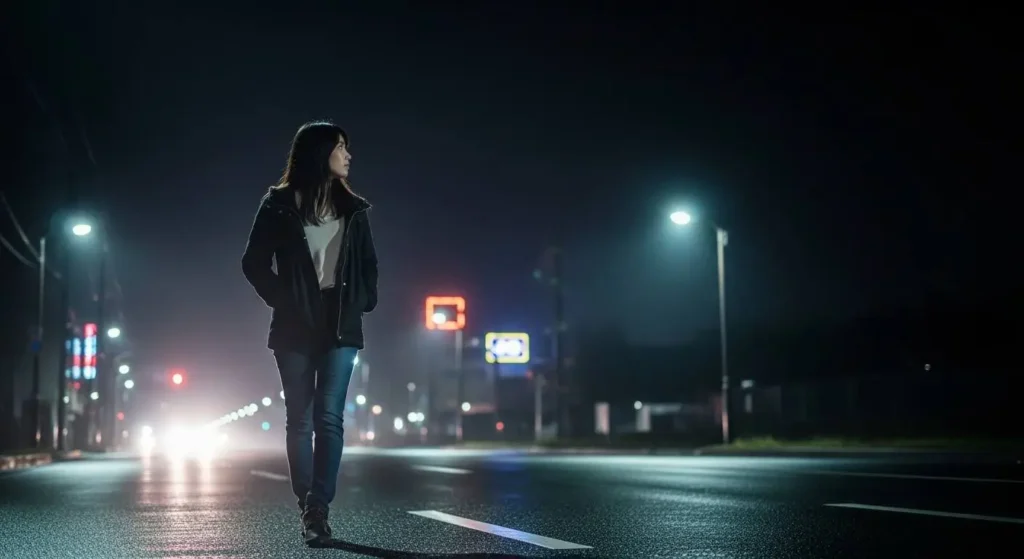
Finally, words that make you feel a more everyday and spiritual friction are lined up, such as “inside the hurried city” and “scorched chest.” Even so, it shows a determination to make the voice of one’s own soul echo in order to “pass through the endless night.”
The ultimate affirmation: “Your path up to now hasn’t been a mistake”
After these descriptions of the struggling “you,” what is unleashed like a single ray of sunlight breaking through thick clouds is the killer phrase, “Your path up to now hasn’t been a mistake.”
Every human being lives with the anxiety of wondering whether their choices were right or if the path they walked was a mistake. Motoharu Sano chose not words of conditional encouragement, but the most powerful words of total affirmation for “everything up until now.” This assertion, completely devoid of hesitation, is the greatest charm of this song and serves as a powerful engine that inspires the hearts of tens of thousands of people.
The overwhelming uniqueness of Motoharu Sano’s vocals and sound
A flow that reconstructed the rhythm of the Japanese language
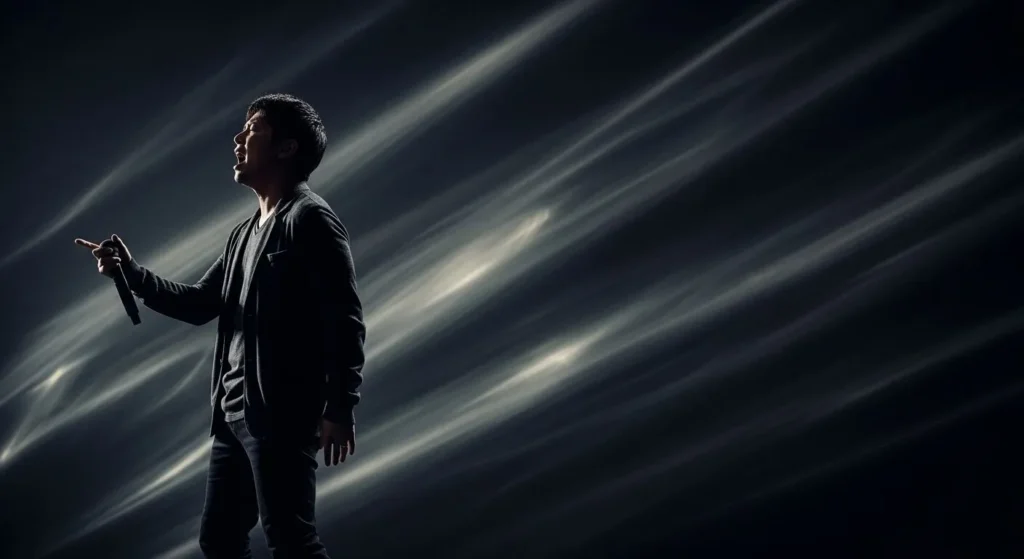
Motoharu Sano’s vocal style can be called an “invention” in Japanese music history. Even in this “Yakusoku no Hashi,” he intentionally breaks the original accents and intonations of the Japanese language, placing words so that they perfectly match the beat of Western rock ‘n’ roll.
For example, he pronounces a long phrase like “bewildered in the stolen darkness” as a single, flowing chunk with a unique, swinging rhythm. Through this technique—almost like playing a percussion instrument with words—he prevents lyrics with a strong message from sounding preachy, allowing them to jump into the listener’s ears as pure musical pleasure.
A “gaze toward everyday people” sharing common ground with Bruce Springsteen
Motoharu Sano’s musical roots show strong influences from great American rock icons like Bob Dylan and Bruce Springsteen. In particular, his method of depicting the dramas of ordinary people desperately living in the corners of the city through a large-scale band sound has something in common with Springsteen’s “Born to Run.”
However, Motoharu Sano does not stop at mere imitation. He has completely sublimated that method to fit the climate and emotions of Japan. In the line “I will build a rainbow-colored bridge and cross the river,” the dynamism of Western rock and the melodious emotion of Japanese pop songs are beautifully fused, constructing an original soundscape that only he can create.

Conclusion: A rainbow-colored bridge leading to the future
“Yakusoku no Hashi” transcends the framework of merely being a hit song from the bubble era; it is a song possessing a universal strength that hasn’t faded in the slightest even today.
When we feel like we are about to stumble over something in our daily lives, or when we are about to lose sight of our own worth, Motoharu Sano’s singing voice appears before our eyes as a “rainbow-colored bridge” as solid as a strong building. And it powerfully pushes our backs, saying, “Your path from now on won’t be a mistake either.”
Among the countless bridges he has built in the Japanese music scene, this “Bridge of Promise” is the most beautiful and sturdy, and it will surely continue to guide many people across generations to the other side of hope.

音楽ファン同士の交流・リクエストはこちら / Connect & Request Songs Here