
- 🎧 Enjoy this article with audio
- 🎧 No. 2 is “Mamotte Agetai” (I Want to Protect You)
- First, please listen to the official audio
- A Precise and Warm Soundscape that Gently Embraces the Era
- The Ultimate Affirming Power of “It’s Okay if You Can’t Do Anything”
- The “Magic Words” That Continue to Resonate Across Generations
- In Conclusion: The “Things to Protect” Within Us
🎧 Enjoy this article with audio
🎶 English Narration
Press the play button to listen to the English narration of this article.
🎵 Japanese Narration
You can also listen to the Japanese narration of this article.
* Listening to the audio before reading the text will give you a more multidimensional understanding of the song’s background and evaluation points.
🎧 No. 2 is “Mamotte Agetai” (I Want to Protect You)
“My Personal Best 15” is finally approaching its peak. The song I have chosen for No. 2 is “Mamotte Agetai,” released in 1981.
It was the exact year I finished my student days and entered the working world.
Even within Yuming’s (Yumi Matsutoya) long career, the role this song played is immeasurable. It is a monumental song that fully opened the door from the brilliant genius of her “Yumi Arai” era in the 1970s to becoming the national pop star “Yumi Matsutoya” of the 1980s and beyond.
At the time, this melody, which overflowed in the streets as the theme song for the Kadokawa film School in the Crosshairs (Nerawareta Gakuen), engraved the shape of “unconditional love” into the hearts of many people across generations.
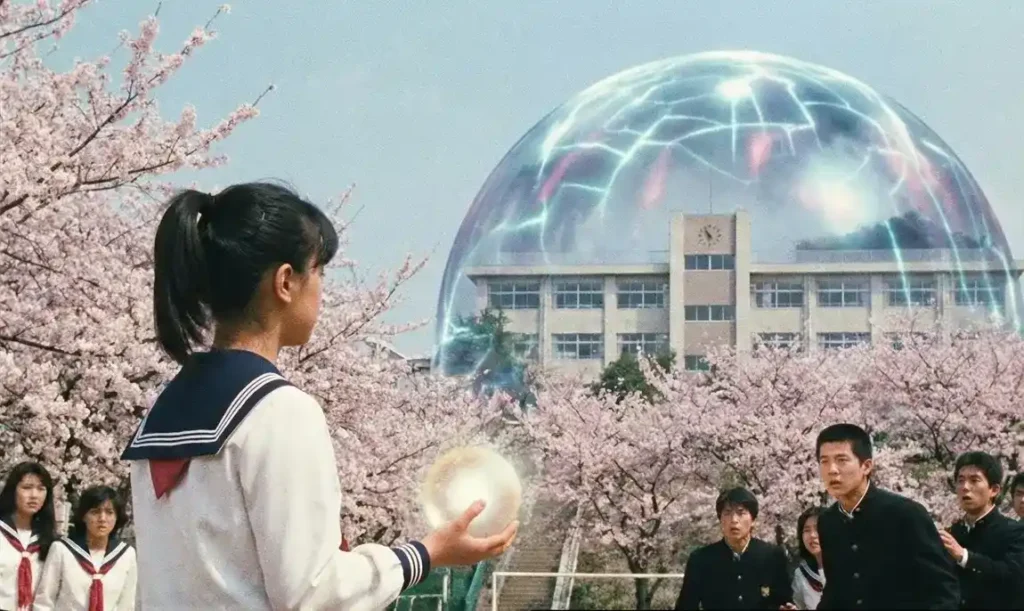
This time, I would like to talk about the true nature of the overwhelming “embrace” this song radiates, blending Masataka Matsutoya’s magical soundscape with the drawers of my own memories.
First, please listen to the official audio
■ Japanese Credits
"You Don't Have To Worry / Mamotte Agetai"
Vocals: Yumi Matsutoya
Lyrics/Composition: Yumi Matsutoya
Arrangement: Masataka Matsutoya
Provided by: Universal Music Group (Official Audio)
■ 2-Line Commentary
One of Yumi Matsutoya's representative songs of the 1980s, a pop song featuring a message that gently wraps around the listener.
Also known by its English title, it's a classic Yuming masterpiece that fuses a sense of security with an urban sound.
A Precise and Warm Soundscape that Gently Embraces the Era
When talking about this song, you absolutely cannot leave out the sound of that intro, which completely changes the atmosphere the moment it plays. This time, while mixing in a slightly technical perspective, I would like to explore the “soundscape” this song possesses.
The Synthesizer Sound that Opens the Door to Memories
I am convinced that the intro to “Mamotte Agetai” is one of the most perfect introductions in Japanese pop music history. The sparkling, yet somewhat melancholic synthesizer tone. It is as if the heat haze of a distant summer day or the first star shining at dusk has been converted into musical notes.

The music scene at the time was in a transitional period, moving from analog to digital. Masataka Matsutoya’s arrangement utilizes the latest electronic instruments (synthesizers) without ever making it a cold, mechanical sound. Rather, by exquisitely blending it with acoustic warmth, it gently invites the listener to “a nostalgic landscape that everyone holds deep within their heart.”
The rhythm section (bass and drums) never steps too far forward, continuing to mark a steady tempo like a powerful heartbeat supporting the protagonist’s firm resolve. And the guitar tone that resonates in the interlude gently strokes our cheeks like the wind of that day when we sat on the dusk bank and talked about our dreams. It is precisely because of this meticulously calculated “blanket of sound” that the vocal’s simple, straightforward message reaches straight deep into our hearts.

From My Student Days in Tokyo to the Emotional Support of My Working Years
When I had just become a working adult, my head was full of my own dreams and future, and I think I didn’t yet understand the true weight of the emotion of “protecting someone.”
On the extension of the memories of chasing dragonflies in a distant summer and playing innocently on the bank until dusk, I was just purely enjoying this beautiful melody.
However, once you step out into society, pipe dreams are no longer enough. Helped by my youth, time just passed quietly without me ever questioning the busyness or the harshness.
Around that time, I met an older woman.
Writing it this way might seem to have some special meaning, but in reality, there was just an “encounter,” and that was it.
She was a graceful and humble person. And I think she probably had feelings for me. We didn’t become lovers; it was a peaceful relationship where we went out with friends and sometimes spent time just the two of us.
I don’t remember the exact details, but there was one time I was treated to dinner at her family home.
For some reason, I still remember the night we drove back together to Oita City. Only the presence of her sitting next to me, seemingly wanting to convey something but leaving it unspoken, remains in my memory.
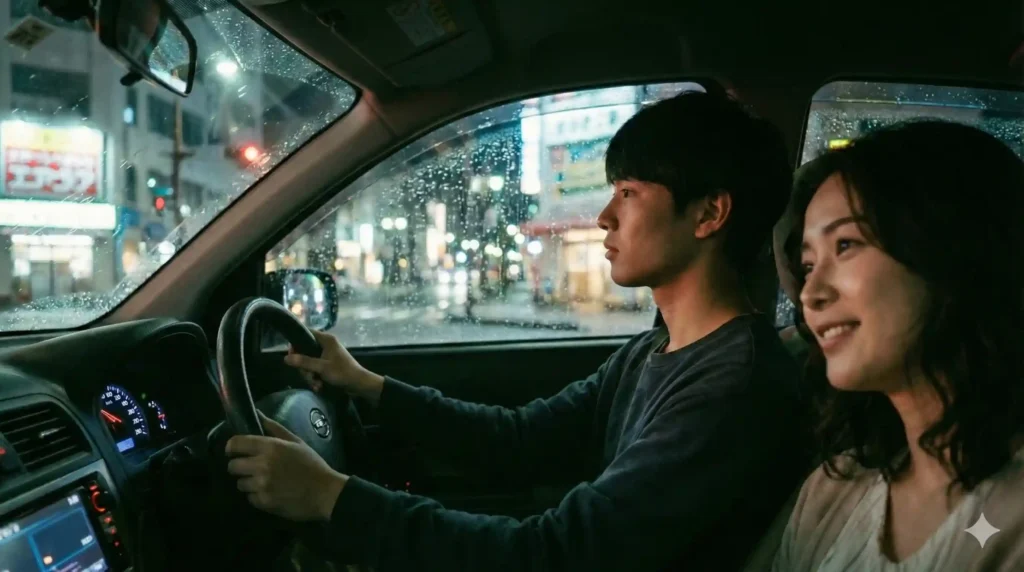
At the time, I was still dragging out a breakup from my student days and didn’t have the emotional room to build a new relationship. Even so, she always treated me with unwavering kindness.
Looking back now, the scenes from that time come to mind overlapping with the song “Mamotte Agetai.”
If I had taken a little more time to face her, the relationship might have taken a different form. But I think back then, I was somewhere enjoying the freedom of not having a girlfriend, and I didn’t even have the capacity to be considerate of her feelings.
It feels like she was the only presence, before or since, who quietly watched over me from afar without saying a word.
The Ultimate Affirming Power of “It’s Okay if You Can’t Do Anything”
The reason this “Mamotte Agetai” goes beyond the framework of a simple love song and has become the soundtrack to my life, and the lives of many others, lies in the “ultimate affirming power” flowing at its foundation.
To Protect is to Keep Believing
The protagonist of this song notices that an important person is worried about something and showing a depressed face, which makes them feel blue as well. However, they don’t offer an easy solution or try to forcefully cheer them up. While strongly wishing to “protect you from everything that causes you pain,” they simultaneously sing out, “It’s okay if I can’t do anything else.”
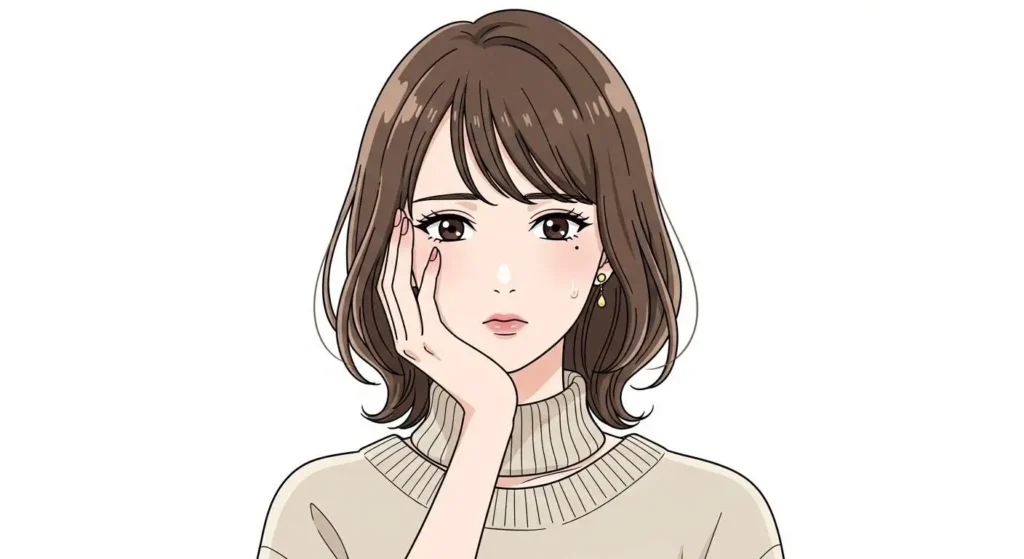
Those straight, shining eyes on the day we first exchanged words. The figure from back then that gently embraced the slightly clumsy and irresponsible me. The protagonist completely affirms not only the “present” of the depressed person in front of them, but also the “brilliant past” and “inherent charm” that person naturally possesses, and just quietly stays by their side.
Physically solving a problem for someone is not the only way to “protect” them. Even when you are apart and cannot meet, continuing to walk with their existence held in your heart. And continuing to wait, believing that the day will come when the other person will stand on their own two feet again and be able to shape their dreams just like before. I can deeply understand that this is exactly the true essence of the act of “protecting” that Yuming imbued into this song.
The Three-Dimensional Feel of “Unconditional Love” Depicted by the Chorus Work
What brilliantly supports such deep spirituality from an acoustic aspect is the multi-layered chorus work that increases in thickness toward the second half.
Every time the words “You don’t have to worry” or straight expressions of affection are repeated, the background chorus wraps around the listener gently, yet powerfully, like multiple overlapping waves. It goes beyond a message from just one single human being and takes on a certain sacredness, as if the whole world is blessing them with, “You are fine just the way you are.“

Masataka Matsutoya’s arrangement never resorts to excessive orchestration here. While keeping the “power of the voice” of the vocals and chorus at the forefront, the rhythm section marks the beat firmly, as if planting its feet on the earth. This three-dimensionality of sound gives an unshakable persuasiveness to the ultimate affirmation that “it’s okay if you can’t do anything.”
The “Magic Words” That Continue to Resonate Across Generations
The nostalgic scenic descriptions scattered throughout the song are also excellent.
What Connects Memories of a Distant Summer to the Present Location
Memories of a distant summer day, holding my breath and chasing dragonflies. Or an innocent afternoon sitting on the bank until dusk, losing track of time while weaving lotus flowers.
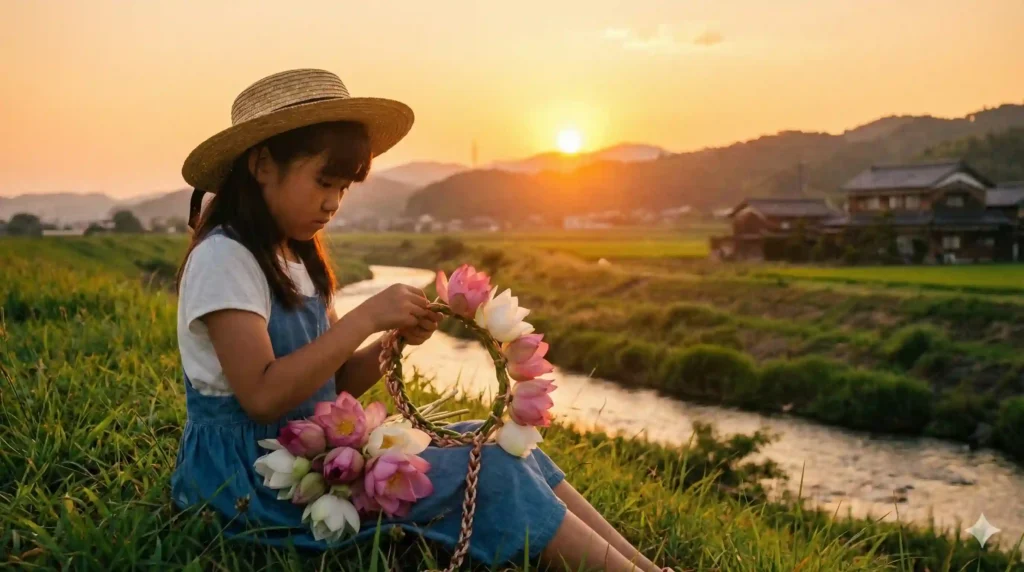
I want you to catch your dreams once more with that pure feeling from back then. That wish was directed at someone important, but at the same time, it was a prayer directed at all of us who are about to come to a standstill, battered by the waves of society. When suffocating amidst the complex worries of adulthood, Yuming uses motifs of innocent original landscapes that anyone can share, such as “dragonflies” and “lotus flowers,” to instantly time-slip our hearts back to “those days,” unraveling our stiffened emotions.
The Lingering Resonance of an Eternally Continuing Fade-out
And the end of this song does not meet a dramatic ending, but slowly fades out while the beautiful chorus and band sound refrain.
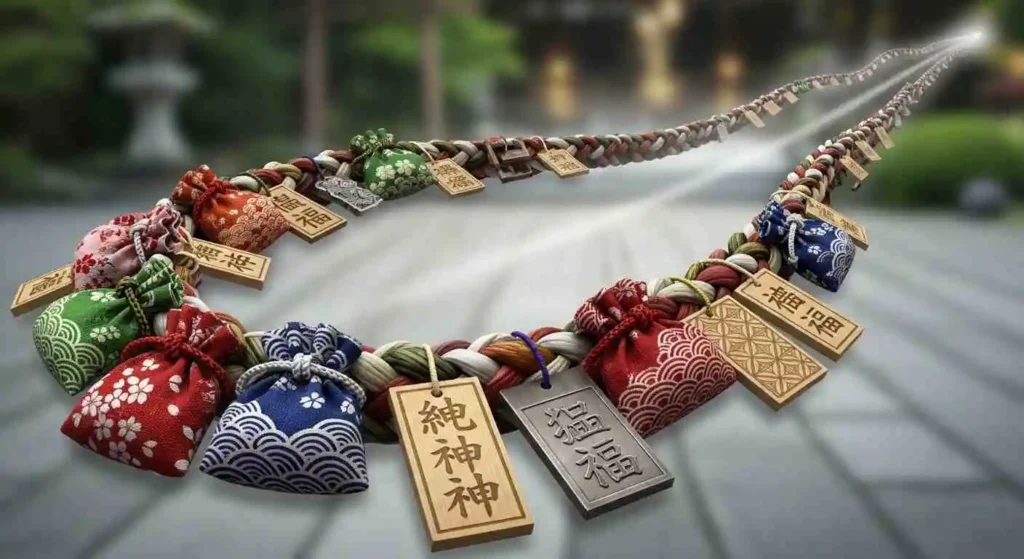
I cannot help but feel a deep meaning in this way of ending as well. This is because it seems to hint that the wish of “I want to protect you” will continue eternally even after the song is over. Even when we return to our daily tasks and are about to stumble over something again, if we listen closely with the ears of our hearts, we can hear that warm chorus coming from somewhere. This fade-out seems to hand us such an “endless amulet.”
In Conclusion: The “Things to Protect” Within Us
Shining at No. 2 in my Personal Best 15 is “Mamotte Agetai.”
The reason this song has not faded at all even after a long time has passed since its release is that it crystallizes the “fundamental human kindness” of caring for and completely believing in someone, with a perfect melody and a precise soundscape.
From the emotional support of those days when I was desperate having just entered society, to the me of today. Listening to this song again, a deep feeling of gratitude wells up, realizing just how much I have been “protected” by so many people up until now. At the same time, I feel as if I am quietly being asked: in my life from now on, whose blue feelings will I be able to soothe, and whose dreams will I be able to keep believing in?
The culmination of the “embrace” that music possesses. I am glad to have been able to share this masterpiece, which stays close to my heart with a different temperature no matter how many times I listen to it, with everyone as my No. 2.

音楽ファン同士の交流・リクエストはこちら / Connect & Request Songs Here