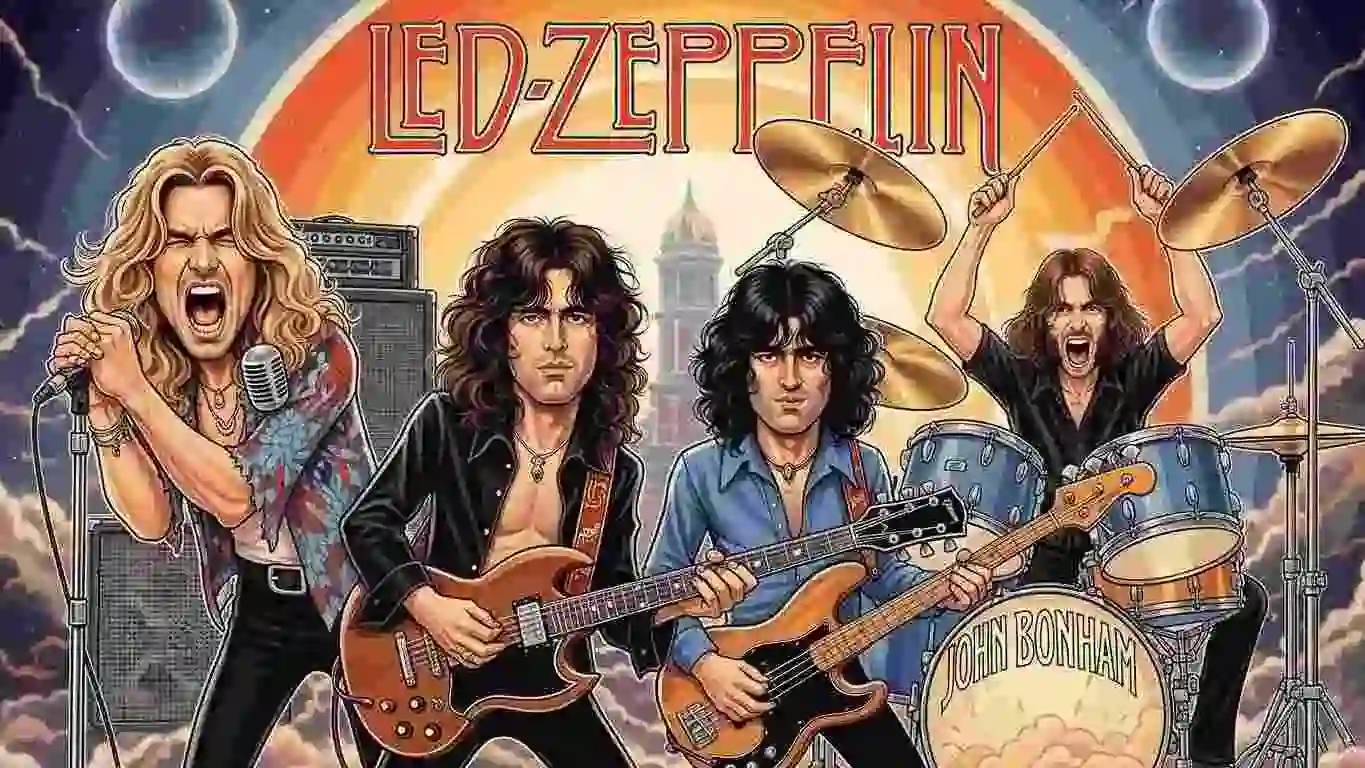
■For more details about 【Led Zeppelin】, click here・・・・➡ 🎈(Zeppelin)
🎧 Listen to the Audio
This article is also available as an approximately 3-minute audio narration.
Experience the impact of No.5, “Good Times Bad Times” — the opening declaration of Led Zeppelin’s debut,
and the precise blueprint that instantly reshaped the future of rock.
🇺🇸 English Narration
🇯🇵 Japanese Narration
🎸【Led Zeppelin Edition】No.5 Is…
At No.5 is the shocking “declaration of war” that opened their 1969 debut album and brought about an irreversible shift in the history of rock: “Good Times Bad Times.”
It has been one year and three months since I started this blog. The foundation that has kept me writing almost every day lies in the passion I carried from my junior high and high school years, and in the four years I spent as a university student in a modest apartment in Higashi-Matsubara, Setagaya. At this pivotal position — No.5 — this song once again shakes my consciousness deeply.
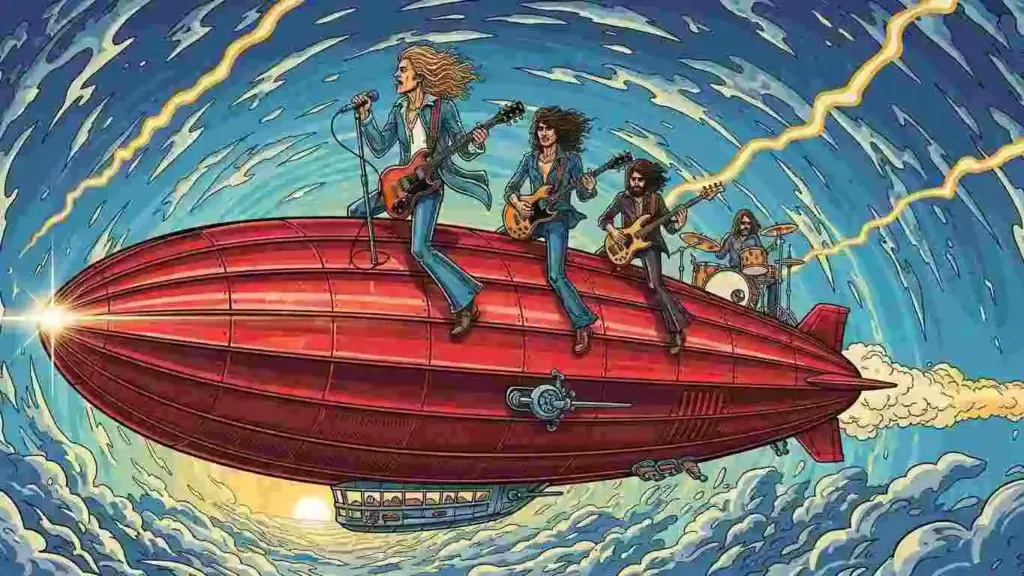
This track is not merely an opening song. It is the precise “blueprint” that the band — soon to become a massive airship — presented to the world. Excessive virtuosity packed into less than three minutes, and an overwhelmingly vivid sense of pop that conceals that virtuosity. Here, the true nature of Led Zeppelin as an “epicenter” is compressed to its densest form — fully worthy of the No.5 position.
Ultra-Short Summary: Rhythm of Fate and the Blueprint
The impatience of youth and the unstoppable current of fate.
An awakening that reconstructs the old proverb “there are good times and bad times”
through ironclad order and relentless rhythm.
A powerful first step that burns away sentimentality and compels us to walk on our own feet.
🎥 As always, start by watching the official YouTube video.
🎬 Official Video Credit (Studio Version)
Song: Good Times Bad Times
Artist: Led Zeppelin
Album: Led Zeppelin I (1969)
Written by: Jimmy Page / John Paul Jones / John Bonham
Audio: Remastered (Official Audio)
Two-Line Commentary
The legendary beginning in just 2 minutes and 46 seconds.
Within this short span, a revolutionary ensemble that overturned the very concept of rock is condensed to its absolute limit.
🎬 Official Video Credit (Live Version)
Song: Good Times Bad Times
Artist: Led Zeppelin
Live: Live at the O2 Arena (2007)
From: Celebration Day
Two-Line Commentary
A breathtaking performance that opened the 2007 reunion concert.
The massive engine, restarting after nearly thirty years of silence, roared with an undiminished, immutable energy.
💡 A Small Tip
Some listeners may be surprised by how different Plant sounds here compared to his debut-era self.
Across the 38 years since 1969, the young “Golden God” evolved into a seasoned bluesman, rich in depth and grit.
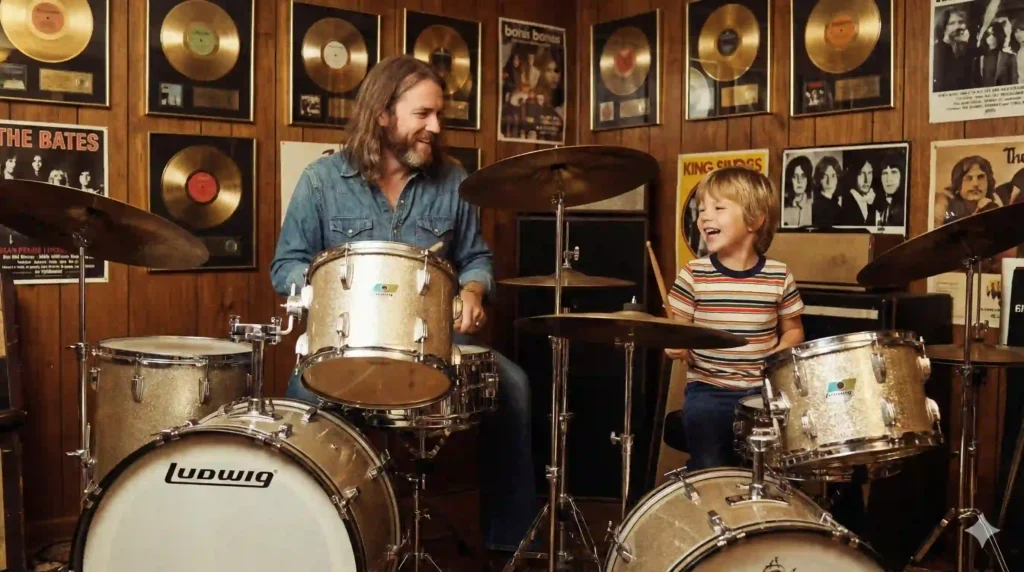
And above all, imagine the drummer driving that powerful beat from behind. On stage is Jason Bonham, the son of the late John Bonham, who passed away in 1980. Seated at his father’s kit, he strikes those triplets as if inheriting the very soul itself. From father to son, and into the present — “Good times, bad times,” the story continues without end. That truth fills me with deep emotion and an inescapable sense of respect.
1969: The Moment “Pop” Was Reborn as Order
In the late 1960s, the British rock scene was enveloped in psychedelic haze and the light-footed steps of the mods. But the two opening chord strikes of “Good Times Bad Times” — that sharp, unmistakable “BAM, BAM!” — instantly turned all prior “rock common sense” into history.
A Hard Strike That Burned Away the Psychedelic Fog
What stands out here is not brute loudness, but an astonishingly refined sense of pop. Within a radio-friendly runtime of under three minutes, excessive virtuosity is packed with surgical precision. This is not pop as compromise, but pop as clarity — proof of their extraordinary objectivity in presenting complex innovation as a lucid blueprint.
Sitting on the tatami floor in my Higashi-Matsubara room, facing this track, I was left speechless by its cold, functional beauty. It carried the collective will of four young men, determined to put an end to chaos and establish an entirely new order. (Okay, maybe that’s laying it on a bit thick!)
John Bonham’s Right Foot: A Revolution in Rock’s Stride
The true highlight of this track is John Bonham’s rapid triplet bass-drum pattern.

How a Single Bass Drum Rewrote the Laws of Physics
The story is well known: many drummers at the time were convinced he must be using a double pedal. In reality, Bonham was producing a beat beyond human physical limits with a single right foot.
But more important than the technical feat is the fact that this rhythm fundamentally changed rock’s sense of “stride.” The once-light step was rewritten into overwhelming propulsion — like a heavy tank charging at full speed. Bonham’s rhythm was not mere accompaniment; it reinforced the song’s skeleton with steel and became an unavoidable force that dragged the listener’s consciousness into the future.
“Good Times, Bad Times”: A Rhythm for Moving Forward
Listening to this through the thin walls of that Higashi-Matsubara apartment, I felt something like the inescapable footsteps of fate. Bonham’s beat does not leave the lyrics’ portrayal of life’s ups and downs as sentiment. It transforms them into something pre-verbal — a resolve to keep kicking the ground and moving forward, no matter what.
Page and Jones: Commanding Sonic Space
On top of Bonham’s explosive beat, Jimmy Page casts his spell.
The Leslie Speaker and the Birth of Sonic Depth
The wavering motion created by the Leslie speaker in Page’s guitar solo suddenly introduces a sense of “light and shade” into the rigid exchange of riffs.

This is not merely an effect. Page meticulously calculated how sound should dominate space. The coexistence of razor-sharp impact and floating shimmer, like light rippling on water, became the foundation of the “sonic temple” Led Zeppelin would later build.
Musical Ballast: The Intelligence of John Paul Jones
This “miraculous collision” avoids disintegration thanks to John Paul Jones, the band’s ballast of intellect. Perfectly synchronized with Bonham’s triplets, his bass line sings melodically at key moments. He rarely stands out, yet without him everything would collapse. That quiet professionalism gives this song the order of a finely crafted work.
Robert Plant: The Cry of a New Era
Breathing living warmth into this solid ensemble is Robert Plant.
A Voice as an Instrument, Words as Urgency
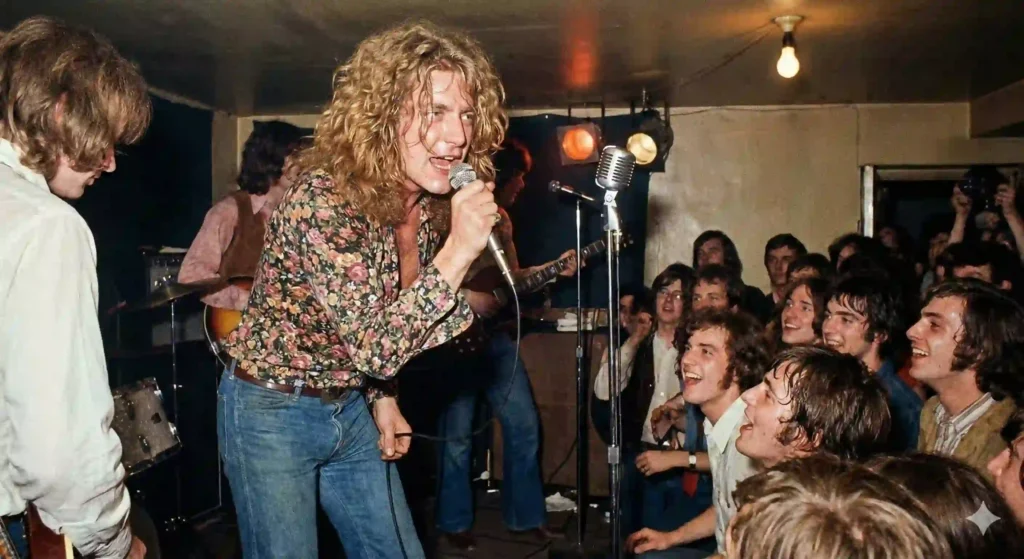
At the time of the debut, Plant stood out not for the later majesty of a “rock god,” but for the freshness of a young man brimming with restless urgency. His vocals do not get buried beneath the wall of sound created by the other three; they function as an integral instrument within it. (This is something I truly feel whenever I listen to Led Zeppelin.)
The refrain “Good times, bad times…” is not a sentimental confession. Within the raging ensemble, it resonates like a phenomenon. What Plant presented was the persuasive power of the scream itself — beyond lyrical meaning — and in doing so, he rewrote the very definition of a rock vocalist.
No.5: A Proud Point of Origin
Why does this song belong at this position? Because it is the blueprint that packages, in its purest form, everything Led Zeppelin represents: physicality, sonic architecture, intelligence, and impulse.

Why This Rank?
On this journey that began at No.25, we explored the band’s diversity up through No.11, and from No.10 onward, their essence. Now, standing at the entrance to the staircase leading to the Top 4 — the temple of rock itself — we needed to return once more to this origin point.
Three Minutes as the Beginning of an Endless Journey
After one year and three months of weaving words almost every day, this song also forces me to rethink what it means to keep going. There are good times, and there are bad times. But turning all of it into fuel, and continuing to draw new blueprints — that is what this song teaches.

Many years have passed since the days I flipped records in that Higashi-Matsubara room. Having loved, known loneliness, and continued swimming through the sea called music, this song no longer appears to me as a relic of the past, but as a living shock — still throwing sparks as it spins in the present.
In Closing: Toward the Next Abyss, the Top 4
The legend of Led Zeppelin began here. The first arrow they loosed has not lost its speed, even after more than half a century.
Placing this song at No.5 also allows us to see more clearly the summit of the “Top 4” that lies ahead. At last, we step into that abyss — a realm so deep that even words hesitate.
The next rank: No.4.
There, a certain “point of arrival” awaits —
one that transcends even the framework of rock itself.
(No.5 “Good Times Bad Times” — End)

音楽ファン同士の交流・リクエストはこちら / Connect & Request Songs Here