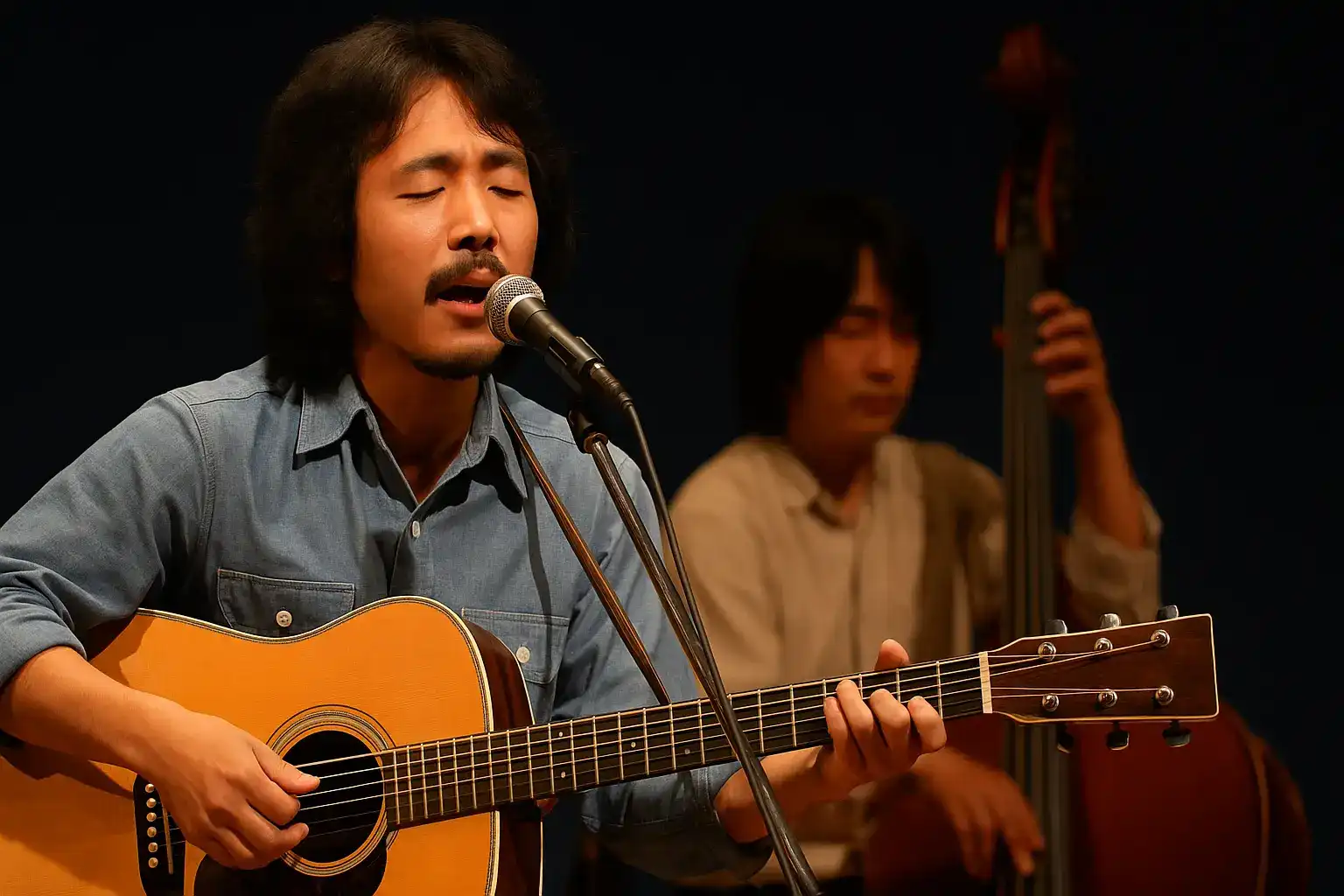
🎧 Enjoy the audio narration of “Ano Uta wa Mou Utawanai no Desu ka” (Listen to this article)
🎵 Japanese Narration
You can listen to a Japanese narration of this article by pressing the play button.
🎶 English Narration
You can listen to an English narration / summary of this article.
Listening first will deepen your understanding of the world depicted in “Ano Uta wa Mou Utawanai no Desu ka.”
🎸 Kaze Best 15 – No.10
No.10 is “Ano Uta wa Mou Utawanai no Desu ka” — “Why Don’t You Sing That Song Anymore?”
This song follows the memories of a woman who once shared her daily life with a musician—“you”—in small live houses and modest bars of the 1970s. The setting is not glamorous. It is the sound of an inexpensive guitar, the smell of night rain, and the texture of rooms where people gathered for music. These elements create a vivid sense of the everyday atmosphere surrounding Japan’s folk scene at the time.
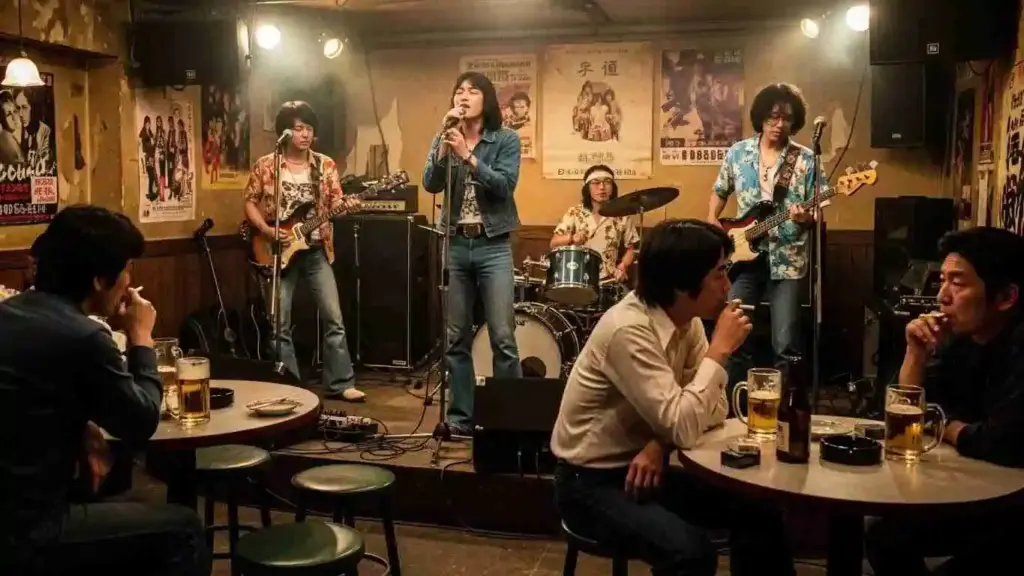
The narrator watched you perform from the back of the room, observing not only the stage but the environment in which your songs were formed. Although the two have long gone separate ways, small remnants of that time—fragments of sound, scent, or chance encounters—quietly revive those memories. It is a story that blends light and shadow, seen only by someone who once stood close to a working musician.
Summary
The narrator is a woman who once stayed close to a man devoted to music.
She watched him perform many times from the back of small venues, sharing the air, noise, and texture of those nights.

Years later, they live separate lives.
A small note in a newspaper revives memories she thought had settled.
She is not questioning or accusing him for no longer singing that song.
Instead, she quietly reaffirms that she was once part of his musical world.
Official Audio
Official Credits
Title: Ano Uta wa Mou Utawanai no Desu ka (Single Version)
Artist: Kaze
Label: PANAM / NIPPON CROWN
Album: “Kaze Single Collection”
Words & Music: Shozo Ise
© NIPPON CROWN CO., LTD.
YouTube: Official audio (PANAM official channel @panamlabel)
Quick Notes
A defining track from Kaze’s mid-70s period, showcasing Shozo Ise’s lyrical clarity.
The narrative is understated yet emotionally resonant, which is why it continues to attract listeners today.
Basic Information
Release & Album
Released as Kaze’s second single on December 10, 1975.
Later included on the album “Toki wa Nagarete…”, released on January 25, 1976. As a lead single, it helped define the mood and tone of the album.
Although not a major chart hit, the song earned long-term appreciation for its strong narrative and the realism of its folk-era setting.
Charts & Historical Context
Between 1975 and 1976, Japan’s folk scene was rooted not in large halls but in intimate venues where the distance between artist and audience was minimal.
Even as folk musicians gained more TV exposure, their songs were nurtured in the small, everyday venues where performers and listeners shared the same air.
Songwriting that focused on everyday life—rather than big, dramatic gestures—was especially valued during this era.

◆ Themes and Worldview of the Song
The Narrator’s Background
The narrator is someone who once shared a unique closeness with the musician. Their bond cannot be reduced to romance alone—it is defined by sharing the environment in which music was created. She saw him during rehearsals, after long nights, and on quiet walks home while the weather shaped the mood of the evening. These fragments form a layered memory connecting daily life and music.
Her role was neither a typical audience member nor a conventional partner. She stood beside the musician in a way that allowed her to witness moments invisible to most. This perspective brings depth to the narrative and gives the song its distinctive atmosphere.
How the Story Begins
The song begins when the narrator happens to read a newspaper article about the musician’s recent activities. It is an ordinary moment, yet it suddenly opens a door to memories she had quietly stored away.
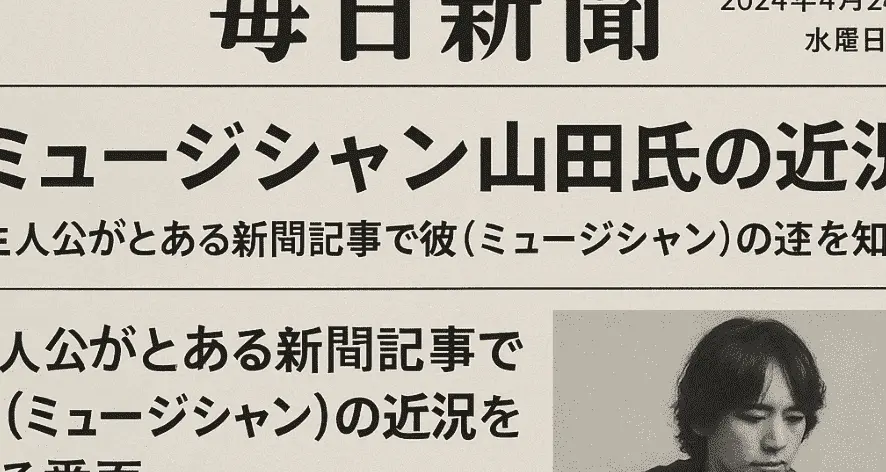
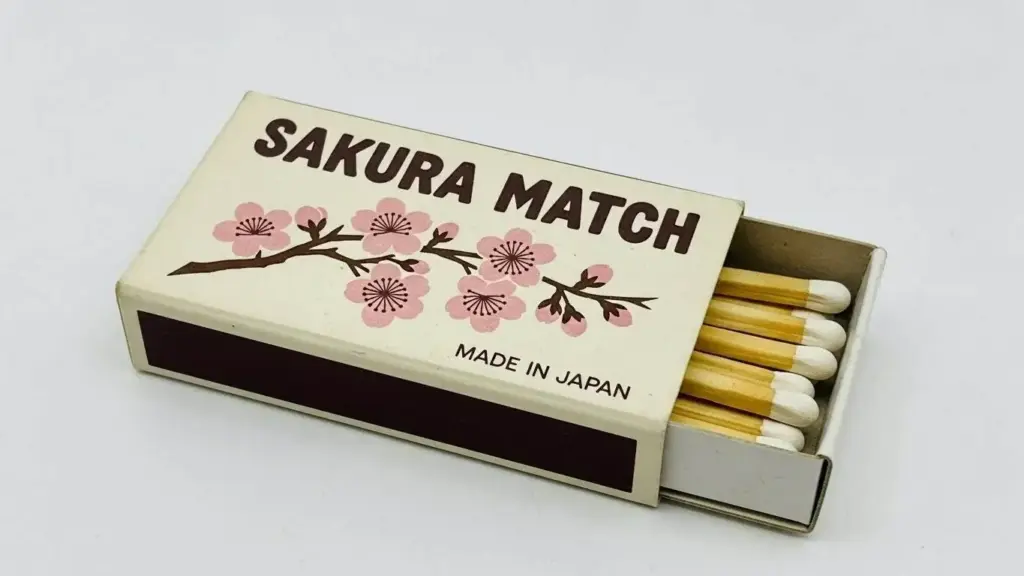
From that moment, memories reawaken: the dim stage lighting viewed from the back of the room, songs she once believed might have been sung for her, the atmosphere inside the venue, the sound of rain outside, and the faint scent rising from a matchbox he once carried.
These recollections belong to someone who once lived near the creative process of a musician. Though the opening is quiet, layers of emotion begin to move beneath the surface—this internal shift shapes the worldview of the entire song.
In 1975–76, although folk musicians sometimes appeared on television, their true activity centered on small venues across Japan. These intimate spaces built the culture of the era.
The song references:
- The back seat of a live house
- A small bar or café
- A matchbox
- The scent of rain
These details carry the realism of their time, presenting a grounded portrayal of a musician’s everyday life. Though not a chart-dominating hit, the song is widely regarded as a foundational piece that shaped the early worldview of Kaze.
Interpreting the Lyrics
Symbolic Scenes
In the middle section of the song, the narrator recalls the musician performing with his guitar in a small venue, illuminated by faint lighting amid a gentle murmur of voices. These memories are not simply nostalgic moments—they are tied to the fabric of her everyday life at the time.
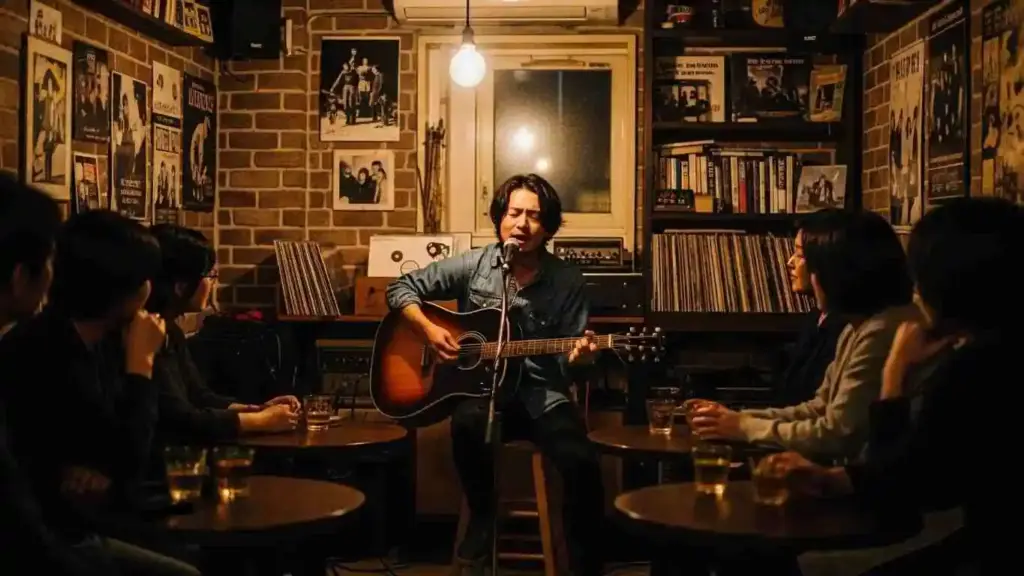
The references to conversations, gestures, and sounds evoke a period when music existed just beside ordinary life—a hallmark of the folk era.
When she learns he no longer sings that song, she does not respond with disappointment. Instead, she arrives at a quiet realization:
“That song was a symbol of the time we once shared.”
The central theme is not about longing for what was lost but about acknowledging the value of a time that undeniably existed.
The Narrator’s Internal Change
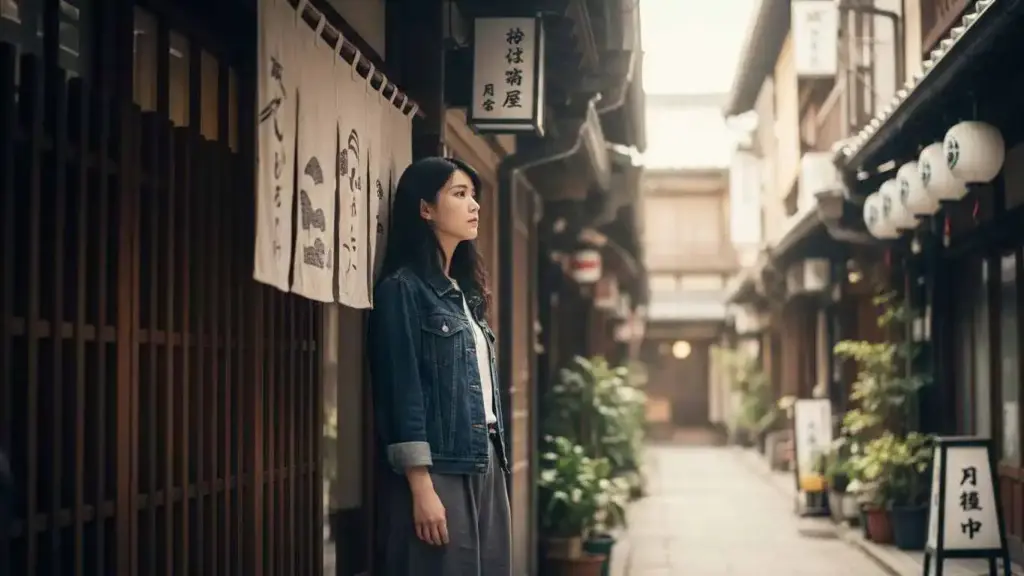
As the song progresses, it becomes clear that the narrator is moving forward. The memory stirred by the newspaper clipping is not a desire to return to the past but a moment of recognition:
“I was once part of his world.”
This quiet self-assurance creates the lasting depth of the song.
Sound & Vocal Style
Arrangement Characteristics
The guitar does not push forward with rhythmic force. Instead, it sits in the background, reflecting the narrator’s emotional distance and giving room for the voice to carry the story. This restraint allows subtle nuances in the vocals to stand out.

Shozo Ise’s vocal delivery avoids dramatic emphasis. He outlines emotions with a light touch, enabling the listener to naturally align with the narrator’s perspective. This understated singing style contributes greatly to the song’s impact.
Why It Ranks in the Top 10
What Sets This Song Apart
Among Kaze’s catalog—rich with themes of youth, travel, and reflection—this song stands out for portraying the relationship between a musician and the one who once stayed close during his performances. This perspective is rare within their works.
The vivid image of the narrator sitting in the back of the venue is emblematic of the folk culture of the time. It highlights the small-scale, face-to-face environments where music was born.
Additionally, the song is memorable for its:
- Calm narrative tone
- Lack of dramatic emotional escalation
- Dense, precise memories that shape the story
A Line That Invites You to Listen Again
Despite the absence of flashy chart success, this song represents a refined point of arrival for narrative-driven folk music. It grows in value over time rather than relying on immediate impact.

If you revisit the song while recalling the narrator watching the stage from afar, the atmosphere of that era may emerge vividly once again.

音楽ファン同士の交流・リクエストはこちら / Connect & Request Songs Here