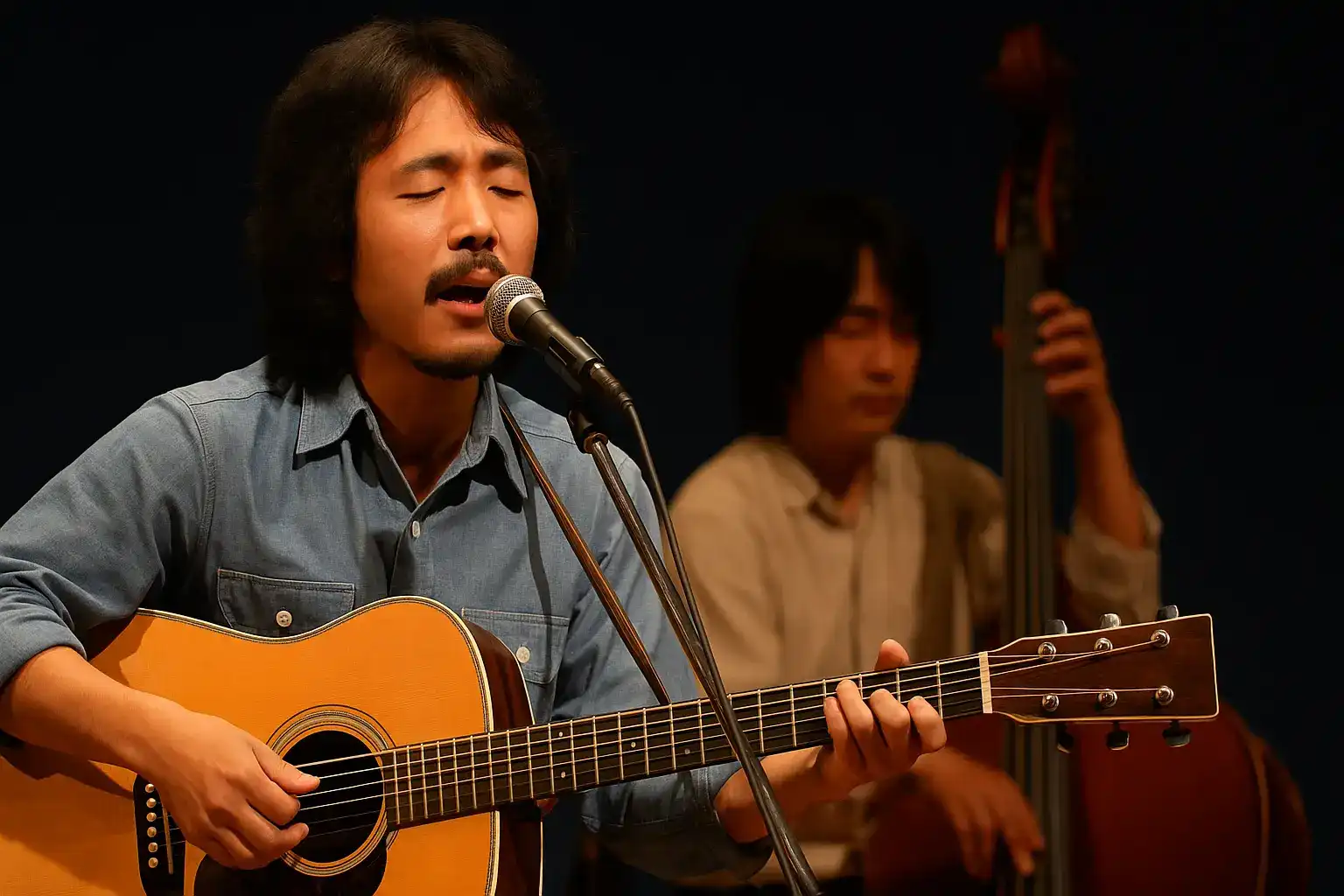
🎧 Enjoy “Turn Left on Route 3” in audio (Listen to this article)
Press the play button to listen to a Japanese narration of this article.
You can listen to an English narration / summary of this article.
Listening to the narration first will help you enjoy the world of “Turn Left on Route 3” more vividly before reading the main text.
🎸【Kaze】Best 15 – No.15 “Turn Left on Route 3”
Today marks the beginning of a brand-new series: “My Personal Best 15 – Kaze Edition.”
Many of you may already know this, but Shozo Ise of Kaze was originally a member of the legendary folk group Kaguyahime.
I listened to Kaguyahime often during my junior and high school days, and Kaze became a big part of my college life. Naturally, the two bands evoke very different memories and emotional landscapes for me.
Kaguyahime—music of my youth.
Kaze—music of an older, more reflective version of myself.
This article does not go into the full history of Kaze. When talking about Kaze, most people focus on Shozo Ise as the principal melody-maker. I covered his musical background in detail in the Kaguyahime Edition.
He was born in Tsukumi City—the same city in Oita Prefecture where I was born. He is my senior from both elementary and junior high school, and someone I’ve always been proud of.
Now, let’s get to the main topic.
No.15 is “Turn Left on Route 3.”
A quiet, contemplative ballad.
There are moments in city life when you suddenly feel the urge to escape toward the sea. This song beautifully captures that longing—an impulse to go “back” somewhere—while gently tracing old memories and shifting emotions. Kaze’s soft melodic style and Shozo Ise’s understated narrative give the song a natural sense of nostalgia.

Summary
The protagonist, overwhelmed by the rhythm of city life, drives toward the seaside—a place once frequently visited.
Along the way, memories of someone once dear quietly return: photographs taken by the sea, a faint expression, a sense of time slipping by.
The trip is calm and introspective, and before the seasons change, the protagonist knows they must return to everyday life.
The song unfolds with soft restraint, allowing past and present to subtly overlap.
First, enjoy the official video
✅ Official Credits
Title: Turn Left on Route 3 (2021 Remaster)
Artist: Kaze
Label: Nippon Crown Co. Ltd.
Lyrics & Composition: Shozo Ise
© NIPPON CROWN CO., LTD.
Release: 2021-09-22 (Auto-generated by YouTube)
✅ Two-line commentary
A signature track from the golden age of Japanese folk music, now officially available in a 2021 remastered version.
Because the label itself supplied the audio to YouTube, it is safe to treat this as an official recording in blog posts or articles.
Basic Information About the Song
Release / Album
“Turn Left on Route 3” was released during the late 1970s, a highly creative period for Kaze. The track showcases Shozo Ise’s refined storytelling style. It was later remastered and officially reissued in 2021 as the “2021 Remaster.”
During these years, Kaze expanded their arrangements beyond folk, adapting to the musical evolution of the time while maintaining their core sound.
Charts & Cultural Context
The song was not a major chart-topping hit, but it has remained a long-loved favorite among fans of Kaze.
The late 1970s marked a transitional era from folk to “new music,” with many songs exploring themes of distance, memory, and shifting lifestyles. Within that trend, this track stands out for depicting a “journey within everyday life”—quiet yet deeply resonant.

Themes and Atmosphere
The Protagonist
The protagonist feels an urge to leave the fast pace of city life and head toward the sea—not as an escape, but as a way to regain balance.
The contrast between urban speed and the calm of nature sets the tone for the entire piece. This journey becomes a quiet act of self-resetting.
The Beginning of the Narrative
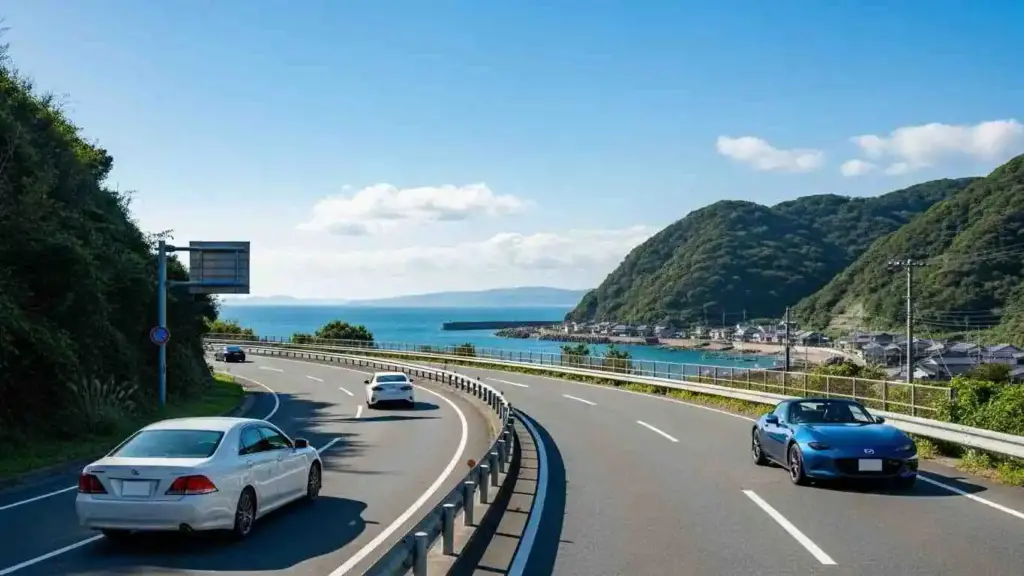
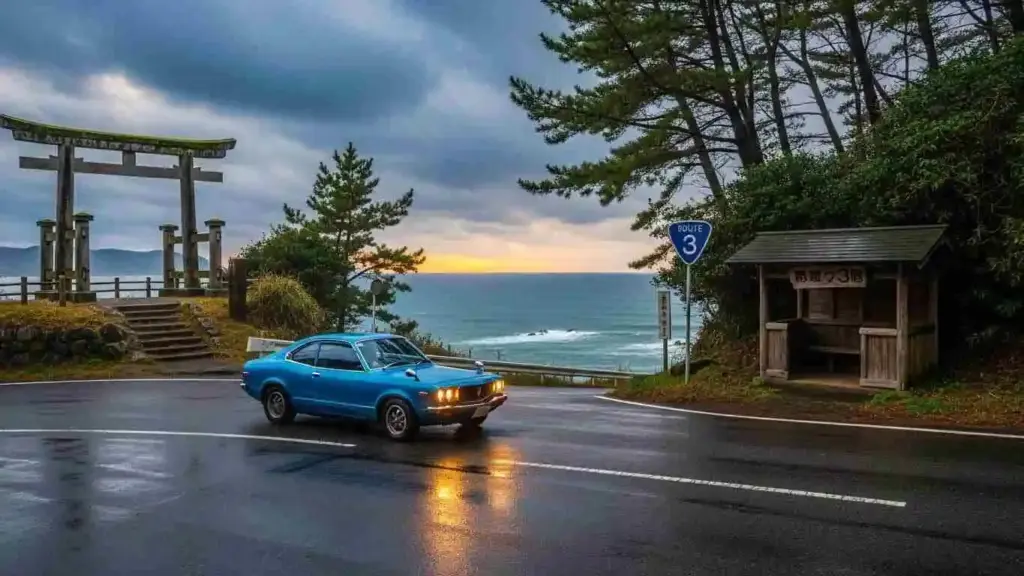
The first half of the song provides vivid, almost cinematic detail: turning left on Route 3, driving toward the coast, sensing the changing season. The listener feels as though they are in the driver’s seat.
Importantly, the protagonist isn’t simply headed for the sea—they are approaching a space where long-held memories may surface. The groundwork for emotional reflection is quietly set.
Key Lyrics & Interpretation
Symbolic Lines
In the middle of the song, the protagonist recalls a photograph of someone they once spent time with. The lyrics offer minimal verbal detail yet carry a quiet weight: Why are they no longer together? Why does the memory remain?
The song leaves space for the listener to supply their own meaning.

Here is one brief quoted line:
“You only wanted to look at the beautiful things.”
This line represents the protagonist’s attempt to understand the feelings of the person in the old photograph. It hints that they may not have been facing the same emotional direction at the time, expressing a subtle distance between past and present.
Emotional Shift
The journey gradually shifts from revisiting a nostalgic place to examining one’s present self.
The sea becomes a boundary between past and present—a space where unresolved feelings quietly rise to the surface.
The song grows increasingly introspective, focusing on internal motion rather than external scenery.

The ending mentions the need to “return before the season changes,” expressing both acceptance and a quiet wish to pause time—just for a moment. This tension gives the song its depth and lingering emotional impact.
Sound & Vocal Expression
Arrangement
The arrangement is one of Kaze’s most atmospheric works—music that feels like a landscape rendered in sound.
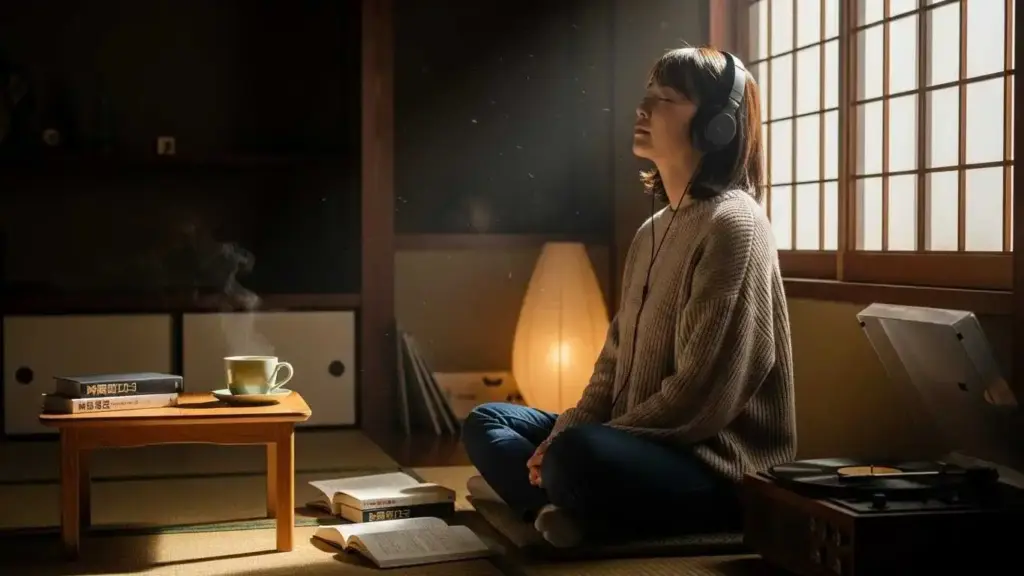
The gentle acoustic guitar suggests the length of the drive, while the restrained rhythm hints at steady car movement. Ichizo Seo’s arrangement transitions smoothly between scenes, creating an immersive sense of travel.
The melody never overstates emotion; instead, it allows subtle changes to convey meaning. Shozo Ise’s vocals stay calm but warm, matching the song’s understated tone.
This balance between narrative distance and emotional intimacy enriches the song’s imagery.
Why It Deserves a Spot in the Best 15
What Sets It Apart
Kaze has many songs centered around love, travel, and seasonal change. This one stands out because it avoids direct emotional expression and instead depicts the story entirely through the protagonist’s quiet perspective.
It captures a universal moment—the desire to revisit the past—without dramatic embellishment. The result is a song that grows deeper with every listen.
The use of a single photograph as a narrative device is also distinctive. Even with minimal description, the atmosphere becomes clear. It may not be the flashiest song, but its introspective beauty gives it a unique place among Kaze’s works.
A Line That Makes You Want to Listen Again
The true charm of this song lies in its quiet depth—something you grasp more fully with each revisit.
When you feel the need to pause and reset before returning to everyday life, this song will be there—calm, steady, and comforting.


音楽ファン同士の交流・リクエストはこちら / Connect & Request Songs Here